
Analectic Magazine
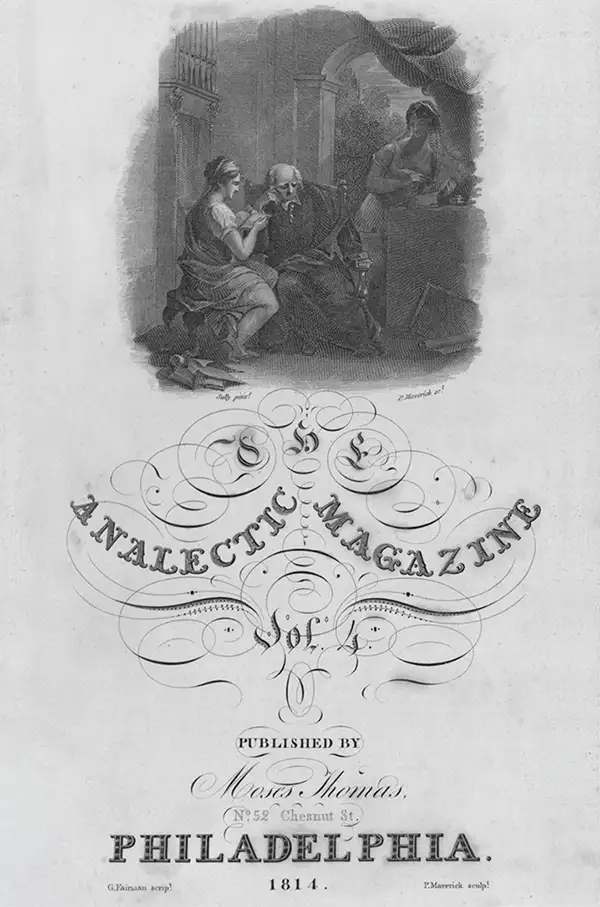
The Analectic Magazine (1813 - 1820) was an influential early American literary and cultural periodical founded in Philadelphia by publisher Moses Thomas and later continued by printer and editor James Maxwell. Conceived as a sophisticated monthly miscellany, it combined original criticism, biography, analytical reviews of new books, translations from French journals, and selections from prominent British publications, while also providing a forum for emerging American literature and national identity. The celebrated American author, essayist, and historian Washington Irving served as its editor from 1813 to 1814, contributing his own work and securing material from such writers as James Kirke Paulding and Gulian C. Verplanck. During the War of 1812 (1812 - 1815), the magazine developed a strongly patriotic character; its November 1814 issue preserved an important early printing of Francis Scott Key’s Defence of Fort M’Henry, the poem later known as The Star-Spangled Banner and adopted as the United States national anthem in 1931. For part of 1816, the periodical appeared as the Analectic Magazine and Naval Chronicle, reflecting its increased attention to American naval affairs. The magazine also occupies an important place in the history of American printing: its July 1819 issue included Bass Otis’s modest woodland and mill scene, generally recognized as the earliest known dated lithograph produced and published in the United States. Publication ceased in 1820 following Maxwell’s illness.
We're Still Hunting
We don't yet have any maps by this cartographer in stock — but that's more a matter of timing than availability. New acquisitions arrive regularly, and pieces from this maker do surface. Check back soon, or reach out if you're specifically looking for one — we're always happy to keep an eye out.
Have a map by this cartographer you're looking to sell? We'd love to hear from you.