
Ligorio, Pirro
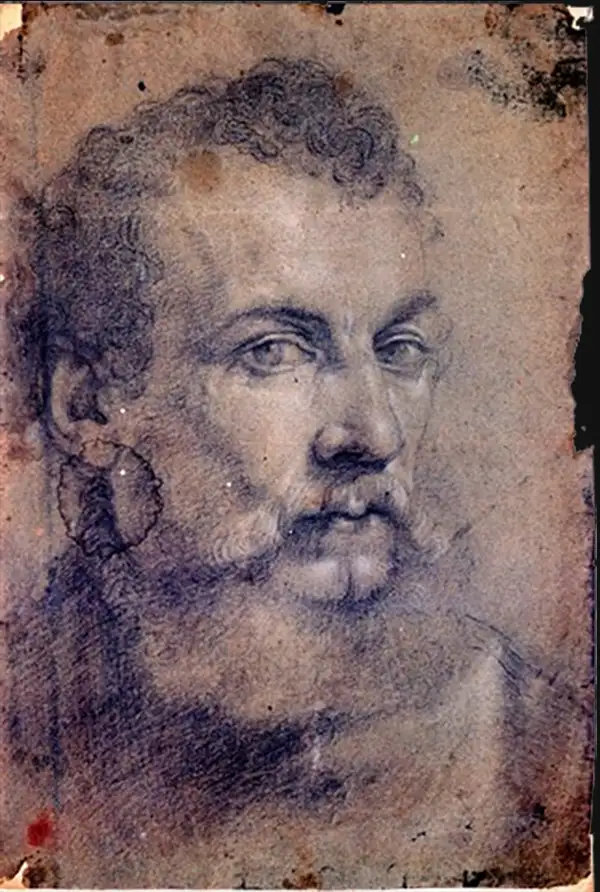
Archivio di Stato di Torino
Pirro Ligorio (c. 1512/13 - 1583) was an Italian antiquarian, architect, painter, and cartographer whose reconstructions of ancient Rome united archaeological observation with Renaissance artistic imagination. Born in Naples, he settled in Rome around 1534, initially working as a painter before turning increasingly to the study of antiquities. In 1549, he entered the service of Cardinal Ippolito II d'Este, a patron whose archaeological and architectural ambitions shaped much of his subsequent career. Ligorio's architectural achievements included the gardens of the Villa d'Este at Tivoli and the Casino of Pius IV in the Vatican. In 1564, he succeeded Michelangelo as principal architect of St. Peter's. Ligorio's principal cartographic achievement was the monumental Anteiquae Urbis Imago, published by Michele Tramezzino in 1561. This bird's-eye reconstruction of ancient Rome combined evidence from surviving ruins, classical literature, coins, inscriptions, and reliefs to recreate the imperial city. Its elaborate architectural detail offered viewers a remarkably coherent vision of Rome's lost grandeur, although the reconstruction necessarily incorporated conjecture alongside documented remains. The map enjoyed a long publishing life, appearing again in an edition issued by Carlo Losi in 1773. Ligorio also compiled extensive illustrated manuscripts on ancient monuments, inscriptions, and coins. His scholarship may have extended into invention, including fabricated inscriptions, complicating his reputation as an authority on antiquity. He entered the service of Duke Alfonso II d'Este in 1568 and later settled in Ferrara, where he continued his antiquarian and architectural work until his death in 1583.
Bird's-eye reconstruction of ancient Rome in all its imperial glory.
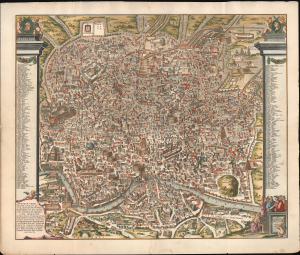
Antiquae Urbis Romae Imago Accuratiss: ex Vetustis Monumentis...
$1,500.00
Acquire
- Digital Map Information
- Suitable for large format printing
- Full resolution TIFF file
- ICC color profile embedded
- Delivered instantly via download link
This is a 1704 François Halma bird's-eye view of ancient Rome, based on Pirro Ligorio's influential 1561 reconstruction. Ligorio restores Rome to its ancient glory, with its temples, baths, theaters, circuses, and imperial monuments rising above a dense fabric of streets and houses. Side panels identify 269 monuments and sites, giving the pictorial detail an antiquarian framework. Published in connection with Johann Georg Graevius' Thesaurus Antiquitatum Romanarum, the view carried a Renaissance conception of Rome into the scholarly publishing world of the early 18th century. (more details)