
1943 Wolfinbarger Pictorial Map of Denver, Colorado

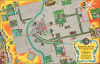
Delightful Denver The Friendly City in the Sky.
Whimsical Map of Wartime Denver.
- Digital Map Information
- Suitable for large format printing
- Full resolution TIFF file
- ICC color profile embedded
- Delivered instantly via download link
Whimsical Map of Wartime Denver.
This is a whimsical c. 1943 pictorial map of Denver, Colorado, by artist Harold Wolfinbarger. It presents the city during World War II, when Denver, like other Western cities with military facilities, experienced a population boom.A Closer Look
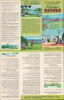
This map covers the main portion of Denver with landmarks illustrated, including Union Station, local and state government buildings, schools, hospitals, museums, libraries, parks, gardens, golf courses, and the Denver Stockyards. The easternmost portion of the Rocky Mountains appear at left, including the Red Rocks Park and Amphitheater. In addition to the buildings, figures are drawn engaged in a variety of activities, including playing golf, tennis, and baseball. The verso contains promotional text and illustrations as well as itineraries for two suggested sightseeing drives around the city.Denver in the Second World War
During World War II (1939 - 1945), Denver emerged as a strategic center for military training, logistics, and industrial production. The city hosted key facilities such as Lowry Field, which became an important training site for aerial photography, armament, and technical specialties essential to the Army Air Forces. Denver's location away from the coasts and potential foreign attack routes made it ideal for military expansion, and tens of thousands of service members passed through its bases. The presence of these installations transformed the city's economy and daily life, bringing a rapid influx of personnel and federal investment that reshaped neighborhoods, transportation, and public services.Denver played an important role in wartime manufacturing and administrative work. The Denver Ordnance Plant in nearby Lakewood produced millions of rounds of ammunition, employing a workforce that included many women and migrants from rural Colorado and neighboring states. Downtown Denver housed regional offices for federal agencies tasked with rationing, price control, and resource management, reinforcing the city's position as an administrative hub for the Mountain West. By the end of the war, these developments had dramatically expanded Denver's population and industrial base, laying the foundations for the city's postwar growth and its emergence as a major metropolitan center in the interior United States.
Publication History and Census
This map was drawn by local artist Harold Wolfinbarger for the Denver Convention and Visitors Bureau and printed by the Smith-Brooks Printing Co. It is undated, but likely dates to the early 1940s, before the renaming of Municipal Airport as Stapleton Field in 1944 and the redesignation of Lowry Field as Lowry AFB in 1948. At the same time, the map includes the large, modern building at Fitzsimmons Medical Center known as Building 500, which was built by the WPA between 1939 and 1941 and was, upon completion, the largest structure in Colorado. The OCLC records this map at seven institutions (with a suggested date of 1950, suggesting a possible later edition).Cartographers
Harold Aubrey Wolfinbarger, Jr. (March 4, 1908 - March 1986) was an artist active in Denver, Colorado known for his depictions of Western Americana. Wolfinbarger was born in Denver and his father, Harold, Sr., was an amateur artist who made oil paintings of Colorado landscapes. Harold, Jr., showed artistic skill from a young age and won a national cartoon contest while attending South High School in Denver. He then attended Denver University and spent his summers working as a ranch hand and cowboy, helping inform his later artistic output. After completing college, Wolfinbarger worked for a year and a half as an apprentice to a commercial artist but soon found that he could support himself as a freelance illustrator, which he did for the remainder of his career. Aside from his commercial art output, Wolfinbarger undertook a period of advanced study under Frank DuMond at the Art Students League in New York City. He saw success as both an illustrator, primarily of books (as with the popular 1961 Ann Miller book Matadors of Mexico), and as a painter. Most of his works in either format dealt with the American West and Mexico, both the landscapes and the people who inhabited them. Wolfinbarger was a long-time member of the Denver Artist Guild and led the organization in 1957-1958. Further Details...
Orville Lemuel Smith (July 18, 1850 - May 8, 1916) was a printing executive based in Denver, Colorado, best known as the longtime president of the Smith-Brooks Printing Co. Smith was born in Hudson Falls, New York, where as a youth he had some exposure to the printing trade. When he was 16 years old, he moved to Philadelphia where he gained further experience at a printing office. He worked as a journeyman printer throughout New York for most of the 1870s before moving to Kansas in 1878, seeking better opportunities. In the early 1880s, Smith and his family moved again, to Denver, where he worked as a printer at various newspapers. Here, Smith's fortunes improved dramatically. He was elected a member of the city's Board of Supervisors and then its president as well as president of the local chapter of the Typographical Union, an organization with which he was deeply involved for many years, including as a elegate to meetings of the International Typographical Union. In 1886, he founded his own printing firm with a partner, named Smith and Ferl, but it was soon (in 1889) superseded by the new firm Smith-Brooks Printing Co., founded with George W. Brooks. As both Smith and Brooks had themselves worked in the lower levels of the printing industry and been proud union members, they were pioneers in the industry in improving workers' conditions, being the first commercial printing in the United States to grant an eight-hour workday. The firm found rapid success and grew to become one of the largest publishing houses in the American West at the turn of the 20th century, employing between 200 and 300 workers. Popularly known as 'Yank' due to his New York roots, Smith was admired by his workers and colleagues and was seemingly a larger-than-life figure in all aspects, also being known as an avid outdoorsman who hunted and fished throughout Colorado. After Smith's death, his son Orville Lemuel Smith, Jr. (1873 - 1943) took over management of the firm. It continued to operate until the late 1960s, in its later years publishing works dealing with the history of Colorado. Further Details...
Condition
Very good. Light wear along original fold lines. Text on verso.
References
OCLC 8529947 (possible later ed.).