
1906 Fisk / Wadsworth Map of Dublin, New Hampshire


This item has been sold.
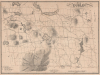
Map of the Town of Dublin New Hampshire including the Part Set Off to the Town of Harrisville.
The Most Climbed Mountain in America
Choose a Collection:
- Digital Map Information
- Suitable for large format printing
- File Size: 49.02 MB
- File Type: ZIP / TIFF
- ICC color profile embedded
- Delivered instantly via download link
This Item
Enquire
The Most Climbed Mountain in America
This is a scarce 1906 map of the town of Dublin, New Hampshire, prepared a half-century earlier by Thomas Fisk and updated by Samuel Wadsworth. Among other features, it is notable for its careful detail of Mount Monadnock, the most prominent peak in southern New Hampshire.A Closer Look
The map covers the town of Dublin as well as the mill town of Harrisville, which broke off from Dublin in 1870 (and therefore was included as part of Dublin in Fisk's original 1853 survey). Settlements and individual properties are noted throughout, along with roads (of various qualities), railroads, paths, lot numbers, and range lines, as indicated in the legend at bottom-left. Hills and mountains, as well as waterways (lakes, reservoirs, ponds), are recorded with their elevations.Mount Monadnock
Among the more noticeable features on this map is Mount Monadnock at bottom, with elevation noted and represented by hachure lines, and with hiking trails traced. Rising 3,166 feet, the mountain has long been one of the most frequently climbed mountains in North America. Its name may derive from an Abenaki word usually interpreted as 'isolated mountain,' a fitting description given its prominent isolation above the surrounding hills and plains. By the late 18th and early 19th centuries, Mount Monadnock had become a local landmark for farmers, surveyors, and early travelers. Pasturing and repeated fires set on its slopes to clear land or discourage wolves helped create the bare, rocky summit cone that remains one of its most distinctive features. Writers and artists of the early Republic took notice as well; by the mid-1800s, Mount Monadnock was already celebrated in regional travel writing and landscape painting.The mountain's cultural prominence grew in the 19th and early 20th centuries, aided by its accessibility to urban New Englanders and by the literary reverence of figures such as Ralph Waldo Emerson and Henry David Thoreau, both of whom immortalized the peak in essays and verse. As hiking became a more popular pastime, organized trail-building and conservation efforts expanded, notably with the activities of local landowners and the Society for the Protection of New Hampshire Forests, which acquired tracts of the mountain to preserve it from development. Today, the mountain remains a protected natural area, cherished both for its rugged beauty and for the deep cultural and literary associations that have accumulated over more than two centuries.
Publication History and Census
This map was originally prepared by Thomas Fisk in 1853 and then updated in 1906 by Samuel Wadsworth, a jeweler, surveyor, and avid local historian based in nearby Keene. Wadsworth's updated map was printed by C. J. Peters and Son in Boston in 1907. This map is quite rare, only being noted in the OCLC among the holdings of Harvard University, the Boston Athenaeum, Yale University, and the University of Minnesota Twin Cities.Cartographers
William Henry Fisk (November 17, 1826 - August 9, 1875) was a Manchester, New Hampshire based publisher, bookseller, stationer, printer, and bookbinder. He was born in Boston, Massachusetts. Further Details...
C.J. Peters and Son Company (fl. c. 1855 - 1920) was an an American typography, electrotyping, engraving, printing, and stereotyping firm active in Boston during the 19th and 20th centuries. The firm produced a wide range of products. Further Details...
Condition
Good. Laid down, old linen. Minor areas of damage, upper left border.
References
OCLC 25382957.