
1902 Boston-Arizona Mining Company Promotional Map Handbills

This item has been sold.
Worth a Venture. / Gold Mines that Pay!
Promoting Arizona Gold Mines to Mainers.
Choose a Collection:
- Digital Map Information
- Suitable for large format printing
- Full resolution TIFF file
- ICC color profile embedded
- Delivered instantly via download link
This Item
Enquire
Promoting Arizona Gold Mines to Mainers.
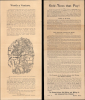
This is a unique set of turn-of-the-century handbills promoting gold mines in Arizona, issued for distribution in New England (and specifically Maine). The enterprise, known as the Boston-Arizona Gold Mining and Milling Company, operated mines between Prescott and Phoenix, Arizona, that produced less gold than hoped for, but did contain deposits of copper and other minerals.A Closer Look
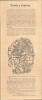
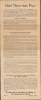
The sheet containing the map of central Arizona (the second image above) is the latter of the two. It was distributed in 1901 or 1902 to shareholders of the Boston-Arizona Gold Mining and Milling Company (B.-A. Mining Co.), touting the likelihood of striking an ore belt once the company's shaft could be drilled to a sufficient depth, arguing that neighboring mines on either side had recently discovered lucrative reserves and seen their stock price soar. The map notes cities and towns, with their borders traced, along with mines, post offices, railways, mountains, Indian Reservations, and other features. It is signed by Harry Livingston Bowdoin, an inventor and engineer (primarily of marine equipment) from Connecticut, who invested in Western mines around this time.The second sheet, without the map, is older, having likely been prepared in very late 1893 or early 1894, soon after the company's creation, for potential investors in Augusta and other cities in Maine. It rather tangentially promotes the prospects of the Boston-Arizona by discussing the mining interests of 'the late' James G. Blaine, a powerful politician from Maine who served in the U.S. House (including as Speaker of the House between 1869 and 1875) and U.S. Senate, as Secretary of State (twice), and as the Republican Presidential candidate in 1884, and who also (like most major politicians of the era) was tainted by allegations of corruption. A similarly tenuous connection is drawn with the overnight fortunes gained at the Granite Mountain Mine in Montana, while more reasonable links are made to other Arizona mines that had led to large gold strikes in recent years.
Boston-Arizona Gold Mining and Milling Company
Despite the optimistic claims presented, it appears that the Boston-Arizona Gold Mining and Milling Company never had much success in striking gold, with its share price in c. 1902 being the same as the promotional rate of 25 cents offered in the earlier handbill of c. 1894. In fact, we can find no record of the company in published sources aside from three small May 1894 adverts placed in the The Boston Globe and Boston Evening Transcript, when the company was made public (claiming to have been previously 'successfully operated as an individual enterprise'). Several companies and mines with similar names did leave a short paper trail, especially a Boston-Arizona Mine located some eight miles west of Prescott (not the mine indicated on the map here) and a Boston-Arizona Copper Company (headed by a judge in Middlesex County, Massachusetts), which operated until at least 1920. The thinking behind these companies was clearly to gain investment from affluent New Englanders, especially Mainers in this case, but alas, the Mainers were not good miners. The venture does not appear to have been a boondoggle exactly, just unsuccessful, though given the practices of the time, political and financial corruption would have likely been involved.Historical Context
In the early 20th century, mining was one of the dominant industries in Arizona, shaping both its economy and patterns of settlement before and after statehood in 1912. Although copper was the leading mineral product (earning Arizona the nickname the 'Copper State'), gold deposits had been discovered in earlier decades, and fortune-seekers attempted to use new technologies to locate and extract additional gold, including from low-grade ores that had previously been unworkable. Numerous companies, including speculative ventures like the Boston-Arizona Gold Mining and Milling Company, sought to develop properties in Yavapai, Mohave, and Pinal Counties, often financed by investors from the East Coast or the Midwest. Despite occasional booms, the industry was volatile, subject to fluctuating metal prices and the challenges of transportation and water scarcity in the desert environment. By the 1930s, many of the smaller gold operations had declined or been consolidated into larger mining enterprises focused increasingly on copper and other base metals.Publication History and Census
As explained above, the two sheets were prepared in c. 1902 and c. 1894, respectively, by the Boston-Arizona Gold Mining and Milling Co. (later the B.-A. Mining Co.). No printer or other publication information is indicated. We have been unable to locate any other examples of either piece.Condition
Very good. Light wear along original fold lines.