
1925 Blueprint Plat Map of Brookhaven, Atlanta, Georgia

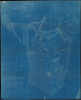

Plat of Silver Lake Park.
From 'Amusement Resort' to Campus Extension to Model Suburb.
- Digital Map Information
- Suitable for large format printing
- Full resolution TIFF file
- ICC color profile embedded
- Delivered instantly via download link
From 'Amusement Resort' to Campus Extension to Model Suburb.
This is a 1925 blueprint map of Silver Lake Park, an artificial lake and residential development just outside of Atlanta in today's city of Brookhaven in western DeKalb County. Though not initially successful as a residential development, the land owned by the Silver Lake Park Company has historically been closely tied to Oglethorpe University and newspaper magnate William Randolph Hearst, who donated the lake and much of the surrounding land to the university in 1929.A Closer Look
The map covers the lands of the Silver Lake Park Company now part of Brookhaven, a suburb of Atlanta in western Dekalb County and home to Oglethorpe University, located in the shaded area at bottom-left here on land donated by the company (see below). The eponymous lake is located towards top, while surrounding streets are labelled. Lots and blocks are numbered throughout, with a portion of lots in the southernmost part being shaded, signifying that they had been sold. Areas of reserved parkland around the lake and elsewhere throughout the development are also indicated.Although the rough contours of the development and some of the street names were maintained in the following decades, the ultimate street layout differed significantly from that seen here as most of the residential development in the area only occurred in the post-World War II period. Instead, in the period just after this map's production, the history of the lake and its surrounding land was closely tied to the university and media mogul William Randolph Hearst.
Historical Context
The Silver Lake Park Company (and later the Silver Lake Park Corporation) was an early 20th-century real estate development enterprise in the Atlanta area associated with land transactions around Silver Lake in present-day Brookhaven. It was formed in 1906, initially as an 'amusement resort,' but after several years this concept was abandoned and the company was reincorporated in 1913 to construct a residential development known as Silver Lake Estates, defined in an early advertisement as 'a splendid Presbyterian community.' To serve as the centerpiece for the planned community, the company constructed a 28-acre man-made reservoir (Silver Lake) along the Peachtree Road corridor by damming tributaries of Nancy Creek.The company's most enduring legacy in Brookhaven stems from its partnership with Dr. Thornwell Jacobs, who was seeking a home to re-establish Oglethorpe University. In 1912 and 1913, Ashford and Owen donated land from the company's holdings to entice the university to build its campus along Peachtree Road. Securing the university cemented Brookhaven's position as a desirable educational and suburban hub.
In addition to becoming home to Atlanta's first bird sanctuary, the lake changed hands multiple times in the following decades, including a period under publisher William Randolph Hearst (owner of the influential Atlanta Georgian since 1912), who donated the lake to Oglethorpe University, which, in turn, renamed it Phoebe Lake in honor of Hearst's mother, as it did with a hall on the university's campus. When Hearst donated the lake to the university in 1929, he did so along with 400 acres of surrounding forest land (likely the '399 acres, more or less' of unsold lots referred to in Fitzpatrick's note at left), indicating the limited state of residential development at the time.
Over the following decades, the university successively sold off this land and a more complete residential development of the area only occurred in the post-World War II period, with the subdivisions / neighborhoods of Brittany, Cambridge Park, Hampton Hall, and Oglethorpe Estates emerging in the 1950s - 1970s. In the late 1970s, the lake's dam was deemed unsafe and had to be reconstructed, after which the lake was deeded to the Silver Lake Civic Association, which now maintains it.
Cyanotype: Why so Blue?
Cyanotype is a photo-reprographic technique developed in 1842 by the British astronomer John Herschel (1792 - 1871). Sometimes called a 'sunprint', the technique employs a solution of ferric ammonium citrate and potassium ferricyanide, which, when painted on white paper or cloth, reacts with sunlight to dye the object a brilliant blue. Areas blocked from ultraviolet exposure remain undyed and white. Herschel developed the technique to reproduce his astronomical notes, but others quickly realized that any object capable of blocking light could be used to create a cyanotype image quickly and easily. By the late 19th century, the process became popular with designers, the military, architects, and engineers (blueprints), who used the cheap and effective technique to quickly and exactly reproduce images in the field. Cyanotyping is limited in that only a single copy can be made at a time, so it was practical only for short-term fieldwork. It is also worth noting that cyanotypes remain highly sensitive to light and, over time, fade or degrade, making them highly ephemeral. The process fell out of fashion in most places by the 1920s but remains in use in some parts of the world, such as India and Nepal, to this day.Publication History and Census
This blueprint map was traced from a blueprint prepared by civil engineer Randolph Burks Railey in March 1916, having been updated by Littleton Hill Fitzpatrick in September 1925. A note at left addresses the map to 'A. H. Eidson,' recorded as a notary active in Atlanta at the time. As a blueprint map, it was likely produced in a very small run, perhaps being the sole example. We have not been able to locate any other examples in institutional collections or in market history.Cartographers
Randolph Burks Railey (1889 - April 1968) was a civil engineer active in Atlanta, Georgia and Miami, Florida. He was born in Bloomfield, Kentucky and attended Washington and Lee University in St. Louis to study civil engineering. After graduating, Railey relocated to Atlanta, where he opened his own private firm and planned several new residential developments around Atlanta, as well as contributing to the design of the expanded campuses of Emory University and Oglethorpe University. In 1925, Railey changed the course of his career, becoming the chief salesman for Goodyear tires in Atlanta. In 1927, he purchased the Union Battery Manufacturing Co. in Miami, Florida, where he would live for the remainder of his life. With a successful business established, Railey became heavily involved in various civil society and philanthropic organizations, including the Rotary Club, the Shriners, and various Masonic lodges. He served for a time as the director for the Miami Chamber of Commerce and ran unsuccessfully for a Miami City Commissioner seat. Railey married Mamie Thornton, with whom he had one daughter. Mamie died in 1946 and Railey remarried in 1947 to Edith Runger, with whom he had one son. Further Details...
Littleton Hill Fitzpatrick (June 18, 1886 - August 6, 1965) was a civil engineer active in Atlanta, Georgia in the early-mid 20th century. He was born and raised in Culloden, Georgia and graduated from the University of Georgia in 1909 with a degree in civil engineering and opened his own office in Atlanta. In 1911, he married Carrie Lillian Worsham, with whom he had four children. In the late 1910s, Fitzpatrick and his family moved to Greenville, South Carolina, where he operated his own civil engineering firm, but by 1922, they had returned to Atlanta. In this same period, in 1919, he started a joint venture with fellow civil engineer C. H. Terry known as Fitzpatrick-Terry Co. (perhaps with the aim of Terry handling Atlanta business and Fitzpatrick branching out to Greenville), but this appears to have been a short-lived effort. Later in his career, Fitzpatrick served on the Board of Directors of the Atlanta chapter of the Georgia Society of Professional Engineers. Further Details...
Condition
Good. Some areas of fading; few marginal mends, some mended splits at folds and junctures of folds.