
1880 Nine Issues of Key Publication of American Whaling Industry


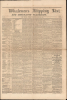
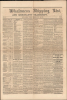
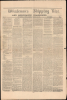
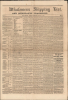
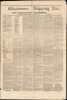
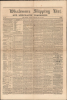
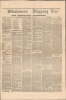
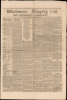
Whalemen's Shipping List, and Merchants' Transcript.
Record of the American Whaling Industry.
$1,200.00
Choose a Collection:
- Digital Map Information
- Suitable for large format printing
- Full resolution TIFF file
- ICC color profile embedded
- Delivered instantly via download link
This Item
Enquire
Record of the American Whaling Industry.
This is a remarkable collection of nine issues of the scarce publication the Whalemen's Shipping List, and Merchants' Transcript, published in the mid-19th century in New Bedford, Massachusetts, headquarters of the American whaling industry. Published between 1873 and 1882, these issues provide an insider's view of the whaling industry in a period when it was declining in the face of new sources of lighting fuel.The Whalemen's Shipping List, and Merchants' Transcript
The Whalemen's Shipping List, and Merchants' Transcript was a 19th-century newspaper published in New Bedford, Massachusetts, the leading American whaling port of its time. The newspaper was founded in 1843 by Henry Lindsey and then passed to his brother Benjamin when Henry died in 1853. When Benjamin Lindsey was posted as U.S. Consul in Brazil, longtime employee Eben P. Raymond took over management of the paper, and eventually its proprietor (Lindsey is noted as publisher in the earlier issues while Raymond appears in the 1882 editions). In 1889, Raymond took on George Phillips as an assistant, and Phillips went on to serve as the editor of the newspaper through its 1914 closure. The publication was initially printed in a smaller format and consisted of eight pages per issue before switching to the four-page format seen here. At its peak, the paper's circulation reached 2,500 and maintained 'foreign agents' in London, Honolulu, and New Zealand (Bay of Islands).Throughout its history, the Whalemen's Shipping List, and Merchants' Transcript served as a specialized maritime trade paper reporting on the movements, departures, and arrivals of whaling vessels from ports around the world. The publication listed ships' names, masters, home ports, destinations, and the quantity of oil or whalebone brought back, providing vital information for shipowners, merchants, insurers, and families connected to the whaling industry. It also included advertisements for ship supplies, marine services, and local businesses, reflecting New Bedford's bustling maritime economy. As can be seen here, much of the paper was also taken up by entertainment columns, including poems, short stories, serialized fiction, gossip columns, and the like, including some republished from other papers. Typically, most of the 'business' portion of the paper was in the double-page foldout (pages 2-3) while the cover and last page included the relatively lighthearted material, including advertisements on the last page. Today, surviving issues are an important historical resource for maritime historians and genealogists studying New England's whaling era.
Historical Context
These issues of the Whalemen's Shipping List, and Merchants' Transcript were produced at the end of the 19th-century whaling boom. Whale oil was primarily used for lighting, but had additional applications, including as a lubricant in machines. Other parts of the whale could have particular uses as well, such as the baleen (whalebone) used for baskets, collar stiffeners, corset stays, and buggy whips. However, by the time these issues were published, the whale industry was in decline, as rampant overhunting had reduced the animal's population globally. It became more and more difficult to find sufficient numbers of whales locally, sending New England whalers to distant, dangerous waters in the Pacific and Arctic, such as the Bering Strait. At the same time, alternative sources of fuel such as kerosene, coal oil, and turpentine were becoming increasingly common, ultimately leading to the boom in petroleum. The U.S. Civil War also disrupted the already weakened industry, with both crews and ships refitted for the war effort. By the end of the century, the industry was only a shadow of its former self.Publication History and Census
This collection of nine issues of the Whalemen's Shipping List, and Merchants' Transcript (sometimes cataloged as 'Whaleman's' instead of 'Whalemen's' and/ or 'Merchant's Transcript' rather than Merchants') dates from 1873, 1877, and 1882. Partial or full runs of the publication are held by the Peabody Essex Museum, New Bedford Whaling Museum, Nantucket Historical Association, Mystic Seaport Museum, and Martha's Vineyard Museum. Individual issues appear on the market occasionally, but such a large collection of issues are rarely available.Condition
Editions vary in condition from very good to average. Some have unrepaired tears or edge loss, while one has creasing. Each newspaper is one broadsheet folded, meaning it has a front and back page and opens to have two inside pages.
References
OCLC 58480511.