
Vermeule, Cornelius Clarkson
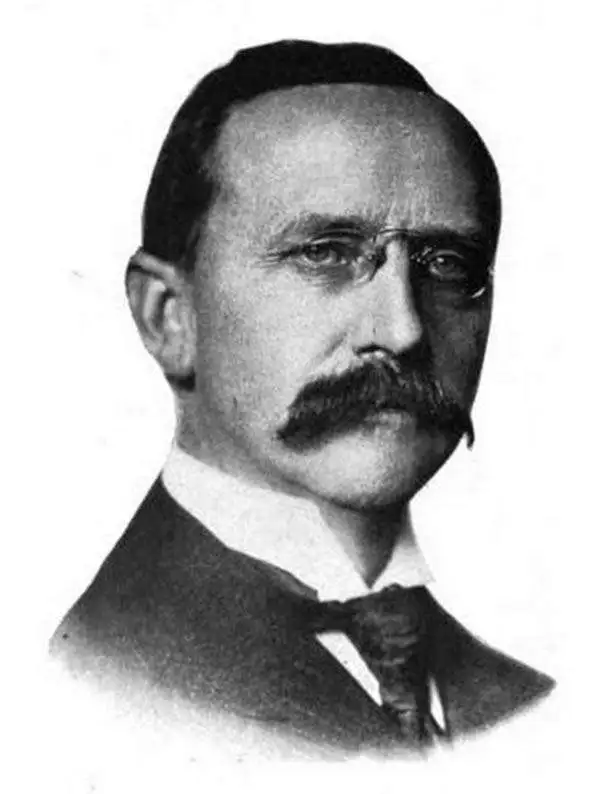
Cornelius Clarkson Vermeule (September 5, 1858 - February 1, 1950) was a civil engineer and surveyor active in the New York City area in the late 19th and early 20th centuries. He was born in Raritan Landing, New Jersey and attended Rutgers University before joining the U.S. Geological Survey. Vermeule was also placed in charge of the New Jersey Geological Survey, eventually completing the first topographical survey of New Jersey, and as a result remained an authority of New Jersey's geology, hydrology, and topography for the rest of his career, including serving as a consulting engineer for the state of New Jersey. In 1888, Vermeule opened an office in New York City and thereafter served as a consulting engineer for more than 100 municipalities as well as private clients and some foreign governments, including in Cuba both before and after independence from Spain. He was particularly expert at understanding natural water flows and designing municipal water supply systems. Late in his career, Vermeule was tasked with overseeing the dismantling of the Morris Canal in New Jersey, first opened in 1831, a task which was carried on and completed by his son, Cornelius Clarkson Vermeule II (1895 - 1943). The elder Vermeule was also an avid local historian and an active member of the New Jersey Historical Society.
Dawn of Modern New York City.
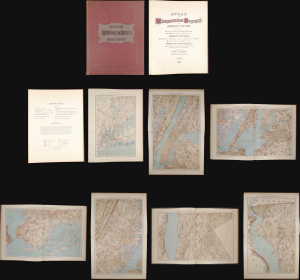
This is a stunning elephant folio chromolithograph atlas of New York City and environs by Julius Bien and C. C. Vermeule, dated 1891. It captures New York City and its surrounding area during a period of frenetic growth and modernization, which, in the following years, led to the consolidation of the five boroughs and the adoption of cutting-edge technology to facilitate the movement of people and goods through the metropolis. (more details)