
1913 Green Real Estate Promotional Map and Booklet, Palm Beach, Florida

This item has been sold.
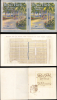
Royal Park Palm Beach Florida 'The Millionaire's Play Ground' / Revised Map of Royal Park Addition to Palm Beach, Florida.
Crucial Piece of Palm Beach's Early History.
Choose a Collection:
This Item
Enquire
Crucial Piece of Palm Beach's Early History.
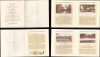
This is a scarce 1913 promotional booklet and map for the Royal Park development in Palm Beach, Florida, prepared by lead promoter and real estate agent Lewis Henry Green. Though the term 'Royal Park' is little used today, the development's success was an important step in the history of Palm Beach, expanding the city into new lands and broadening the social class of its residents beyond the elite.A Closer Look
The map covers the proposed development of Royal Park, situated between the Atlantic Ocean and Lake Worth (the Lake Worth Lagoon, part of the Intracoastal Waterway) south of the contemporary center of Palm Beach. Lots and blocks are numbered throughout, with the size of corner lots indicated as a reference for all uniform-sized lots in a given block. Small strips of land are also set aside for sewer and transmission lines. Larger lots face both the Atlantic Ocean and Lake Worth, and some larger inland lots were also reserved (many of these, especially along Royal Palm Way, were later used for commercial space). Streets are labeled throughout, with names that are still in use today, including the famous Worth Avenue.Pitching Royal Park
Royal Park had some major advantages as a prospective real estate development. It was situated along a desirable part of the South Florida coast at a time when the area was already becoming a preferred destination for retirees, convalescents, and seasonal residents from the north (for a similar map of a contemporary nearby development, see our NorthLakeWorth-bryantgreenwood-1913). It was also close to the already-developing center of Palm Beach, which was connected to the rest of the country by the Florida East Coast Railway. Moreover, the development had strong local political support; Elisha 'Cap' Dimick (1849 - 1919), the president of the company behind the development, the Palm Beach Improvement Company, was also the mayor of Palm Beach (its first) - there was evidently no shame or concern about potential conflicts of interest with this arrangement. The Royal Park Bridge was opened in 1911, leading to Royal Palm Way, providing a direct link with the Florida mainland.Despite these advantages, the Palm Beach Improvement Company initially faced terrible difficulties selling lots to potential buyers because the area set aside for the development was a marshy hinterland. Though only a mile from the railway, hotels, and mansions built by magnate Henry Flagler at the center of Palm Beach, actually reaching the area planned for the development was no small task. Before any lots could be demarcated, let alone sold, a lake had to be dredged, marshes and bogs filled in, and basic roads built out to the site.
Facing a potential disaster, the Palm Beach Improvement Company hired real estate promoter Lewis Henry Green, who had rapidly sold all the lots in nearby Floral Park, to rescue the development. Green was the one who came up with the tagline 'the millionaire's playground,' even though the pamphlet accompanying the map makes clear that the development was intended to broaden land ownership in Palm Beach beyond the ultra-wealthy. Green was a master of advertising and promotion, using printed media such as the present work to generate interest, scheduling ostentatious public auctions, and giving away prizes to buyers, including silver tea sets and gold watches.
Perhaps just as importantly, Dimick and his business partners themselves moved to Royal Park and had both a personal and financial interest in ensuring that basic services like roads, water, and sewage were functional, as well as adding flourishes like electric street lighting and 'tropical' landscaping along roads. A local businessman, W.E. Watson, was contracted to take prospective buyers from Palm Beach proper (often directly from the train station) in large bus-like 'buggies' along the now-improved roads to the development site. Transported by Watson, Green's auctions began to attract hundreds of potential buyers.
The result was that by 1917, all the lots in Royal Park had been sold and the development quickly matured into a proper neighborhood, effectively shifting the 'center of gravity' of Palm Beach southwards and allowing for the emergence of Worth Ave., in the southern portion of the development, as one of the most celebrated upscale shopping corridors in the country.
Florida Land Boom(s)
In the second half of the 19th and throughout the early 20th century, Florida experienced a series of land booms and crashes. The initial land boom established Florida as a center for the citrus industry in the 1880s - 1890s, and its collapse allowed for the easy acquisition of large tracts of land at cut-rate prices. Industrialist and founder of Standard Oil Henry Flagler (1830 - 1913) seized the opportunity to build his Florida East Coast Railway and extend it to the region that would develop into Miami and other communities on the state's southeastern coast.Flagler and other Florida boosters successfully promoted the state as a paradisical escape from the grimy cities and cold weather of lands further north. Land prices shot up at an astronomical rate, and developers carved entirely new cities out of wetlands in mere months. In addition to Flagler's railway, the arrival of the highway system in the 1920s made the region more easily accessible. But the speculation around land prices in Florida had reached irrational heights, and the damage caused by two hurricanes followed by the financial crash of 1929 led to a collapse in the real estate market, ruining many investors in the process.
Publication History and Census
This map and booklet were prepared by the Palm Beach Improvement Company and its star real estate agent, Lewis Henry Green, in 1913. It is exceptionally rare, with minimal market history and only two institutional holdings, at the State Library of Florida and the University of Miami.Condition
Excellent. Consists of map and booklet. The map is 9 x 16 in., while the booklet, when closed, is 9 X 8 in.
References
OCLC 18664282.