
Nagata Shigeru (永田稠)
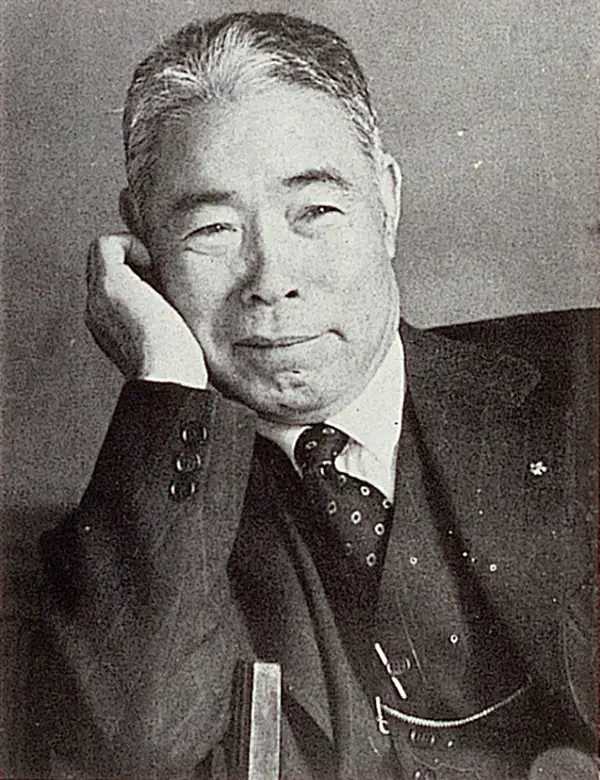
Nagata Shigeru (永田稠; December 30, 1881 - January 2, 1973) was a Japanese emigration manager who played a leading role in several key overseas Japanese settlements. He was born in Nagano and received standard education for the time before starting, but not completing, a political science preparatory course at the Tokyo Professional School (now Waseda University). In 1906, he moved to Hokkaido and the following year traveled to the United States as a member of the Japan Rikko-kai (日本力行会), an organization dedicated to helping Japanese emigrate to the U.S. He stayed in the U.S. for five years and returned to Japan to head Japan Rikko-kai before co-founding the Shinano (i.e. Nagano) Overseas Association (信濃海外協会). From 1924, he was deeply involved in the Aliança Colony (アリアンサ移住地) in Sao Paulo State, Brazil, populated by Nagano emigres. Following Japan's invasion and occupation of Manchuria, Nagata consulted the Kwantung Army's Immigration Department (関東軍移民部) and in 1934 founded a school to train emigre farmers how to thrive in Manchukuo. In 1937, he founded a model colony akin to Aliança near the Manchukuo capital of Xinjing (now Changchun) called Rikko Village (力行村). At the end of World War II, Nagata returned to Japan and afterwards published accounts of his travels and work.
AKA: 永田稠
Japanese 'collaborative settler colonialism' in Brazil.
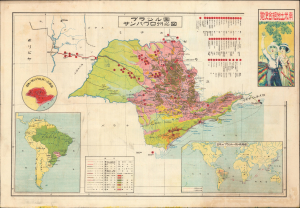
ブラジル国 サンパウロ州之図 / [Map of Sao Paulo State Brazil].
$1,200.00
Acquire
- Digital Map Information
- Suitable for large format printing
- Full resolution TIFF file
- ICC color profile embedded
- Delivered instantly via download link
This is a 1923 Japanese-language map of Sao Paulo State, Brazil, issued jointly by the Nambei Tochi Kumiai and the Kaigai Kyōkai Chūōkai, organizations dedicated to promoting Japanese emigration to South America. In particular, the map relates to migrants from Nagano settling in agricultural colonies cultivating rice, cotton, coffee, sugar, and other commodities. Japanese emigration to South America in particular can be seen as a kind of economic colonialism called by some 'collaborative settler colonialism'. (more details)