
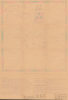
1945 Mimeographed WWII Route Map of the 318th Infantry Regiment in Europe


This item has been sold.
Map Route CT 318.
Ephemeral WWII mimeograph Route Map following the 318th Infantry Regiment.
Choose a Collection:
- Digital Map Information
- Suitable for large format printing
- Full resolution TIFF file
- ICC color profile embedded
- Delivered instantly via download link
This Item
Enquire
Ephemeral WWII mimeograph Route Map following the 318th Infantry Regiment.
This is a 1945 mimeographed World War II unit route map of the 318th Infantry Regiment in Europe. It records the regiment's fight across Europe, noting milestones, and includes an operational report of the last days of combat in the European theatre, May 6-7, 1945, on the verso. As a mimeograph, this route map is unusual for the genre and limited by the medium, making it exceptionally ephemeral.A Closer Look
The map depicts western and central Europe from Scotland south to northern Italy and from northern Spain east to Berlin, Germany. 31 locations across Europe are numerically identified, beginning with the regiment's arrival in Scotland and following its movements through England to France, and across France, Luxembourg, Belgium, and Germany, and ending in Austria, with each one explained in a key below. Countries are labeled, but the only cities named are London, Paris, Berlin, Bern, Linz, and Milan. Handwritten notes along the bottom inform the map's recipients, the writer's parents, that he first saw action at Wendels, Germany, and that the insignia at the top below the title is the Regimental Insignia. A note in the lower right corner reads, 'I picked this map up here at regiment and a good souvenir too. I hope you and dad like it, some good information on it too.' The regimental operational report from May 7, 1945, is printed on the verso.318th Infantry Regiment
The 318th Infantry Regiment was organized on June 15, 1942, at Camp Forrest, Tennessee. The regiment arrived in Gourock, Scotland, on July 7, 1944, and landed on Utah Beach on August 5, 1944. Elements of the regiment first saw combat a few days later on August 9. The regiment's first major battle was at Argentan, France, on August 18-20, 1944, where they helped close the Falaise Gap. After the battle at Argentan, the regiment fought its way across France, through Luxembourg, and into Belgium, where it saw action in the Battle of the Bulge with the 101st Airborne at Bastogne. They entered Germany on February 7, 1945, and crossed the Rhine River on March 28, 1945, fighting through Germany during April until the war ended in Braunau, Austria (Hitler's birthplace).Combat Teams
At the beginning of World War II, the U.S. Army reorganized its infantry divisions from square divisions (2 battalions with 2 regiments each) to triangular divisions (3 regiments directly under the division commander). This meant that each regiment could be assigned operations individually, or the entire division could be tasked with a larger operation. When infantry regiments operated independently, they often did so alongside a field artillery battalion, a combat engineer company, a medical company, and a signals platoon. This grouping of units was designated a 'combat team' or 'regimental combat team'. Combat Teams were usually not permanent units but were created and dissolved as needed. Thus, a unit like the 318th Infantry Regiment would have also been known as the 318th Combat Team. One of the most well-known combat teams is the 442nd Regimental Combat Team, which was composed entirely of Japanese American (Nisei) soldiers, and is remembered as the most decorated unit in U.S. military history for its size and length of service.Publication History and Census
This map was created by an unknown artist and published as 'Annex #1 of S-3 Periodic Report No. 110, 7 May 1945.' (The S-3 officer was part of a regiment's or battalion's staff officers and was in charge of training and operations for the unit. The S-3 planned tactical operations, security measures, and reconnaissance, prepared tactical reports and operation maps and overlays, and performed other duties.) This is the only known surviving example.Condition
Good. Wear along original fold lines. Verso repairs to fold separations and at fold intersections. Slight loss at a fold intersections. Closed edge tears professionally repaired on verso. Mimeographed text on verso.