
1935 Eddy Pictorial View of Downtown Los Angeles

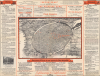
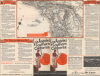
Interesting Places in and around Los Angeles. / Los Angeles and Southern California...
L.A.'s Art Deco Grandeur.
- Digital Map Information
- Suitable for large format printing
- Full resolution TIFF file
- ICC color profile embedded
- Delivered instantly via download link
L.A.'s Art Deco Grandeur.
This is a pictorial view of Downtown Los Angeles and environs, drawn by Gerald Eddy in 1934 and published the following year by the National Travel Service, a travel agency in L.A. It presents the city during the Great Depression, when it largely bucked national and international economic trends and built many of its most iconic buildings.A Closer Look
The sheet includes a very curious view-within-a-view, with a magnifying glass highlighting a portion of Downtown Los Angeles within a wider view of Southern California. The magnified portion covers Civic Center, dominated by the distinctive Art Deco City Hall, completed in 1928. Nearby, the 'New Union Depot Site' refers to the under-construction Los Angeles Union Station, another of L.A.'s most distinctive buildings. The rest of the main view covers from Sunset Avenue in the north to Western Avenue in the west and Santa Barbara Avenue in the south. Thirty locations are numbered, consisting of hotels, theaters, and other entertainment venues. Outside of the magnified portion, the view covers the L.A. Basin, between the Santa Monica and San Gabriel Mountains in the north and Long Beach in the south. Surrounding the view are brief advertisements for hotels, restaurants, and attractions, including those numbered on the view. The verso includes additional advertisements for locations and travel opportunities farther afield (San Diego, San Francisco, Mexico), a reference to the California Pacific International Exposition in San Diego's Balboa Park, and a broader view of Southern California, from Santa Barbara to the U.S.-Mexico border.Historical Context
While the Great Depression devastated the global economy, Los Angeles in the early 1930s managed a surprising degree of economic resilience, partially insulated by a regional oil boom, a burgeoning aviation industry, and a robust agricultural sector. Hollywood also acted as a premier economic engine, as millions of Americans sought cheap escapism from their grim realities. This economic cushioning allowed the city to press forward with spectacular civic transformations and major public works. In 1932, Los Angeles confidently hosted the Summer Olympics, expanding the Los Angeles Memorial Coliseum and constructing the world's first official Olympic Village, a major boost to local pride and employment. The skyline also transformed with Art Deco landmarks; in addition to City Hall and Union Station mentioned above, other prominent examples include the brilliant turquoise Eastern Columbia Building (completed in 1930), the Wiltern Theater (completed in 1931), and the iconic Griffith Observatory (completed in 1935). Funded by a mix of private wealth, local bonds, and early New Deal initiatives, these projects, alongside massive water infrastructure such as the Colorado River Aqueduct, ensured that, while the rest of the nation stalled, Los Angeles was actively engineering its future metropolis.Publication History and Census
This view and the verso view were drawn by Gerald A. Eddy in 1934 and published the following year as part of this brochure by G.A. King of the National Travel Service. It is seemingly quite rare; we have been unable to locate any other examples of this view in institutional collections or on the market.Cartographer
Gerald Allen Eddy (October 12, 1889 - September 9, 1967) was an American artist. Born in Michigan, Eddy's parents either divorced or his father died between 1900 and 1910. In 1910 Eddy was living with his mother, brother, and stepfather in Los Angeles and working as an artist. Eddy was a prolific cartographer and created numerous maps of different areas of the western United States. He married Madolyn M. Smith on January 18, 1911. By 1917, the couple had one daughter, according to his World War I draft card. By 1919, Eddy was drawing views for newspapers in southern California. By 1939 Eddy was a staff artist for the San Francisco Call-Bulletin and drew courtroom sketches and maps for the newspaper. By 1940 his maps would be syndicated in newspapers across the country. He was married to his wife Madolyn when he died. Further Details...
Condition
Very good. Verso repair to a fold separation. Advertisements and Map of Southern California on verso.