
1911 Folding Map of Istanbul and the Bosporus Straits

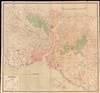

Istanbul ve Boğazı ve civarı haritası / [Map of Istanbul, the Bosphorus, and Surroundings].
Ottoman map of Istanbul's defenses on the eve of World War I.
- Digital Map Information
- Suitable for large format printing
- File Size: 73.41 MB
- File Type: ZIP / TIFF
- ICC color profile embedded
- Delivered instantly via download link
Ottoman map of Istanbul's defenses on the eve of World War I.
This is a rare c. 1911 (1327 AH) large-scale folding Ottoman map of Istanbul, the Bosporus, and environs. This map was published by a military-affiliated publisher amid multiple crises in the European portion of the Ottoman Empire. Its ready foldability suggests that it was intended for use in the field, perhaps preparing fortifications in the event of an attack on the city.A Closer Look at the Map
The focus of this map is the fortifications in and around Istanbul, especially the walls on both sides of the Bosporus protecting against seaborne attack from the Mediterranean. The areas shaded red on the map show settlement. Natural resources, including waterways with drinkable water and forests, are also highlighted. In the twentieth century, urban sprawl and development covered up nearly all these streams and forests.Wider Context - The Collapse of Ottoman Europe
Ottoman control over the Balkans, Greece, and other nearby territories was already in jeopardy in the early 19th century, and by the end of the 19th century, many of former territories achieved independence. Those regions that had not (Albania, Macedonia, portions of modern Greece and Bulgaria) were under tenuous or only nominal control from Istanbul.Despite the Young Turk revolution in 1908 and the onset of drastic reforms, the Ottoman Empire continued to lose territory, particularly in the Balkans, and face severe domestic political uncertainty. One of the reforms launched after 1908 was a reorganization of the Turkish military and the reform of the General Staff, the institution that produced this map.
In the years immediately after the map's production, the difficulties faced by the Ottomans only increased and the empire lost nearly all of its European territory by the end of 1913. The destabilization of the region allowed rival foreign powers to interfere and compete with each other, setting the stage for the First World War.
Publication History and Census
This map was published by Erkan-ı Harbiye-i Umumiye Matbaası, a publisher affiliated with the Turkish military's General Staff. A date of 1911 has been handwritten in the legend, with the Islamic calendar date of 1327. Because the Ottoman Empire at this point used two calendrical systems, the exact date is difficult to determine. It is held by the Bayerische Staatsbibliothek, though their edition is dated to 1912 (1328 AH) and has a different publisher. This edition is held by a small handful of archives and collections in Turkey and is very scarce to the market.Cartographer
Erkan-i Harbiye-i Umumiye Matbaası (اركان حربيه عموميه مطبعه سى ; fl. c. 1899 – 1927) was an Istanbul-based publisher of the late Ottoman and early Republican eras affiliated with the Turkish military's General Staff. Modeled heavily on the Prussian system, its primary mandate was to publish the materials required to run the empire's active military machine, from operational maps to regulations, strategic directives, intelligence reports, and translations of foreign military doctrines. Rather than being aimed at the general public or even government officials, its audience was the active officer corps, field commanders, and the high command. The documents it produced were often restricted, meant for internal circulation among commissioned officers and general staff planners. Further Details...
Condition
Very good. Some wear along fold lines and fraying at edges, slight dampstaining in margins.