
1943 Mansucript Maps of 'Anti-Partisan' Operation in Nazi-Occupied Belarus

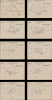
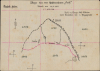
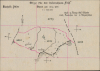
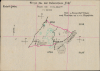
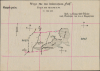
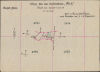
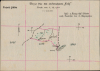
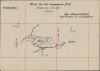
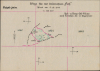
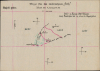
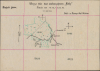
Skizze für das Unternehmen 'Fritz.'
Brutal 'Counterinsurgency' in the Collapsing Nazi Empire.
- Digital Map Information
- Suitable for large format printing
- Full resolution TIFF file
- ICC color profile embedded
- Delivered instantly via download link
Brutal 'Counterinsurgency' in the Collapsing Nazi Empire.
This is a unique set of ten World War II manuscript maps prepared in 1943 by the Nazi SS (Schutzstaffel) documenting 'Operation Fritz,' an anti-partisan sweep through occupied northeastern Belarus launched in late September of that year. By then, the war on the Eastern Front had turned decisively against the Germans. Behind the front lines, the Nazis' brutal occupation policies helped to motivate the formation of partisan groups, who battled with units of the SS and auxiliaries, some drawn from anti-Soviet collaborators in the Baltics and elsewhere. Their significance is as a chronological cartographic record of an operation that combined the pursuit of armed resistance with civilian killings, forced-labor deportations, and the destruction of rural settlements.A Closer Look
These ten maps successively document the situation of the 'Einheit: Adler' (Eagle Unit) during Operation 'Fritz' between September 24 and October 11, 1943. Set at a consistent scale of 1:100,000, each documents the location of 'Battalion and Company Command Posts' (Batl.-u.Komp.-Gef.-Stände) at the end of the period in question. A grid overlays the maps, with numbered squares, creating continuity between maps. It records villages (with their Polish names), waterways, marshlands, forests, roads, railways, and other features throughout. The geographic scope of the Eagle Unit's actions during the operation was quite wide, spanning from Druja (Druya) in the north, on the Daugava River, which forms the border of Latvia and Belarus, to as far south as Zaborze (Zabor'e), roughly halfway between the Latvian border and Minsk, roughly constituting between one-sixth and one-eighth of the territory of the postwar Belorussian SSR (now Belarus).Operation 'Fritz'
Operation Fritz (September 24 - October 10, 1943) was an anti-partisan effort launched in villages and forests around Hlybokaye (or Głębokie) and Pastavy (Postawy in German) in the Vitebsk region north of Minsk, in the northwestern part of Generalbezirk Weißruthenien (General District of White Ruthenia), that is, Belorussia. It was led by SS-Brigadeführer und Generalmajor der Polizei Curt von Gottberg, under the general command of Obergruppenführer Friedrich Jeckeln (both von Gottberg and Jeckeln were arrested as war criminals at the end of the war, with the former committing suicide while in British captivity and the latter being convicted in a Soviet tribunal in Riga and then executed). The operation used a combined force of Sicherheitsdienst (SD, or SS intelligence) personnel, police units, other auxiliaries (including an anti-aircraft unit), and SS troops organized as 'Kampfgruppe von Gottberg.' A recently formed battalion of Estonian collaborationist volunteers also took part, drawn from policemen and called Polizei Füsilier Bataillon 286.The operation's objectives were to suppress and liquidate local resistance fighters, Jewish survivors, and other designated 'undesirables,' including the double-turncoat Soviet military officer Vladimir Gil, also known as Vladimir Rodionov. Gil was a career Soviet officer holding the rank of captain in the Red Army's 229th Rifle Division when he was captured by the Germans in July 1941. Under the guidance of the SS, he established an anti-Soviet 'Russian National People's Party'. He formed the 1st Russian Waffen-SS 'Druzhina' Brigade from Soviet prisoners of war (some with latent White Russian sympathies), which engaged in behind-the-front-line activities typical of collaborationist units, mainly military police duties, pursuing and murdering Jews, and hunting partisans. When sent to fight Soviet-backed partisans in the Vitebsk region, the 'Druzhina' Brigade switched back to the Soviet side on August 16, 1943. It was renamed the 1st Anti-Fascist Partisan Brigade, and Gil was awarded the Order of the Red Star. Gil managed to escape during Operation 'Fritz' but died in May 1944 while fighting the Germans; he has become something of a legendary figure, with historians debating whether or not he was a secret agent planted by the NKVD as a faux collaborator.
Like other Nazi 'anti-partisan' (Bandenbekämpfung) campaigns on the Eastern Front, 'Fritz' resulted in the outright murder of hundreds of civilians, either those accused of helping partisans or Jews who had somehow hitherto managed to escape Nazi violence. By the time of the operation, most of the Jews killed in the Holocaust had already died, and soon after the operation the extermination camps within the General Government (occupied Poland) - Belzec, Sobibor, Treblinka, and Lublin-Majdanek - were wound down and focus shifted westwards to Auschwitz - Birkenau. In the twisted ideology of the Nazis, the drive to exterminate Jews and the war against partisans were one and the same battle. Operation 'Fritz' coincided with the final liquidation of the Minsk ghetto, one of many that was hastily closed and its inhabitants sent to extermination camps as the war turned decidedly against the Nazis.
Hlybokaye itself was a regional center for the enactment of the Holocaust and had a ghetto from October 1941 to August 1943 (much of the town's prewar population, perhaps a majority, was Jewish). Though most of the Jewish population of the surrounding area had already been killed by Einsatzgruppen units or sent to extermination camps, the remaining Jews in Hlybokaye were scheduled to be sent to Majdanek on August 19, 1943. When news of this leaked, a rebellion set off among the ghetto's remaining inhabitants. In response, the Germans bombed the city with incendiary munitions, setting much of it on fire.
The Nazis' assessments of 'Fritz' deemed it a success, carefully tabulating the numbers of 'partisans' killed, wounded, and captured. The fact that the number of partisans was far larger than the number of weapons retrieved reveals that many were, in fact, unarmed civilians. In total, between putative combat operations and later 'special treatment' (i.e., summary execution), more than 550 partisans were killed. In contrast, only 11 Germans and one foreign volunteer died in the operation, while 40 were wounded, further evidence that the operation primarily consisted of mass executions rather than pitched battles. Additionally, a 'work force' (i.e., slave laborers) totaling nearly 12,000 were also captured, along with thousands of livestock animals, reflecting the scorched earth tactics that left the area effectively depopulated in the aftermath of Operation 'Fritz.'
Wider Historical Context
By September 1943, after the catastrophic German defeat at Stalingrad and the collapse of the Kursk offensive, the strategic initiative on the Eastern Front shifted decisively to the Red Army, triggering heightened partisan activity throughout Axis-occupied regions. Faced with an increasingly hopeless military situation and severely disrupted supply corridors, the Nazi high command escalated anti-partisan warfare into systematic scorched-earth pacification coordinated by Heinrich Himmler and the SS. Operations across Belarus and western Russia abandoned any pretense of targeted counterinsurgency. Instead, combined Wehrmacht, SS, police, and local collaborationist forces encircled entire regions, burning hundreds of villages to the ground, looting all grain and livestock, and either executing the inhabitants or deporting them to the Reich as slave labor to deny the resistance any civilian base of support.This counterinsurgency doctrine was inextricably bound to the Holocaust, driven by the core Nazi ideological trope of 'Judeo-Bolshevism,' which treated Jews and partisans as synonymous threats. By 1943, as the prospect of total victory evaporated, anti-partisan operations functioned as both a cover and an instrument for completing the genocide in the occupied East. Sweeps through forests, marshes, and rural zones targeted Jewish escapees from liquidated ghettos who had joined partisan detachments or sought refuge in family camps. SS units notorious for their savagery routinely logged thousands of 'bandits' and 'partisan suspects' killed while recovering only a small handful of firearms, a stark discrepancy demonstrating that the vast majority of victims were defenseless civilians and fleeing Jews murdered under the banner of partisan suppression.
Publication History and Census
These manuscript maps were prepared during or just after Operation 'Fritz' in September - October 1943. They were most likely produced by the intelligence arm of the SS, the Sicherheitsdienst (SD). As manuscript maps, they are a unique set of documents tracing the brutal counterinsurgency and intertwined enactment of the Holocaust on the Eastern Front.Condition
Excellent. Ten manuscript maps drawn on tissue paper. Very light wear along original centerfold of each map.
References
Bundesarchiv R 70 Sowjetunion/14, Einsatzgruppen und Einsatzkommandos, 1943 : 'Der SS - und Polizeifihrer WeiBruthenien Minsk, den 15.9.1943.' Muñoz, A., Hitler's War Against the Partisans During the Kursk Offensive (London: Frontline Books /Pen and Sword) 2025, pp. 121-122. Kuklińska, Soraya, Oskar Dirlewanger. SS-Sonderkommando 'Dirlewanger', 2021, p. 486. Dallin, Alexander and Ralph S. Mavrogordato, 'Rodionov: A Case-Study in Wartime Redefection', American Slavic and East European Review, vol. 18, no. 1, February 1959, pp. 25 - 33. Nazi Conspiracy and Aggression, vol. II, chapter XV, section 5. United States Holocaust Memorial Museum, Holocaust Encyclopedia, 'Minsk'.