
1960 Martin Company Briefing for Contractors to Build Titan ICBM Base in South Dakota

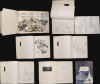
Preliminary Briefing Proposed Subcontracts for the Activation of Operational Bases T-2 Through T-5.
Birth of the Silo-based multistage Intercontinental Ballistic Missile.
$3,500.00
Choose a Collection:
This Item
Enquire
Birth of the Silo-based multistage Intercontinental Ballistic Missile.
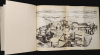
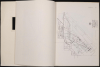
This 1960 briefing packet, here in its only known example, outlines the planning stages for the broad implementation of the Titan I (SM-68/HGM-25A), the United States' first multistage intercontinental ballistic missile (ICBM), operational from 1959 to 1962 as a backup to the Atlas ICBM and a Cold War deterrent to the Soviet Union. The packet includes an artistic rendering of what one of the silo sites would look like, along with maps and aerial views of the completed silo sites.A Closer Look
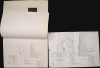
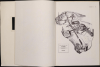
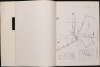
The 26-page briefing's highlights are maps, technical diagrams, and panoramic renderings of complete silo sites. It opens with an agenda, followed by a directory of contractor representatives, complete with each individual's security clearance level. From there, the booklet moves into a summary of the project's scope and a proposed timeline, charting the path from the initial planning meetings (for which this booklet was prepared) to the start of construction in September 1960.Visual materials play a key role throughout. A map of the project area between Sturgis and Hermosa, South Dakota highlights the general location of three planned sites. This is followed by a detailed map of Ellsworth Air Force Base, situated just outside Rapid City, along with a series of maps, technical diagrams, and panoramic renderings showing how the completed sites will appear. These illustrations include both above-ground structures and subterranean facilities, offering a comprehensive view of the planned development.
The booklet goes beyond construction logistics, addressing the human and community impact of the project. It includes summaries of local housing options, as well as information on schools, hospitals, and public safety services such as police and fire departments. Finally, it concludes with a discussion of local trade unions, paired with tables outlining projected salaries for contractors across various professions.
Titan I Missile
The HGM-25A Titan I Missile was an Intercontinental Ballistic Missile designed and built by the Martin Corporation and the Martin Marietta Corporation between 1959 and 1962. The Titan I was unique for its time as one of the first ICBMs to be deployed in hardened, underground silos - as illustrated here. In the early 1960s, 54 missiles were always deployed in silos, with one spare missile at each site. Two squadrons were located in Colorado, one in Idaho, one in Washington state, one in South Dakota, and one in California. The Titan I became obsolete with the advent of the Titan II and the Minuteman I missiles in 1963. Of the 101 Titan I missiles, 17 were test-launched, one was destroyed in an accident, 33 were distributed to museums and other locations as static displays, and the remaining 50 were scrapped.The Martin Company
The Martin Company was founded as the Glenn L. Martin Company on August 16, 1912, by aviation pioneer Glenn Luther Martin, and was based in Santa Ana, California. The company built military training aircraft. After a failed merger with the Wright Company in September 1916, Martin started a new Glenn L. Martin Company on September 10, 1917. This time, the company was based in Cleveland, Ohio. During World War I, Martin gained a U.S. Army contract for its MB-1 bomber, but the planes did not enter service until after the war. During the Interwar years, Martin built the SC-1, a Curtiss-designed scout bomber, before moving its factory to Middle River, Maryland. In the 1930s, Martin built flying boats for the Navy as well as the Martin B-10 bomber for the Army. Martin also constructed the China Clipper flying boats used by Pan American Airways to operate their trans-Pacific route between San Francisco and the Philippines. Martin designed the B-26 Marauder and the A-22 Maryland bombers, the PBM Mariner, and the JRM Mars flying boats during World War II. Martin operated a bomber plant at Offutt Field, Nebraska, where it built 1,585 B-26s and 531 Silverplate B-29s, including the Enola Gay and Bockscar, the aircraft that dropped the atomic bombs on Hiroshima and Nagasaki.The company's name officially changed to The Martin Company in 1957. After World War II, Martin had little success in military aviation, producing the B-57 Canberra and two successful seaplane designs. It also produced two passenger airliners. Martin also moved into aerospace manufacturing. It designed and manufactured both the Titan I, Titan II, and Titan III ICBMs. NASA used rockets in the Titan III series to launch both Voyager probes, both Viking Project probes to Mars, and both Helios probes to the Sun. The Martin Company merged with the American-Marietta Corporation in 1961 to form the Martin Marietta Corporation. The Lockheed Corporation acquired Martin Marietta in 1995 and formed the Lockheed Martin Corporation.
Publication History and Census
This briefing book was created for a presentation to leading subcontractors of the Martin Company at the Continental Hotel in Denver, Colorado, on July 22, 1960. This is the only known surviving example.Condition
Excellent. 26-page booklet bound with brads. Includes 2 aerial photographs, 1 fold out diagram of a Titan missile base, and a loose map of the proposed facility. Fold out measures 11x16.25 inches.