
1781 Carre Manuscript Map of the Bois de la Grande Cahume, Côte-d'Or, France

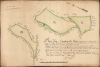
Bois de la Grande Chaume / Plan dés Cantons de Bois...
The Great Forge of Buffon.
$500.00
Choose a Collection:
- Digital Map Information
- Suitable for large format printing
- Full resolution TIFF file
- ICC color profile embedded
- Delivered instantly via download link
This Item
Enquire
The Great Forge of Buffon.
This is a 1781 manuscript plat map of lands in the Bois de Grande Chaume, belonging to the important French naturalist Comte de Buffon, prepared by a royal surveyor surnamed Carre. These lands were particularly significant for their connection to the Grande Forge de Buffon, where Buffon conducted important metallurgical experiments.A Closer Look
The Bois de Grande Chaume is located in Côte-d'Or, some 45 miles northwest of Dijon. This map, oriented with northeast at the top, traces roads, forests, and fields belonging to the Comte de Buffon in the modern-day communes of Montbard, Saint-Rémy, and Arrans. The roads and lands surrounding those highlighted here are labeled, while the main focus (the lands shaded green) is described in more detail below. The text reads:Map of the Wood Sections belonging to Monsieur the Count of Buffon, operated by Mr. Delauberdiere [de Lauberdières], Master of the forges and furnaces of the County of Buffon, for the harvest of the current year called [feuniot/ feniot? Likely a reference to a summer wood harvest].
Figure A, being part of the grande chaume [large stubble/ fallow field], contains forty-eight arpents forty-three perches. Part B, being part of the grand allier, containing three and a half arpents. C, being part of the fontaine pierre sot, contains twenty-two arpents. D, the 'grain d'orge' [barley grain] copse, contains twenty-four and a quarter arpents.
Which makes in total ninety-eight arpents [and] eighteen perches. Measured and surveyed by the undersigned, King's Surveyor residing in Montbard, on August seventeenth and following days, 1781. [signed 'Carre']
The Comte de Buffon
Georges-Louis Leclerc, Comte de Buffon (1707 - 1788) was an important French Enlightenment thinker whose work transformed the study of the natural world. As the director of the Jardin du Roi in Paris, he dedicated his life to creating the monumental Histoire naturelle, a 44-volume encyclopedia that aimed to document every known aspect of nature. Unlike his contemporary Carl Linnaeus, who focused on rigid classification, Buffon argued for a more holistic approach, studying organisms in relation to their environments and history. His observations led to the first principle of biogeography, known as Buffon's Law, which notes that different regions with similar environments often harbor distinct species. Although he did not fully embrace the modern theory of evolution, his suggestion that species could 'degenerate' or change over time made him a vital precursor to scientists like Jean-Baptiste Lamarck and Charles Darwin.Beyond his biological work, Buffon was a significant industrialist and a pioneering cosmologist. In his home region of Burgundy, he established the Grande Forge de Buffon, one of the most advanced metallurgical centers of the 18th century, and referred to here. He used his industrial facilities to conduct experiments heating iron spheres and measuring their cooling rates to estimate the age of the Earth. These experiments led him to propose that the Earth was tens of thousands of years old - far older than the 6,000 years suggested by biblical chronologies at the time. By grounding his theories in physical laws and industrial observation rather than theology, Buffon helped establish natural history as a rigorous, autonomous science.
Despite its scientific significance and success, the forge and these lands, which Buffon had inherited from his mother, were in dire straits. Chesneau de Lauberdières, referred to in the text, had mismanaged the enterprise, plundered the surrounding forests, and fled with the funds set aside for the forge in 1785. Buffon had to personally intervene and take over management of the forge, despite his advanced age. In 1791, Buffon's heirs sold the forge, but it continued to be used for iron production for decades afterwards until a major flood in 1866.
Publication History and Census
This manuscript map was prepared by the royal surveyor Carre on August 17, 1781. The text on the verso suggests that this map was part of a larger work, perhaps a plat book documenting various holdings of the Comte de Buffon. In any event, as a manuscript map, it is an entirely unique work.Condition
Very good. Manuscript. Light wear along original centerfold. Light edge wear. Slight loss just above the scale.