
1945 Psychological Warfare Branch Propaganda Leaflet, Eve of Battle of Okinawa

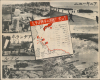
太平戰爭の進展!次は? / [The Progression of the Pacific War! What's Next?]. / 31-J-1.
Defeat is inevitable; resistance is futile.
- Digital Map Information
- Suitable for large format printing
- Full resolution TIFF file
- ICC color profile embedded
- Delivered instantly via download link
Defeat is inevitable; resistance is futile.
A 1945 American airdrop propaganda leaflet and map produced by the U.S. Army's Psychological Warfare Branch in the final months of World War II (1939 - 1945). Issued on the eve of the Battle of Okinawa, it transforms the relentless Allied advance across the Pacific into a stark psychological weapon, tracing the island-hopping campaign ever closer to the Japanese home islands. Combining cartography, battlefield photography, and carefully calculated messaging, the leaflet delivers an unmistakable warning to its Japanese audience: defeat is inevitable, and further resistance is futile.A Closer Look
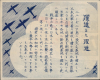
The recto consists of a map set at a diagonal with the title 'The Progression of the Pacific War! What's Next?' The map itself answers this rhetorical question, strongly suggesting that Japan itself was in the crosshairs. The Battle of Okinawa followed April 1, taking three months to complete, at the cost of some 12,500 Allied lives along with nearly 100,000 Japanese personnel and tens of thousands of civilians' lives. A dashed line shows the progress of the Allies' 'Island Hopping' campaign, while a list on the right records Allied victories since July 1943, including battles in the Southwestern Pacific and the Philippines, culminating in the destructive Battle of Manila in February 1945. Photographs in the background include (clockwise from top-right) scenes from the battles of New Guinea (ニューギニア), Morotai (モロタイ), Leyte (レイテ), Luzon (ルソン), Hollandia (ホランヂア), and New Guinea again.The text on the verso, titled 'One Leap After Another', reinforces the point of the recto, mentioning Allied victories on New Guinea and Manila, the establishment of bases closer to the Japanese home islands, and the destruction wrought by B-29 bombers. The text mentions the capture of Iwo Jima, but the leaflet may have been produced in the battle's closing stages, anticipating this final result. The text ends with the line 'No matter how hard you strive, it is no longer possible to change the overall outcome of the war'.
Psychological Warfare in the Pacific War
Although psychological warfare is as old as warfare itself, it became formalized in World War II. It was employed on a mass scale, aided by advances in printing technology and aviation, allowing for thousands of leaflets to be dropped behind enemy lines. U.S. Army officer Bonner Fellers was a major figure in this development, leading the Psychological Warfare Branch (PWB) in the Pacific Theater. Fellers had served in the Philippines before the war and had authored a paper on 'The Psychology of the Japanese Soldier', which became influential after the Pearl Harbor attack.Although the PWB engaged in a wide array of psychological warfare operations, including sabotage and diversion or confusion tactics, they were primarily focused on convincing Japanese soldiers to surrender. Fellers determined that the most effective tactic was to focus on Japan's suffering and blame a clique of militarists rather than the emperor for the country's predicament. This approach presaged Fellers' actions during the U.S. occupation of Japan, where he coordinated among top-level defendants of the Tokyo Tribunals to whitewash Emperor Hirohito's involvement in war crimes.
Publication History and Census
This leaflet was produced by the U.S. Army's Psychological Warfare Branch, most likely in March 1945, after the Battle of Manila but before the Battle of Okinawa, and seemingly near the end or just after the Battle of Iwo Jima. It is recorded according to the Branch's internal cataloging system as 31-J-1. The recto map image was reused for leaflet 136-J-1 (previously sold by us, Lifeline-psywarfarebranch-1944). We have been able to locate only two institutional examples of the present leaflet, held in a Japanese ephemera collection at Texas Tech University and in a Psychological Warfare Branch Scrapbook of American Propaganda Leaflets at Pacific University.Cartographer
Psychological Warfare Branch (1944 – 1945) was a psychological warfare unit within the U.S. Army that operated in the closing months of the Pacific War against Japan. Similar to the Psychological Warfare Division in the European Theater, the PWB mostly produced leaflets to be dropped in large numbers from airplanes that were meant to demoralize the enemy, encouraging them to surrender, and to provide information on Allied victories to civilians. These efforts were influential on the development of psyops in the early Cold War, including their widespread employment during the Korean War. Further Details...
Condition
Very good. Light wear along original fold lines.
References
OCLC 1593911476. Pacific University, Psychological Warfare Branch Scrapbook of American Propaganda Leaflets (MS.70), PUA_MS70_049.