
1944 Mansucript Map of Mayfair and Soho (Nightlife during the Blitz)

This item has been sold.
[Mayfair / Soho, London]
Unique record of Mayfair WWII nightlife at the height of the Blitz.
Choose a Collection:
- Digital Map Information
- Suitable for large format printing
- Full resolution TIFF file
- ICC color profile embedded
- Delivered instantly via download link
This Item
Enquire
Unique record of Mayfair WWII nightlife at the height of the Blitz.
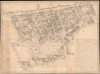
An extraordinary artifact of wartime London, this unique 1941 manuscript map captures the theaters, nightclubs, restaurants, hotels, pubs, illicit establishments, and air-raid shelters of Mayfair, Soho, and the West End at the height of the Blitz. It documents London balanced precariously between pleasure and destruction: orchestras played, couples danced, and fashionable clubs welcomed servicemen, aristocrats, refugees, actors, diplomats, and intelligence officers even as blackout curtains smothered windows and German bombs fell overhead. Its remarkable annotations offer an intimate, street-level portrait of London nightlife under siege.A Closer Look
Centered on Mayfair, coverage embraces London's West End, extending from Oxford Street/High Holborn to Victoria Street and from Grosvenor Place to Chancery Lane, including parts of adjacent Soho and Westminster. The map covers key sites, including Buckingham Palace, Trafalgar Square, Leicester Square, St. James's Park, Green Park, and the Palace Gardens.Throughout, the map meticulously details London's vigorous wartime nightlife, documenting every club, hotel, pub, and theater, as well as places of healing (Genito-urinary Diseases, Dean Street) and others of ill repute. There is even what appears to be a Japanese restaurant (Miyako, Manette St.), but we note that the Nippon Club (Cavendish Place) is not named - it closed in December 1941 when Imperial Japan bombed Pearl Harbor. We can find no trace of Miyako in the public record. Gatti's Restaurant (Charing Cross) is named with an additional note reading 'derelict'; it closed in 1939. Across the way, the Grand Grill is highlighted, likely due to its large underground ballroom, an excellent bomb shelter if needed.
Highlighted Places of Shelter
Between the Strand and Victoria Embankment, there are several interesting highlights, including underground tunnels highlighted in red. Lower Robert Street and Lower Adam Street formed part of the remarkable subterranean infrastructure beneath the Adelphi, the monumental riverside development designed by Robert, John, James, and William Adam between 1768 and 1774. During World War II, the Adelphi vaults acquired a more practical importance. Their thick masonry and protected position made portions suitable for conversion into air-raid shelters. E. M. Delafield's semi-autobiographical The Provincial Lady in Wartime describes its protagonist working in a shelter canteen beneath the Adelphi during the early months of the war, evoking a subterranean community of wardens, volunteers, office workers, and displaced civilians.Mayfair and Soho During WWII
In 1941, at the height of the Blitz, Mayfair and the adjoining West End remained the improbable center of London nightlife. Although Mayfair was not formally the only district where evening entertainment was permitted, it formed part of the specially regulated central London entertainment zone, where restaurants, hotels, theaters, cinemas, and private clubs continued to operate. Establishments such as the Embassy, the Astor, the Milroy, and the May Fair Hotel attracted aristocrats, politicians, actors, war correspondents, intelligence personnel, wealthy refugees, and British and Commonwealth servicemen on leave. Les Ambassadeurs opened on Hanover Square that year, adding another fashionable address to a nightlife culture sustained as much by wartime urgency as by luxury.The pleasures of Mayfair in 1941 unfolded against rationing, separation, and the expectation of death. Uniforms largely replaced evening dress, but orchestras continued to play, couples danced, and champagne and whisky circulated - sometimes legitimately, sometimes through the black market. Private 'bottle parties' circumvented ordinary licensing hours by allowing patrons to reserve or ostensibly provide their own alcohol, while Mayfair's grand hotels served meals almost unimaginable to Londoners living under stricter austerity. Leave was brief and futures uncertain, lending farewell dinners, hurried romances, gambling, and dancing an atmosphere of feverish immediacy. American servicemen were not yet present in the great numbers seen after the United States entered the war in December 1941, so the clientele remained predominantly British, Commonwealth, European, and diplomatic.
The blackout made every excursion difficult and dangerous. Illuminated signs and street lamps disappeared behind paint, shades, and heavy curtains, while restaurant and club entrances were screened to prevent even a narrow beam of light from escaping. Patrons navigated nearly invisible streets obstructed by sandbags, rubble, bomb craters, and emergency vehicles. Taxis were scarce, public transportation became unreliable during raids, and central London venues faced early closing restrictions intended to reduce traffic and prevent crowds from gathering during air attacks. Many restaurants advanced dinner service and theaters scheduled earlier performances so audiences could return home before conditions deteriorated.
Nevertheless, Mayfair continued to dine and dance through the raids, sometimes literally underground. The May Fair Hotel transferred music and dancing to its subterranean ballroom, which offered the reassuring appearance of an air-raid shelter. That confidence was shaken on March 8, 1941, when a bomb penetrated the nearby Café de Paris on Coventry Street, killing dozens in its basement nightclub and demonstrating that no fashionable refuge was truly safe. Mayfair's persistence was therefore neither simple frivolity nor immunity from war: it was a conscious assertion of morale, a refusal to let the blackout extinguish metropolitan life.
Publication History and Census
This is a unique manuscript without any authorial inscription. We have dated it based on the content - several of the clubs here listed were destroyed or made inoperable during the Blitz, including Fly Fishers Club (Swallows Street), Arlington and Vermeer Gallery (Old Bond Street), and Piccadilly Arcade. At the same time, we do not see the popular Les Ambassadeurs, which opened on Hanover Square later in that year. We are also offering a similar map, by the same hand, of Pimlico (PimlicoLondon-wwii-1939).Condition
Good. Manuscript. Some soiling. Overall toning. Pencil makrs. Ink corrections. Map was crudely dissected into panels for no apparent reason. We rejoined the panels and had it laid down on linen.