
1972 Associated Press Wirephoto Map, Vietnam War

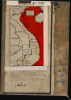
[On verso] Map Locates Thanh Hoa...
Repulsing North Vietnam's 'Easter Offensive'.
$350.00
Choose a Collection:
This Item
Enquire
Repulsing North Vietnam's 'Easter Offensive'.
This is a 1972 Associated Press wirephoto map of Vietnam, demonstrating developments in the Vietnam War, which at this point had seen U.S. ground forces withdraw while U.S. air and logistical support for South Vietnam remained robust. The events discussed both relate to the 1972 Easter Offensive by North Vietnam, which was ultimately repulsed with massive U.S. air support.A Closer Look
The map depicts Vietnam in 1972, when the country was locked in a bitter civil war between North Vietnam and South Vietnam, the former heavily backed by the Soviet Union and the latter supported even more so by the U.S. At this time, U.S. ground forces were being withdrawn due to the unpopularity of the war, but U.S. air, logistical, and training support increased as part of President Nixon's 'Vietnamization' strategy. The events highlighted here, the bombing of Thanh Hóa and the Battle of An Lộc, occurred within the context of North Vietnam's failed 1972 invasion of the South, commonly known as the 'Easter Offensive.'Operation Linebacker
Launched in response to the North Vietnamese invasion, Operation Linebacker marked a seismic shift in the Vietnam War. After years of the restricted 'Rolling Thunder' campaign, President Nixon removed many of the 'no-go' zones, allowing the U.S. Air Force and Navy to hit high-value targets in North Vietnam with unprecedented intensity. At the center of this campaign was a single, stubborn target, the Thanh Hóa Bridge (nicknamed the 'Dragon's Jaw'), a vital transportation crossing that the U.S. had tried to destroy repeatedly in the preceding years. The inability of the U.S. to destroy the bridge despite losing multiple planes in the process made the bridge into a widespread symbol of defiance for the North Vietnamese. However, a large U.S. bombing raid as part of Operation Linebacker in late April 1972 finally succeeded in heavily damaging the bridge (thanks to the use of new laser-guided munitions), and a second raid was ordered in October for good measure, permanently knocking the bridge out of commission. Aside from its importance for the Vietnam War, the successful deployment of laser-guided munitions against the bridge proved their usefulness to U.S. military planners, who invested heavily in them in the following years.The Battle of An Lộc
The Easter Offensive consisted of three prongs of attack, one of which required North Vietnamese Army (PAVN) forces to capture An Lộc, a provincial capital strategically located on a highway which offered a clear path to Saigon, just 60 miles to the south. The PAVN was able to move supplies through Cambodia, the border of which was barely 10 miles away from An Lộc, to minimize U.S. air attacks. The battle that followed was one of the most intense and brutal sieges of the Vietnam War, serving as a critical test for the policy of 'Vietnamization.' For sixty-six days, approximately 6,350 South Vietnamese (ARVN) defenders (later reinforced) were surrounded by nearly 35,000 PAVN and Viet Cong troops. While American ground troops had largely withdrawn, U.S. air support was decisive. B-52 Stratofortresses flew 'Arc Light' missions, dropping massive payloads that broke up NVA tank and infantry assaults often just hundreds of yards from the ARVN lines. The battle resulted in heavy losses on both sides, and An Lộc was almost entirely leveled, but the ARVN's ability to hold the city prevented a collapse of the South Vietnamese government in 1972 and stalled the North's push toward Saigon for another three years.Publication History and Census
This wirephoto map and descriptive text were prepared by the Associated Press; They are undated, but the verso includes a stamp dated April 22, 1972. This is the only known example.Condition
Good. Overlay slightly adhered but is moveable. News clipping attached to verso.