
1945 Psychological Warfare Branch Propaganda Leaflet, Battle of Saipan

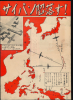
サイパン陷落す!/ [Saipan Falls!].
- Digital Map Information
- Suitable for large format printing
- Full resolution TIFF file
- ICC color profile embedded
- Delivered instantly via download link
A Closer Look
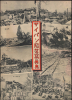
The recto includes a map of far eastern Asia, highlighting Saipan and recording the distances by air to the Philippines, Taiwan, and Tokyo. A table at the bottom right lists Japanese bases occupied by the Allies since the start of the year, from Cape Gloucester (グロスター岬) in New Britain in January to Saipan (サイパン島) in July. An image of a B-29 Superfortress at the top left is accompanied by a caption discussing its earliest use against the Japanese home islands from June 15, 1944, and reminding the reader that the bombers could reach Tokyo from Saipan in five and a half hours. The verso, titled 'True Collection of Photos of the Fall of Saipan', contains photographs of destroyed Japanese military equipment and factories, the comparably good state of Allied troops, and captured Japanese troops enjoying a meal.The Fall of Saipan
The capture of Saipan in July 1944 served as one of the main strategic turning points of the Pacific War, breaching Imperial Japan's inner defense perimeter and bringing the home islands within direct striking distance of American airpower. Beforehand, the United States Army Air Forces (USAAF) relied on staging Boeing B-29 Superfortress strikes from bases in China, a logistically nightmarish effort; Saipan eliminated this bottleneck. Located roughly 1,500 miles south of Tokyo, the island offered long enough airstrips and accessible deep-water shipping lanes to supply large-scale air operations. As a result, Japan's primary industrial centers, manufacturing plants, and urban heartlands came within the combat radius of unescorted B-29 mass bombing formations for the first time. The establishment of B-29 operations on Saipan and neighboring Tinian and Guam fundamentally transformed the air campaign, shifting USAAF strategy from sporadic harassment to relentless, systematic destruction.Quickly running through industrial, logistics, and infrastructural targets, the 21st Bomber Command under General Curtis LeMay soon adapted these bases for low-altitude incendiary firebombing raids, culminating in devastating strikes on Tokyo and key cities. Politically, the fall of Saipan shattered the military regime's promises of security, forcing the immediate resignation of Prime Minister Hideki Tojo on July 22, 1944, and signaling to Japanese leadership that ultimate defeat was inevitable. Nevertheless, even as B-29s effectively ran out of targets to bomb and the Japanese population starved, the Japanese government continued to resist surrender ultimatums until the deployment of the terrifyingly powerful atomic bombs on Hiroshima and Nagasaki in early August 1945.
Psychological Warfare in the Pacific War
Although forms of psychological warfare are as old as warfare itself, in the Second World War it became formalized and was employed on a mass scale, aided by advances in printing technology and aviation, allowing for massive amounts of leaflets to be dropped behind enemy lines. U.S. Army officer Bonner Fellers was a major figure in this development, leading the Psychological Warfare Branch (PWB) in the Pacific Theater. Fellers had served in the Philippines before the war and had authored a paper on 'The Psychology of the Japanese Soldier', which became influential after the Pearl Harbor attack.Although the PWB engaged in a wide array of psychological warfare operations, including sabotage and diversion or confusion tactics, they were primarily focused on convincing Japanese soldiers to surrender. Fellers determined that the most effective tactic was to focus on Japan's suffering and blame a clique of militarists rather than the emperor for the country's predicament. This approach presaged Fellers' actions during the U.S. occupation of Japan, where he coordinated among top-level defendants of the Tokyo Tribunals to whitewash Emperor Hirohito's involvement in war crimes.
Publication History and Census
This leaflet was prepared by the Psychological Warfare Branch, most likely in mid-July 1944. It lacks the notation often, but not always, found on similar leaflets (usually a 2-3 digit identifying number, followed by a dash and 'J' to indicate Japanese language, and another dash with a number, generally 1, presumably for the edition of that particular leaflet). We have only found one example of this leaflet in institutional collections, at the National Museum of Japanese History.Cartographer
Psychological Warfare Branch (1944 – 1945) was a psychological warfare unit within the U.S. Army that operated in the closing months of the Pacific War against Japan. Similar to the Psychological Warfare Division in the European Theater, the PWB mostly produced leaflets to be dropped in large numbers from airplanes that were meant to demoralize the enemy, encouraging them to surrender, and to provide information on Allied victories to civilians. These efforts were influential on the development of psyops in the early Cold War, including their widespread employment during the Korean War. Further Details...
Condition
Very good. Light soiling. Light wear along original fold lines.
References
National Museum of Japanese History, H-762-65.