
1957 Al-Bourini Map of Trucial States (Abu Dhabi, Dubai, and Related Emirates)

This item has been sold.
ساحل عمان [Coast of Oman]. / الإمارات السبع على الساحل الأخضر [The Seven Emirates on the Green Coast].
Rare Peek into Daily Life in the Emirates during the 1950s.
Rare Peek into Daily Life in the Emirates during the 1950s.
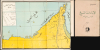
This is a 1957 map of the Trucial States, the future United Arab Emirates, that appeared in the book The Seven Emirates on the Green Coast, written by Ahmad Qasim Al-Burini. Al-Burini's account is one of the most detailed historical accounts of the emirates in this formative period.A Closer Look
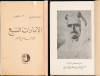
The map covers the Trucial States (future United Arab Emirates) and the adjoining portion of Oman. Political boundaries, which, it is noted, are approximate due to ongoing territorial disputes and uncertainties, are traced between the various emirates. The Gulf is labeled as the 'Arabian Gulf' (الخليج العربي) rather than the Persian Gulf, as is standard on maps produced in Arab countries. A small legend at the top left also explains the symbols and lines used for hills, wells, and wadis (valleys with seasonal waterways). An inset map below the title and legend presents a regional map of the Arabian Peninsula, with a shaded portion reflecting the area covered by the main map. The map obliquely refers to an ongoing civil war in Oman by shading the interior of the country differently from the coastal Sultanate of Muscat.Al-Burini's The Seven Emirates on the Green Coast was a landmark in documenting the history of the Trucial States / Emirates in these years. A sharp commentator, Al-Burini provided an unvarnished take on the state of society, politics, and culture in the emirates. The book is also characterized by a strong sense of empathy and humanity, recounting festivities, local customs, and quotidian interactions with local people. The book also contains multiple photographs, making it a rare and detailed contemporary account of the region from the bottom up. However, Al-Burini also rubbed elbows with the leaders of the emirates, including Sheikh Saqr bin Sultan Al Qasimi (ruler of Sharjah from 1951 to 1965), a fervent pan-Arabist and reformer, whose portrait appears opposite the book's title page.
Historical Context
The 1950s were a transformational decade for the emirates of the Trucial States, which would later form the United Arab Emirates. Oil discoveries elsewhere in the Gulf region prompted early efforts at oil exploration, which paid off when both onshore and offshore deposits were discovered in Abu Dhabi in 1958. But even before oil wealth supercharged modernization efforts, the governments of the emirates had begun efforts to reshape society, influenced by several outside forces, from British technology and culture to pan-Arab nationalism. Traditional culture still predominated, defined by long-established industries like pearling (which suffered badly in the mid-20th century) and date farming, narrow-alleyed cities and towns, and education in madrassas, if at all. But the emirates and the wider Gulf region were on the precipice of great political, social, and economic changes that would become apparent in the following decades.Publication History and Census
This map is unattributed but appeared in Ahmad Qasim Al-Burini's 1957 bookThe Seven Emirates on the Green Coast, published by the House of Wisdom (دار الحكمة), which may be the publisher of that name founded in 1945 by the Iraqi Communist Party and mostly issuing translations of Marxist classics and Soviet works. This is the first edition of the book, with a second edition published after Al-Burini's death in 2025. Due to some inconsistencies in cataloging, the book appears in four separate OCLC listings, held altogether by some fifteen institutions, mostly in the Arab World. In North America, it is held by Stanford University, the University of Washington, the Library of Congress, Harvard University, and McGill University.Cartographer
Ahmad Qasim Al-Bourini (أحمد قاسم البوريني; c. 1930 - February 9, 2025) was a Kuwaiti educator active in the United Arab Emirates in the 1950s. In 1953, the Emirate of Kuwait, then a British protectorate, sent an educational mission to the city of Sharjah in the Emirate of Sharjah to encourage mutual modernization and exchange. Al-Bourini spent several years in Sharjah teaching Arabic at the al-Qasimiyah School (المدرسة القاسمية , now a museum) and traveling throughout the Trucial States (the future United Arab Emirates). He also helped to establish the modern educational system in Sharjah and the other emirates of the Trucial States. A keen observer, he documented his travels, interactions, and impressions in the 1957 book The Seven Emirates on the Green Coast (الإمارات السبع على الساحل الأخضر), which is among the most detailed documents on daily life in the emirates in this transformational period, when new ambitions drove initial modernization efforts but society still remained overwhelmingly traditional. In 1957, al-Bourini emigrated to Germany to work at a radio station and remained there until his death in 2025. The same year as his death, The Seven Emirates on the Green Coast was republished by the Emirati firm Bumelha Publishing. Further Details...
Condition
Good. Some splits along folds and inexpert tape repairs to verso. Book (quatro) in good condition with some wear to covers, occasional annotations in pencil and blue crayon. Book measures 8.5 x 6 in.
References
OCLC 1314893483, 784458008, et al.