
1945 Army Newsmap of Japan and China - Atomic Bomb Issue! (signed by Tibbets)

NEWSMAP For the Armed Forces. V-E Day + 15 Weeks - 192nd Week of U.S. Participation in the War.
Signed by Paul Tibbets - the Pilot of the Enola Gay, the B-29 that Dropped the Atomic Bomb on Hiroshima.
- Digital Map Information
- Suitable for large format printing
- Full resolution TIFF file
- ICC color profile embedded
- Delivered instantly via download link
Signed by Paul Tibbets - the Pilot of the Enola Gay, the B-29 that Dropped the Atomic Bomb on Hiroshima.
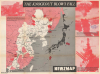
This is the chilling Atomic Bomb issue from the iconic World War II Newsmap series. It was issued in 1945, days after the bombing of Hiroshima and Nagasaki, and one week before the Japanese announced their surrender to the Allies to end the Pacific War and World War II (1939 - 1945). The present example is signed by Paul Tibbets, the pilot of the Enola Gay, the B-29 that dropped the atomic bomb codenamed 'Little Boy' on Hiroshima, Japan, on August 6, 1945.Understanding the Map
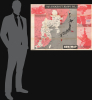
Coverage embraces from central China and Mongolia to Japan and from the Soviet Union to Taiwan (Formosa) and Hong Kong. Red areas highlight the regions controlled by the Chinese nationalists led by Chiang Kai-shek and the Soviet Union, with white areas illustrating Japan's ever-dwindling empire. Thick red arrows illustrate the directions of advance by the Chinese south of Hankow (Hankou), the Soviet Red Army in Manchuria and Karafuto, and the U.S. Navy in the western Pacific near Japan itself. A photograph in the upper left corner presents Soviet troops in combat against the Japanese, on whom the Soviets declared war on August 8.Mushroom Cloud: The Bombing of Hiroshima and Nagaskai
The photograph in the upper right corner has since become iconic and almost immediately recognizable as the mushroom cloud rising above Hiroshima following the atomic bombing of that city by the U.S. on August 6, 1945. The bottom photograph presents the deck guns of an American warship, although it is unclear which one; it is likely a cruiser.Paul W. Tibbets Jr.
Paul Warfield Tibbets Jr. (February 23, 1915 - November 1, 2007) was an American pilot and retired U.S. Air Force brigadier general best known for piloting the B-29 Enola Gay on the mission that dropped the atomic bomb on Hiroshima, Japan. Tibbets was born in Quincy, Illinois, and moved with his family to Iowa, Florida, and back to Illinois before finishing high school. After attending both the University of Florida and the University of Cincinnati, Tibbets enlisted in the U.S. Army in 1937 and joined the U.S. Army Air Corps to become a pilot. When the Japanese bombed Pearl Harbor on December 7, 1941, Tibbets was on a routine training flight in a B-17 Flying Fortress and heard the news over the radio. He and the 3rd Bombardment Group organized anti-submarine patrols off the Georgia Atlantic coast soon after. In February 1942, he was transferred to the 29th Bombardment Group and was with the Group when it was assigned to England as the first Bombardment Group deployed to Europe. Tibbets was the co-pilot on the first American daylight heavy bomber mission on August 17, 1942, and on October 9, 1942, Tibbets led the first American raid of over 100 bombers in Europe. The historical record is unclear about how many bombing missions Tibbets flew over Europe. Some sources say 14, while others say 25.Tibbets quickly earned a reputation as the most capable pilot in Europe and was assigned the mission of flying Major General Mark W. Clark to Gibraltar in the lead-up to the Operation Torch landings, and flew General Dwight D. Eisenhower to Gibraltar on the night of the invasion. After the invasion, Tibbets flew missions in North Africa until he was reassigned to the United States in 1943 to help develop the B-29 Superfortress. In September 1944, Tibbets was put in command of the 509th Composite Group, the unit that was given the task of dropping the atomic bombs on Hiroshima and Nagasaki. Tibbets and the rest of the 509th transferred to Tinian, in the Marianas Islands, in April and May 1945. Tibbets flew the Enola Gay (which he had named after his mother) on the fateful mission to drop the atomic bomb on Hiroshima from Tinian on August 6, 1945. He publicly supported and defended the mission for the rest of his life.
Publication History and Census
This map was created by the Army Information Branch and published on August 20, 1945. Ten examples are cataloged in OCLC and are part of the collections at Denison University, Ohio Wesleyan University, Davidson College, the Library of Michigan, the University of Wisconsin-Madison, Southern Illinois University at Edwardsville, the University of Missouri - Columbia, Wichita State University, the Denver Public Library, and Texas A and M University.Source
Army Information Branch, NEWSMAP. Monday, 20 August, 1945. Week of 7 August to 14 August. Volume IV No. 18F.
Newsmaps were published weekly between April 1942 and March 1946. Their content usually featured world maps, short summaries of the week’s military action, and photographs of troops and materiel. Early Newsmaps were printed on one side only, but, later in the war, they were printed on both sides, with the reverse bearing large-format maps, photographs, or other visual information. Several different versions of Newsmaps were produced: a large domestic version, a smaller overseas version, and an industrial version, which included more information about war production efforts. Two other editions appear in the United States Government Publications Monthly Catalogs, a 'Newsmap Special Edition' and a 'Newsmap Special Supplement for Special Training Units'.
Per the National Archives and Records Administration, ‘NEWSMAPS were not issued for general distribution. The posters were distributed to military installations, government and civilian groups working on War Department projects, and certain depository libraries, as designate by Congress, and one copy to Congressmen, if requested.’ The importance of the Newsmaps to the Army is related in the 1944 Basic Field Manual for The Special Service Company. The Manual states that as soon as the company reaches its destination ‘the company commander should contact the Special Service Branch in theater of operations headquarters, for copies of the weekly Newsmap.’ Also per the Manual
The librarian should check the weekly Newsmap as soon as it is made available and should post it in a conspicuous place. He should take steps to see that the place where the Newsmap is posted is made known to all troops of the area in which the company or platoon is operating. This can be done effectively through notices in soldier newspapers, verbal announcements by those directly in charge of troops, and by posting announcements on bulletin boards.
Condition
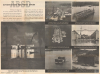
Good. Wear along original fold lines. Vero repairs to fold separations and at fold intersections. Slight loss at some fold intersections. Closed margin tears professionally repaired on verso. Closed tear extending 2 inches into left margin in lower left corner not effecting printed image professionally repaired on verso. Closed tear extending 1 inch within printed area to the left of Khabarovsk professionally repaired on verso. Text and printed images on verso. Bears a collection stamp from the State Library of Massachusetts.
References
OCLC 48030780.