
Rigby, Robert M. (sold)
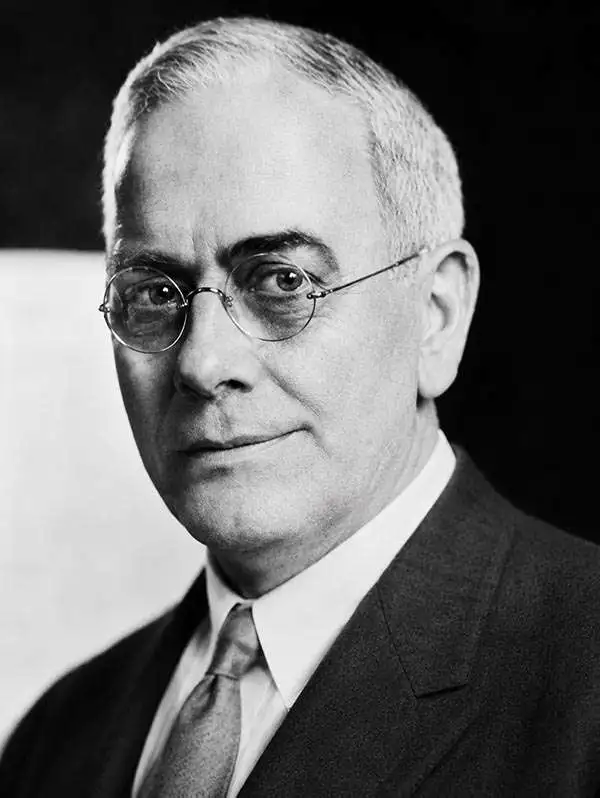
Robert M. Rigby, Jr. (November 11, 1858 - February 13, 1932) was a printer and founder of the Rigby Printing Co., based in Kansas City, Missouri. Rigby was born in Chicago to parents from England, his father being a prominent manufacturer of machines used in public works, and came to Kansas City in 1879. He began working for the bookbinder Ramsey, Millet, and Hudson, staying there until 1882. After a brief stint in Chicago, Riby returned to Kansas City, believing it offered more opportunities than his hometown. In 1884, he founded the Rigby Printing and Stationary Company, which was later supported by John H. Ramsey of the firm that had originally employed him as a bookbinder. Rigby found considerable success in business, employing between 80 and 110 people in a large printing plant in Kansas City. It was known as the printer of the Bell Telephone Directory for Kansas City towards the end of the century, among other works. He married Helen Curtis in 1880 and with her had four children, but Helen died in 1891 and Rigby remarried Lizzie Curry in 1893 and had two additional children. Rigby was known to have multiple business interests outside of the printing world and was also an avid equestrian, owning multiple horses. Among its considerable output, the Rigby Printing Co. was notable for publishing African-American literature in the early 20th century, namely Otis M. Shackelford's 1915 work Lillian Simmons, or the Conflict of Sections. After Rigby's death, the firm continued to exist for many years, for much of the mid-20th century under the leadership of Emmett B. Ruddock (1894 - 1965), who had worked for Rigby since 1926. He served as the company's treasurer, vice president, president, and finally Chairman of the Board. The company continued to function in a limited capacity until the mid-1990s.
Last Gasp of Luxury Passenger Rail.
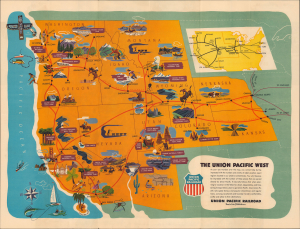
This is a 1954 pictorial map of the Western United States, prepared by the Rigby Printing for the Union Pacific Railroad. It was produced as the railroad sought to compete with automobiles and airlines for passengers, an ephemerally successful effort before the collapse of passenger rail in the following years. (more details)