
Tsukioka Yoshitoshi (sold) (月岡芳年)
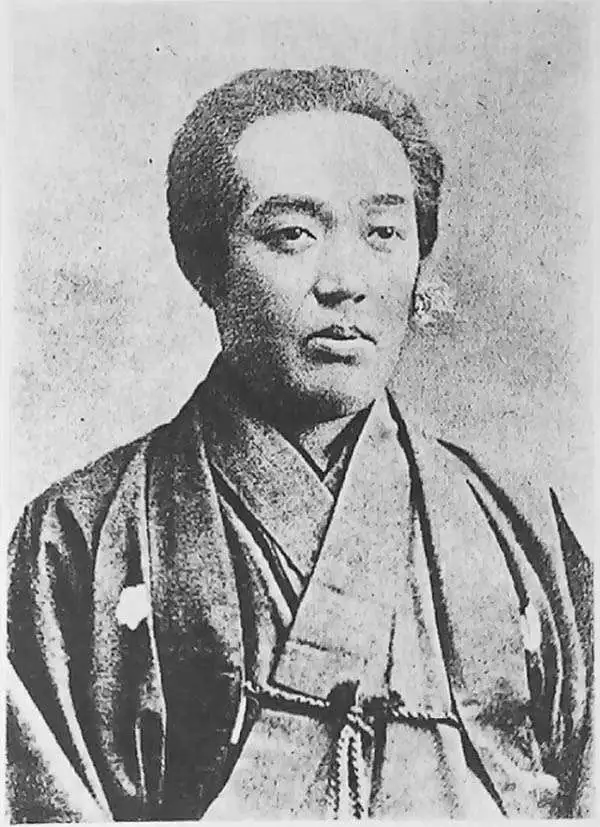
Tsukioka Yoshitoshi (月岡芳年; April 30, 1839 - June 9, 1892) was a Japanese painter and woodblock printer who is generally regarded as one of the last great masters of the ukiyo-e genre and among the last members of the celebrated Utagawa School of woodblock printers. Yoshitoshi (like other great woodblock masters, he is often known simply by his given name) was born in the Shimbashi neighborhood of Edo (Tokyo) to a wealthy merchant family that had used its wealth to gain samurai status. He was interested in art from a young age and from age 11 apprenticed with Utagawa Kuniyoshi (歌川国芳). As his life spanned the end of the Edo period and the Meiji period, Yoshitoshi was able to draw on new influences from abroad for his work, though in his later years, like many Japanese intellectuals of his generation, he became concerned with preserving Japan's cultural distinctiveness. Yoshitoshi's work is known for its intensity, often depicting extreme violence, nudity, sexuality (kinbaku), death, and macabre themes. Much of his work is classified in the genre of 'bloody prints' (無残絵); for instance, his series of 28 prints of famous murders in Japanese history. There is no doubt that his work was influenced by the chaos and violence rampant in Japan in the 1850s-1860s. In his later years, Yoshitoshi's works focused less on violence and sexuality and more on abstract or religious themes. He also maintained an interest in prints related to kabuki theater throughout his career.
AKA: 月岡芳年
Ukiyo-e: The Other Side of Japan's Foreign Trade.
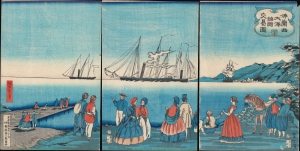
佛蘭西大湊諸國交易圖 / [Illustration of a Large French Port Trading with Various Nations].
sold
- Digital Map Information
- Suitable for large format printing
- Full resolution TIFF file
- ICC color profile embedded
- Delivered instantly via download link
A scarce, vivid ukiyo-e woodblock triptych from the last days of the Tokugawa or Edo period. This is Tsukioka Yoshitoshi's c. 1866 view of ships in a French port. It fits squarely within prints of the era focusing on foreigners (a topic of great curiosity in Japan at the time) but is unusual for depicting a purely foreign scene rather than the more common subject of foreigners in Yokohama. (more details)