
Kochergin, Nikolai Mikhailovich (sold) (Николай Михайлович Кочергин)
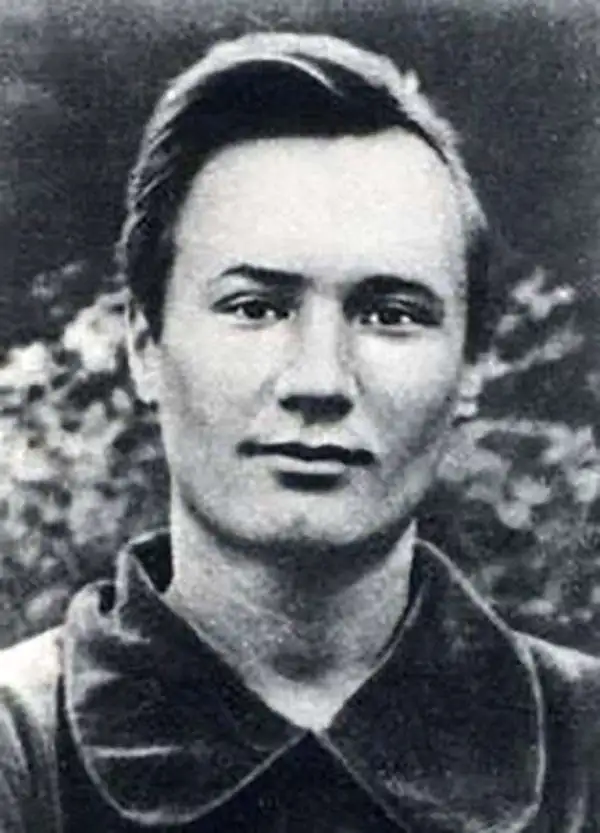
Nikolai Mikhailovich Kochergin (Николай Михайлович Кочергин; May 9, 1897 - May 10, 1974) was a Russian-Soviet artist and poster designer who played an important role in developing the distinctive Socialist Realist style of Soviet propaganda posters. Born in Moscow, he studied at the Stroganov School of Art and Industry (Строгановском художественно-промышленном училище, now Stroganov Moscow State University of Arts and Industry) and in 1918 volunteered for the Red Army, being sent to the Higher School of Military Camouflage. During the Russian Civil War, Kochergin was primarily based in Baku and designed a series of iconic posters of the conflict which were widespread in the Caucasus region. During the 1930s, Kochergin engaged in mass-agitation art, designing parades, theater productions, and festivities, while creating propaganda posters and illustrating some children's books. Throughout the 1930s, he continued his work in the poster medium, producing both agitation and statistical-graphic posters. During the Second World War (Great Patriotic War) Kochergin designed patriotic posters, but was himself badly injured during the siege of Leningrad, diminishing his production for a time. After the war, Kochergin primarily focused on a series of monumental paintings and illustrating children's books, becoming a key figure in the Soviet 'golden age' of children's illustration.
AKA: Николай Михайлович Кочергин
Soviet Exceptionalism: Denouncing Hunger Abroad, Ignoring Hunger at Home.
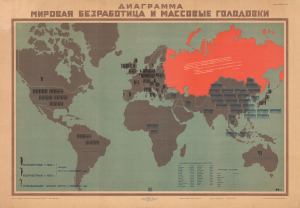
Диаграмма Мировая Безработица и Массовые Голодовки / [Chart of Global Unemployment and Mass Famines].
sold
- Digital Map Information
- Suitable for large format printing
- File Size: 62.35 MB
- File Type: ZIP / TIFF
- ICC color profile embedded
- Delivered instantly via download link
A unique survivor, this is the only known example of this 1931 IZOSTAT Soviet Exceptionalism propaganda poster map of the world presenting the Soviet Union as an exception in a world beset by hunger and unemployment. Produced during the Great Depression (1929 - 1939), it was meant to tout the benefits of Stalin's intensive collectivization and industrialization drive (First Five-Year Plan, 1928-1932), which itself caused widespread famine, particularly in Ukraine. The producer, IZOSTAT was a propaganda arm of the U.S.S.R. government focused powerful persuasive infographics. (more details)