
CartoCuriosity - Selling off the Bastille
CartoCuriosity - Selling off the Bastille
Revolution, demolition, and how commercialization created a French national symbol.
In this episode of CartoCuriosity, Spencer Hunt of Geographicus Rare Antique Maps explores the Storming of the Bastille, the event that ignited the French Revolution, and the unlikely entrepreneur who profited from its destruction. While the Bastille has become synonymous with the fall of royal authority, its enduring place in history owes much to Pierre-François Palloy, a Parisian entrepreneur who transformed the fortress's demolition into a public spectacle, a propaganda campaign, and a thriving business. Through broadsides, souvenirs, and relentless self-promotion, Palloy helped turn a prison into a revolutionary icon and ensured that the Bastille would live on long after it disappeared.
Featuring Spencer Hunt of Geographicus Rare Antique Maps
Produced by Cory Choy, Tom Fama, and Christian Cuciniello
Music by Luke Allen and El Buru. Sound by Silver Sound
2026-01-09
A Closer Look at the Map
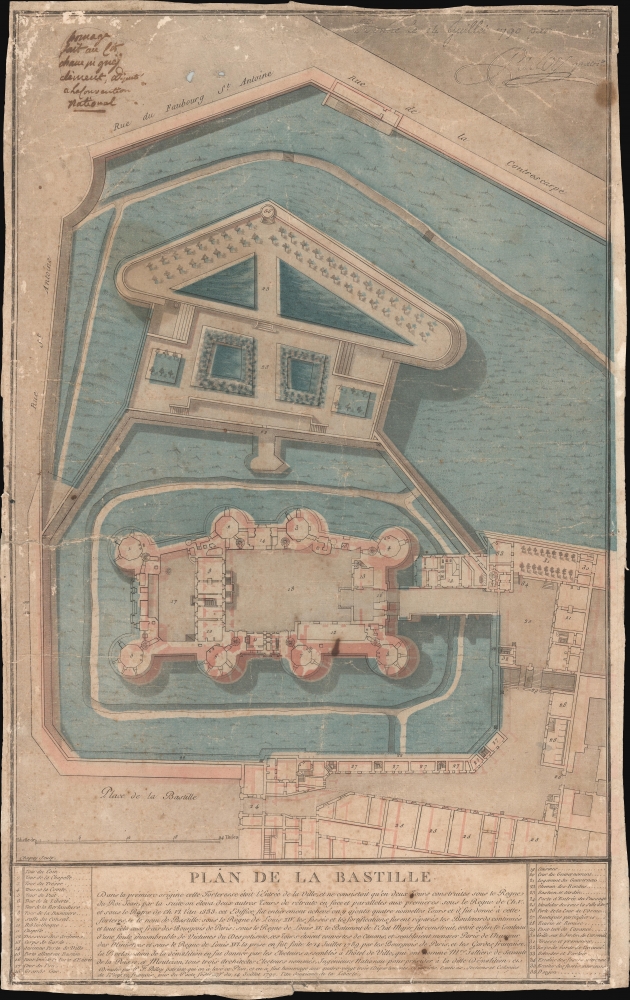
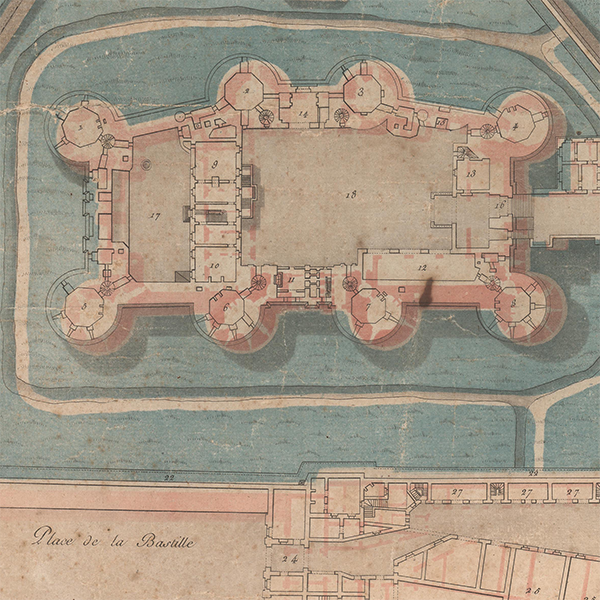
Merchandising the French Revolution and making the Bastille an Icon.
Podcast Summary
Revolution, demolition, and how commercialization created a French national symbol.
Napoleon Bonaparte once observed that in revolutions there are two kinds of people: those who cause them, and those who profit from them.
In this episode of CartoCuriosity, Spencer Hunt of Geographicus Rare Antique Maps explores the storming of the Bastille, the broadside that commemorated it, and the remarkable story of Pierre-François Palloy—the man who turned the destruction of one of Paris’s most infamous structures into a revolutionary enterprise.
The Bastille Before the Revolution
The Bastille was originally constructed as a fortress during the Hundred Years’ War to defend the eastern approaches to Paris. Over time, it served military purposes through the 15th and 16th centuries, including during the Armagnac-Burgundian Civil War and the Wars of Religion.
In 1417, it became a state prison, initially used for members of the nobility. By the 17th century, however, it had become a more general prison and increasingly a symbol of royal authority.
By 1789, whether or not the prison still held many prisoners, the Bastille occupied a powerful place in the imagination of Parisians. It represented secrecy, arbitrary imprisonment, and the power of the monarchy.
July 14, 1789
The storming of the Bastille took place on July 14, 1789, at the beginning of the French Revolution. After weeks of unrest, tensions in Paris escalated into open confrontation.
Parisians first went to Les Invalides, where the French military stored weapons and equipment. There they seized thousands of muskets, only to discover that the ammunition had been moved to the Bastille.
The crowd then gathered outside the prison, demanding access to the gunpowder stored within. Negotiations dragged on. The Bastille, still protected by a moat and drawbridges, remained closed. As the crowd grew increasingly agitated, violence broke out.
By the afternoon, fighting had erupted between the crowd and the prison guards. Eventually, Bernard-René de Launay, governor of the Bastille, opened the gates. The crowd entered, seized the gunpowder, and killed de Launay and several others.
The storming of the Bastille was not about freeing large numbers of prisoners. It was about securing gunpowder—and striking a symbolic blow against royal authority.
Enter Pierre-François Palloy
Into this moment stepped Pierre-François Palloy, a successful Parisian public works contractor and master mason.
On the night of July 14, Palloy sent his workers to begin demolishing the Bastille. He did so before receiving formal authorization, apparently deciding that it was better to act first and seek approval later.
Two days later, the city government officially sanctioned the demolition. Palloy ultimately employed nearly 1,000 workers a day over roughly two years to dismantle the fortress.
Turning Ruins into Revolutionary Memory
Palloy did more than tear down the Bastille. He transformed its destruction into a public spectacle. Balls were held among the ruins, crowds came to watch the demolition, and the site became a theater of revolutionary identity.
The broadside discussed in this episode was part of that effort. A broadside is a single printed sheet, similar to a poster, used to spread news, commemorate events, or promote political messages.
Palloy’s broadside helped fix the Bastille in the public imagination as a symbol of the Revolution. In modern terms, it functioned as a piece of revolutionary propaganda.
Souvenirs of the Bastille
Palloy also converted the physical remains of the fortress into commemorative objects. Stones from the Bastille were fashioned into small models and sent to the departments of France. One was even sent to George Washington and remains associated with Mount Vernon.
Metal from the Bastille’s chains and drawbridges was used to make medallions and other souvenirs. In this way, Palloy distributed fragments of the demolished prison throughout France and beyond, turning the Bastille itself into a relic of revolution.
Patriot Palloy
Palloy later styled himself Palloy Patriote, or Patriot Palloy. His revolutionary celebrity, however, did not protect him entirely.
In 1793, he was accused of embezzling funds connected to the demolition of the Bastille. He was convicted and imprisoned from December 1793 to March 1794.
After his release, Palloy left Paris for a town to the northeast, where he spent much of the rest of his life hosting gatherings and recounting his role in the Revolution. Remarkably, he survived the Revolutionary period, the Napoleonic era, the Bourbon Restoration, and the early years of the July Monarchy before his death in 1835.
Bastille Day and Revolutionary Legacy
The first commemoration of the storming of the Bastille took place in 1790, while the building was still being demolished. Known as the Fête de la Fédération, it marked the first anniversary of July 14 and celebrated national unity amid the early hopes of the Revolution.
Today, Bastille Day is France’s national holiday. The fortress itself is gone, but its symbolic power remains. Thanks in part to Palloy’s ambition, enterprise, and instinct for spectacle, the Bastille became not merely a demolished prison, but one of the enduring icons of revolutionary history.
Featuring Spencer Hunt, Geographicus Rare Antique Maps.
Produced by Cory Choy, Tom Fama, and Christian Cuccinello.
Music by L. Budu and Luke Allen. Sound by Silver Sound.