
Lipe, Frances Worthington (sold)

Frances Worthington Lipe (February 28, 1929 - Present) is an American author and researcher. She compiled a map entitled 'Japanese Prisoner of War Camps During World War II, 1941 - 1945: Known locations of camps where American, British, Dutch, Australian, Canadian, Indian, and other Allied Military and Civilian Personnel were imprisoned by the Japanese', which was originally copyrighterd in 1980. She also compiled and edited Hell and Beyond - A Diary of War and Captivity from her father's letters and writings when he was a Japanese prisoner of war during World War II. Lipe was active in the Republican Party in Texas in the 1960s and 1970s.
Japanese WWII POW camps.
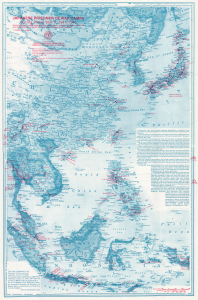
Japanese Prisoner of War Camps During World War II, 1941 - 1945. Known locations of camps where American, British, Dutch, Australian, Canadian, Indian, and other Allied Military and Civilian Personnel were imprisoned by the Japanese.
sold
This is a 1980 Frances Worthington Lipe map of East Asia highlighting World War II (1939 - 1945) Japanese prisoner-of-war camps. Lipe dedicates her research and this map to her father, Josiah Wistar Worthington, who survived 2.5 years in several such camps. (more details)
Japanese WWII POW camps.
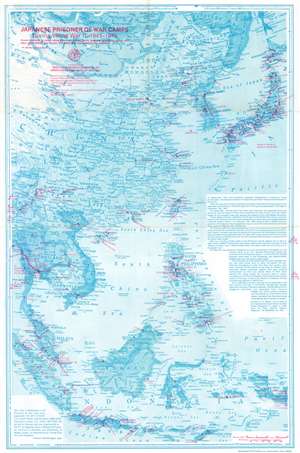
Japanese Prisoner of War Camps During World War II, 1941 - 1945. Known locations of camps where American, British, Dutch, Australian, Canadian, Indian, and other Allied Military and Civilian Personnel were imprisoned by the Japanese.
sold
This is a 1980 Frances Worthington Lipe map of East Asia highlighting World War II Japanese Prisoner of War Camps. Coverage extends from the Soviet Union south to Portuguese Timor and the Timor Sea and from Rangoon, Burma, and western China east to Japan. Maroon overprinting identifies prison camp locations, naming most, save in areas where multiple camps were concentrated. For example, the camps in and around Manila are not individually identified. 'Manila Area' appears in block lettering and is followed by the number thirty-one. Other cities follow the same model, including Hong Kong, Singapore, Beijing (Peking), and Shanghai. A line of triangles (marking the camps) stretches from Bangkok to Moulmein following the infamous Burma Railway. Some camps, including those on Guam and Wake Island, are noted, but appear outside the map's geographical scope. A short text along the right border provides a compelling summary of the history of Japanese prisoner of war camps. (more details)