
CartoCuriosity - Frisland, Zeno's attempt to co-opt Columbus
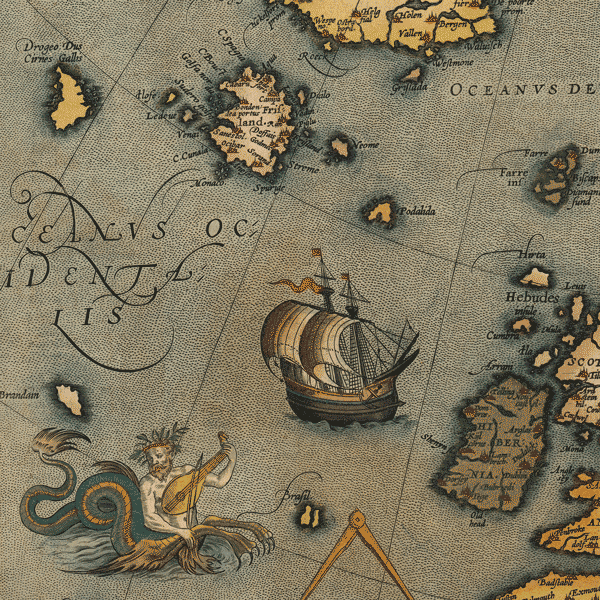
CartoCuriosity - Frisland, Zeno's attempt to co-opt Columbus
Story a Venetian nobleman's attempt to Co-Opt Columbus's discovery of America, and in doing so influenced cartography for centuries.
History's most successful cartographic hoax, this tale of Nicoló Zeno’s 1557 map is one of ambition, nationalism, and invention. Seeking to wrest the discovery of America from the hated Genoese navigator Christopher Columbus, Zeno fabricated a grand alternative history - one that credited his own illustrious Venetian family with crossing the Atlantic more than a century earlier. Though entirely fictitious, the Zeno Map was accepted as genuine by scholars and mapmakers for over three centuries.
Kevin J. Brown, Cory Choy, Tom Fama, Christian Cuciniello
2025-04-03
A Closer Look at the Maps
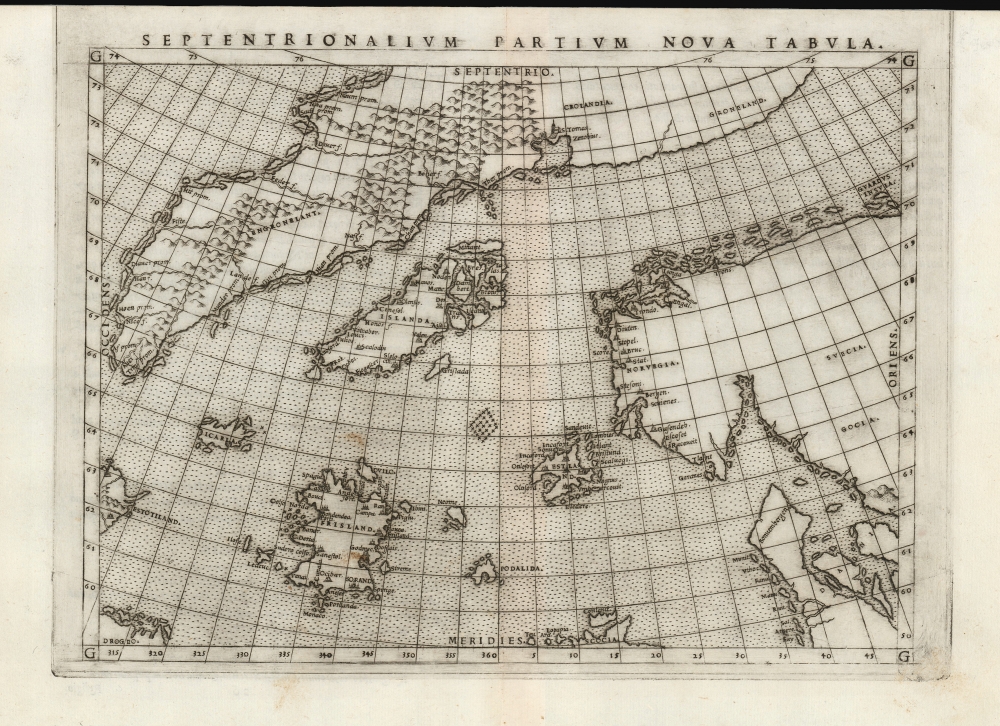
Earliest acquirable state of the Zeno map.
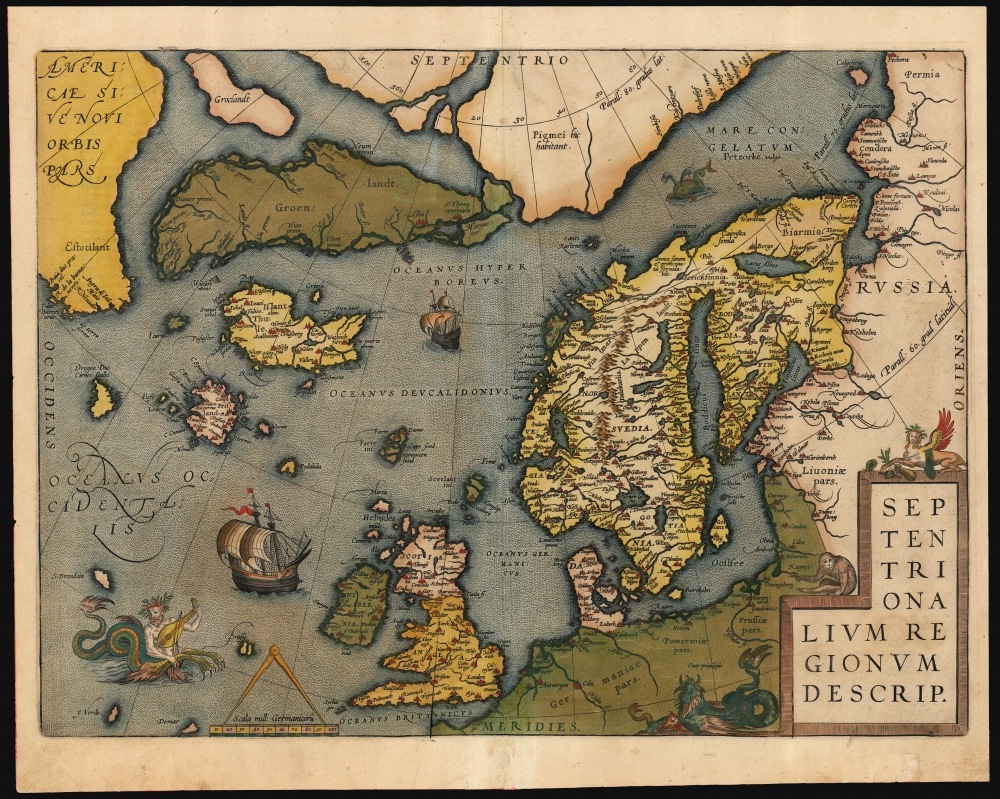
Scandinavia, Britain, Greenland: The Northern Limits of Geographical Knowledge in the Age of Discovery.
Podcast Summary
Frisland, Zeno's attempt to co-opt Columbus
A Venetian family myth, a phantom island, and one of cartography’s most persistent frauds
A lie can travel halfway around the world while the truth is still putting on its shoes.
In this episode of CartoCuriosity, James Roy of Geographicus Rare Antique Maps explores the famous Zeno family fraud: a 16th-century Venetian tale that placed phantom islands in the North Atlantic and confused mapmakers for generations.
A Family Story with an Agenda
In 1558, the Venetian nobleman Niccolò Zeno the Younger published a book and map celebrating the supposed 14th-century voyages of his ancestors, Niccolò and Antonio Zeno.
The work claimed that these earlier Zenos had traveled widely through the North Atlantic, visiting unknown islands and corresponding with Venice along the way.
Conveniently, Zeno explained that the original letters and map had been destroyed when he was a child, leaving him to reconstruct them from memory and surviving fragments.
It was, in effect, family propaganda—designed to elevate the Zeno name and Venetian prestige.
The Island of Frisland
According to the story, the elder Niccolò Zeno was blown off course during a voyage to northern Europe and landed on an unknown island called Frisland.
There he met a ruler named Zichmni, who supposedly spoke Latin and welcomed the famous Venetian traveler. Niccolò then invited his brother Antonio to join him, and together they spent years adventuring through the North Atlantic.
The narrative is colorful, dramatic, and deeply suspect.
A Map of Phantom Geography
The 1558 Zeno map introduced several new and highly influential geographic features:
- Frisland, a large island southwest of Iceland
- Drogeo and Icaria, additional phantom islands
- Estotiland, shown at the western edge of the map
- A distorted northern geography linking Scandinavia and Greenland
None of these phantom islands existed. But at the time, the Zeno map appeared to offer new information about a poorly understood region.
As a result, leading cartographers adopted parts of the Zeno geography, spreading the error across Europe.
A fraudulent map helped shape the mapping of the North Atlantic for nearly a century.
Why the Fraud Worked
Venice was still a powerful intellectual and cartographic center in the 16th century. The Zeno name carried weight, and the map arrived at a time when northern geography remained uncertain.
In that context, the map’s errors were not immediately obvious. Its invented geography filled gaps that European mapmakers were eager to resolve.
The story also served a political and cultural purpose. Venice and Genoa were fierce rivals, and Christopher Columbus was Genoese.
By suggesting that Venetian explorers had crossed the Atlantic before Columbus, the Zeno narrative gave Venice a flattering alternative claim to early Atlantic discovery.
Scholars Try to Explain It
For centuries, scholars attempted to reconcile the Zeno narrative with real geography. Some concluded that Zeno had been honest but confused.
In the 19th century, Richard Henry Major of the British Museum argued that Frisland might represent the Faroe Islands and that Zichmni might be Henry Sinclair, Earl of Orkney.
This interpretation shifted the supposed achievement away from Venice and toward the British Isles, but it still accepted the basic premise that the story contained a recoverable truth.
Fred W. Lucas and the Case Against Zeno
Not everyone was convinced.
Fred W. Lucas examined the Zeno map and narrative with new tools, better access to sources, and a more skeptical eye.
He showed that the map was a pastiche—assembled from existing maps and printed travel accounts, with fabricated geography inserted into the gaps.
Even elements of the narrative echoed early printed accounts of Caribbean encounters, repurposed and relocated to the North Atlantic.
The Zeno map was not a confused survival of medieval knowledge. It was a constructed fiction.
The Power of a Useful Lie
The Zeno fraud endured because it was useful.
It offered Venice a heroic Atlantic past, supplied mapmakers with plausible-looking geography, and gave later scholars a puzzle to solve.
Frisland remained on maps long after its foundations should have collapsed. For generations, people looked at the island and asked the same question:
What is that?
The answer is one of cartography’s great cautionary tales: maps can preserve knowledge, but they can also preserve ambition, rivalry, and invention.
Featuring James Roy, Geographicus Rare Antique Maps.
Produced by Cory Choy, Christian Cucinello, and Tom Fama.
Edited by Jada McKinnon.
Music by L. Budu and Luke Allen. Sound by Silver Sound.