
1920 Directorate of Posts (Youzheng zongju) Folding Map of China




This item has been sold.
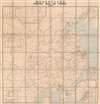
Postal map of China, 1920 / 民國九年中華郵政輿圖.
军阀混沌时期的中国邮政地图。
- Digital Map Information
- Suitable for large format printing
- File Size: 141.37 MB
- File Type: ZIP / TIFF
- ICC color profile embedded
- Delivered instantly via download link
军阀混沌时期的中国邮政地图。
这是一幅1920年由邮政总局制作的大型双语折叠中国地图。它展现了中国邮政网络的发展历程,考虑到当时的政治动荡和基础设施的匮乏,邮政总局的这项成就令人瞩目。仔细观察
这张地图展示了民国初期(1912-1949年)的中国邮政系统。它涵盖了名义上由以北京为中心的中华民国统治的领土。实际上,这片领土的大部分由军阀、外国人或渴望独立的非汉族人统治。然而,正如后文所述,邮政服务是连接原清朝各省的重要纽带,并为一定程度的民族统一奠定了基础。左上角的插图是蒙古和新疆的地图,这两个地区是当时中国政府权威备受争议的地区。在这些环境恶劣、幅员辽阔的地区建立邮政基础设施是一项了不起的成就。值得注意的是,地图上没有显示西藏,因为西藏在当时实际上已经独立(而且也缺乏邮政基础设施)。青海(安多)是一个游牧地区,是广袤的西藏文化的一部分,这里用其蒙古语名称“Kokonor”来表示。有趣的是,青海省在都兰寺(都兰寺是一座藏传佛教寺院)建了一座邮局,1919年的邮政总局年度报告指出,这只是一个临时措施,直到建成永久邮局为止。右下角的插图还描绘了满洲、广州地区和上海地区。
邮政基础设施沿铁路发展,密度最高的地区是北京附近及沿京汉铁路向南至汉口一带,满洲沿南满铁路一带,以及上海和广州周边地区。人口稠密的四川省是个例外,由于地处丘陵地带,直到20世纪50年代初才通城际铁路。此外,航运线路也被用来连接东南沿海繁忙地区的主要港口。
邮政服务与现代中国
中国邮政的历史可以追溯到古代,当时中国融入了蒙古先进的邮政中继系统(Yam或Örtöö),使得信息能够在幅员辽阔的帝国境内快速传递。然而,真正面向民众日常生活的现代邮政服务直到19世纪末才出现,其中最显著的是在1896年,当时成立了邮政总局,最初是隶属于皇家海关的一个机构。与海关一样,邮政总局虽然隶属于国家,但独立运作,并以其专业性著称,其工作人员来自世界各地。在近代中国历史上的动荡时期,包括20世纪初的政治分裂和战争,邮政服务一直是维系昔日帝国的重要纽带,并为未来的国家统一奠定了基础。它还通过管理信件和汇款,帮助海外华人与祖国保持联系。北洋政府统治下的中国
1911年秋,中国各地爆发起义,北京朝廷依靠袁世凯领导的现代化北洋军镇压革命。但当政权岌岌可危之际,袁世凯倒戈,与清政府谈判,以自己成为中华民国首任总统为条件,换取清政府的退位诏书。这个非正式被称为北洋的新政权试图推行一系列现代化改革,但缺乏足够的资源在全国范围内贯彻其意志。袁世凯试图巩固自身及其亲信的权力以克服这些问题,但结果却适得其反,滋生腐败,激起反对,最终导致南方建立起一个与之抗衡的共和国。袁世凯甚至试图自立为帝,建立新王朝,但这一举动适得其反,进一步削弱了他的政权。清朝时期的将领和地方长官逐渐脱离中央政府的管辖,各自征收赋税,组建效忠于自己的军队。多次统一尝试均告失败,各路军阀之间的战争愈演愈烈。袁世凯于1916年去世,开启了军阀混战的时代,但他的政权名义上仍是中央政府,直到1928年,国民党领导的统一战争取得部分成功,攻占北京,并将首都迁至南京。
出版历史和人口普查
这幅地图由游政总举于1920年绘制,上海商印株式会社出版。它被少数几所大学收藏,但在市场上却十分罕见。民国时期,游政总举曾绘制过几幅与此图标题相同的地图(中华民国政图),但此版本是最早的版本之一。目前尚不清楚这些地图与游政总举在瑞士地理学家查尔斯·雅科-吉拉莫(1868-1925)的指导下,于1907年至1936年间出版的四版《中国邮政地图集》之间是否存在任何关联。Cartographers
Youzheng zongju (郵政總局; 1896 - 1949), known in English as the Inspectorate General of Posts or Imperial Chinese Post under the Qing Dynasty and the Directorate General of Posts, Chunghwa Post, or simply the Chinese Post Office after 1911, was the primary postal service operating in China during the years of its existence. It was created in the wake of the First Sino-Japanese War, a series of reforms meant to account for China's weakness vis-à-vis its much smaller but more modernized neighbor. After the Qing collapsed and China entered a period of political fragmentation, the postal service was an important basis for building national identity and the hopes of national reunification. Like the Maritime Customs Service, of which it was originally a branch, the postal service was nominally a part of the Chinese state (under the Ministry of Communication) but was independently managed and staffed with many foreigners, especially at the senior level. This insulated it somewhat from the incessant political and military struggles of the Republican Era (1912 – 1949) and allowed it to operate across jurisdictions, even in some Japanese-occupied areas during the Second World War (Second Sino-Japanese War). At the same time, it came under increasing control from the late 1920s onwards, as the government of Chiang Kai-Shek aimed to centralize power and enforce censorship, a harbinger of its future after the Communist takeover in 1949 (when China Post was formed, retaining the name Youzheng zongju in Chinese until it was partially separated from the government and established as a state-owned enterprise in the 1990s and early 2000s). Further Details...
The Mercantile Printing Company (c. 1913 – 1938) was a publisher of English-language and bilingual books and maps based in Shanghai, China. Notably, it published postal and road maps of China. Further Details...
Condition
Very good. Dissected and laid on linen - linen replaced with fresh linen. Accompanied by custom slipcase.
References
OCLC 137245536, 870920425. Lane Jeremy Harris, 'The Post Office and State Formation in Modern China, 1896-1949' (Ph.D. Dissertation, University of Illinois at Urbana-Champaign, 2012). You zheng zong ju, Report on the Working of the Chinese Post Office (China. You zheng zong ju, 1919), pp. 18.