
How to Frame Antique Maps
Special Framing Needs of Antique Maps and Documents
Dos and Don't of Framing Rare Maps and Documents
Kevin Brown • September 08, 2026
Conservation Framing of antique maps is an art form that combines aesthetics with preservation. Antique maps are not just decorative pieces; they are historical documents that carry stories of their lifetimes, often including exploration, trade, war, and political intrigue. When framing these rare documents, consider both beauty and conservation to maintain their integrity for future generations. Here are some expert tips for framing antique maps beautifully and safely.
Conservation Framing
Conservation Framing comprises a range of techniques and methodologies that prioritize the preservation of valuable and delicate items, such as rare maps and other historical documents. It ensures that the map's condition is maintained by limiting exposure to harmful elements. This approach is especially crucial for antique maps as it shelters them from environmental damage, such as light, humidity, insects, and pollutants.
Acid-Free Materials
One of the key components of conservation framing is the use of pH neutral or acid-free materials. Acid inherent in the document, other papers, glues, and framing materials can cause yellowing, brittleness, and degradation over time. When framing an antique map, it is essential to use acid-free matting, mounting, and backing to prevent adverse chemical interactions with the old paper. The industry standard for acid-free matting is Acid and Lignin-free Crescent RagMat® Museum Board, which comes in multiple thicknesses and colors.
UV-Filtering Glass
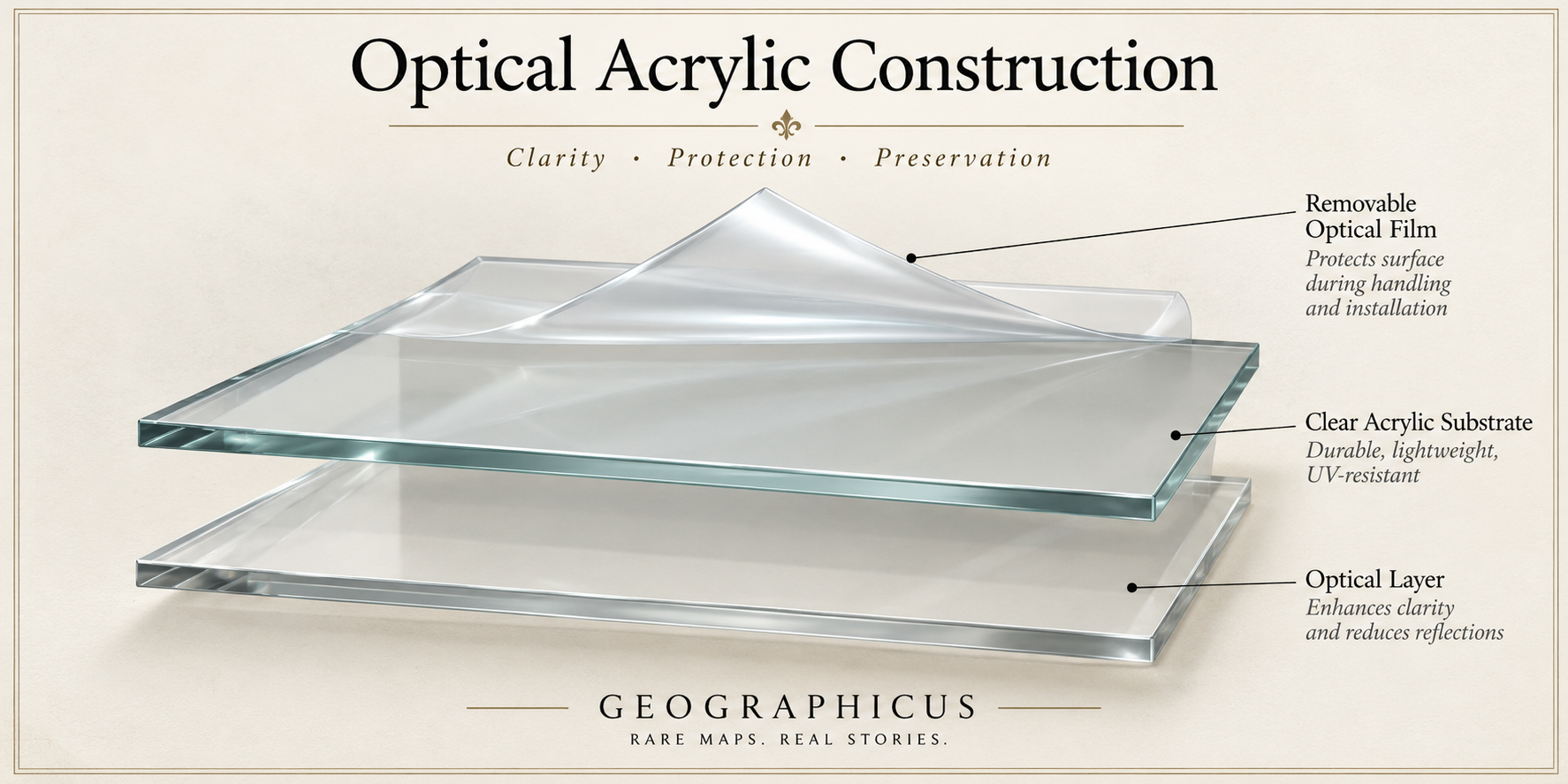
Another critical aspect of conservation framing is the use of UV-filtering glass. Ultraviolet rays can fade and weaken paper over time, so using glass that filters part of the spectrum will protect the map from light damage. This type of glass is available in both non-glare and regular finishes, allowing you to choose based on your display preferences.
This glazing will likely be the most cost-intensive part of your framing project. The current gold standard for UV filtering is Tru Vue Optium Museum Acrylic®; however, your framer may recommend a more cost-effective alternative based on where and how you plan to display your framed map.
The Right Frame for Your Rare Map
Selecting the right frame is not just about aesthetics; it involves practical considerations to ensure the map's security and longevity. Here are some factors to consider.
Frame Material
The frame material should complement the map while also providing durability. Wood frames are a popular choice for antique maps due to their classic look and sturdy nature. However, metal frames can also offer a sleek, modern contrast to a map's vintage aesthetic. Large elaborately carved and gilded baroque frames, commonly used for paintings and other fine art, are poor choices for maps, as they overwhelm the detail-rich cartographic images.
Frame Size and Proportion
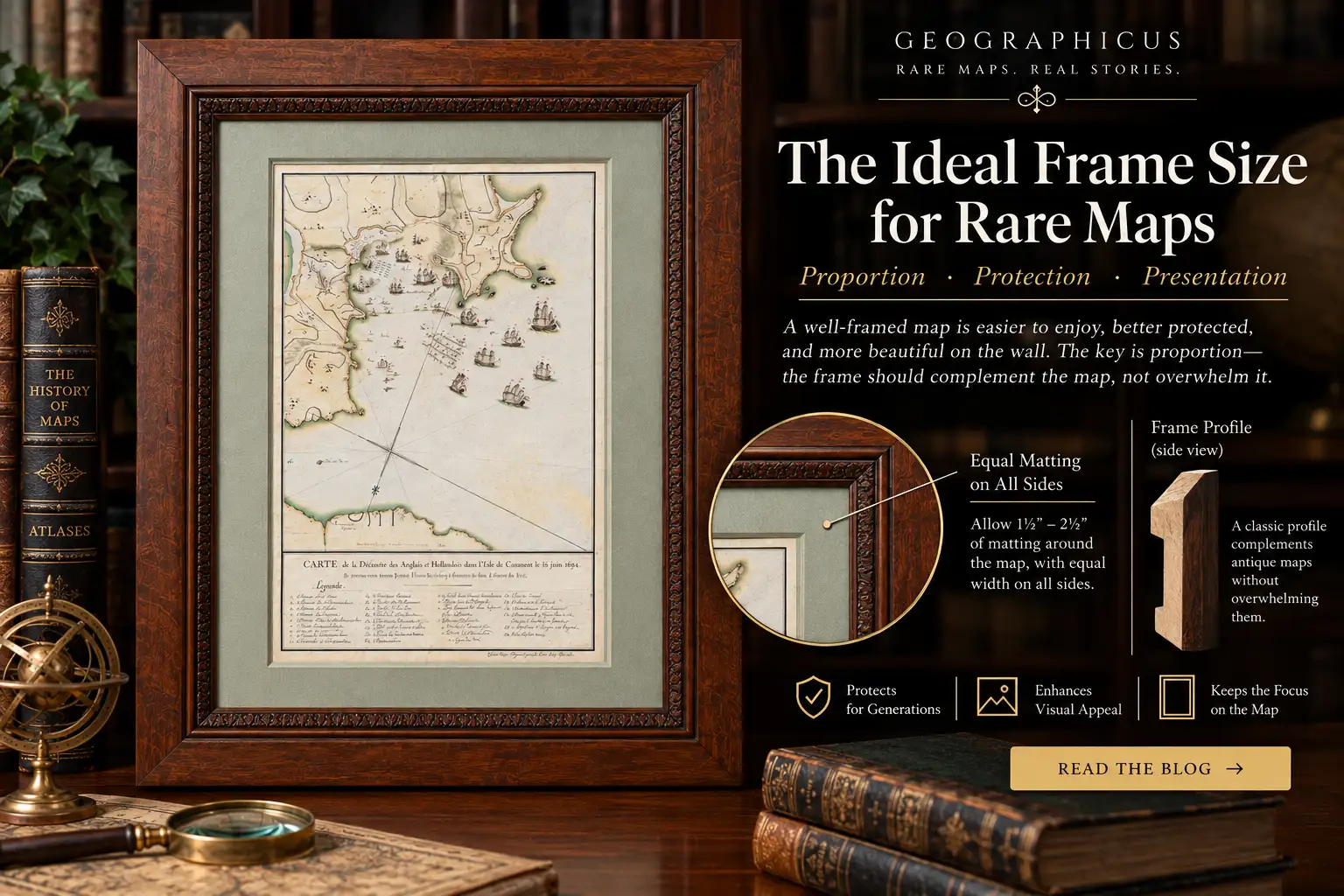
The frame size should be proportional to the map's dimensions. A frame that is too large or ornate can overwhelm the map, while one that is too small may not provide adequate support or protection. Ensure that there is enough space between the map and the frame edges to accommodate matting and prevent direct contact with the glass.
Historical Integrity
Period Frames - The holy grail frame choice for an antique map is a period frame corresponding to when the map was made. These can be hard to find, but there are specialist frame dealers who can help. Most antique shops will also have stacks of old frames that can be purchased and repurposed - especially if your map is from the 18th - 20th centuries, as old frames from these periods are readily available. While an older frame may require restoration or minor repairs, or need resizing, you will often find it is both cheaper and more 'in tune' with your map than modern alternatives. We make a practice of acquiring and saving attractive period frames that we find at antique markets for just this purpose.
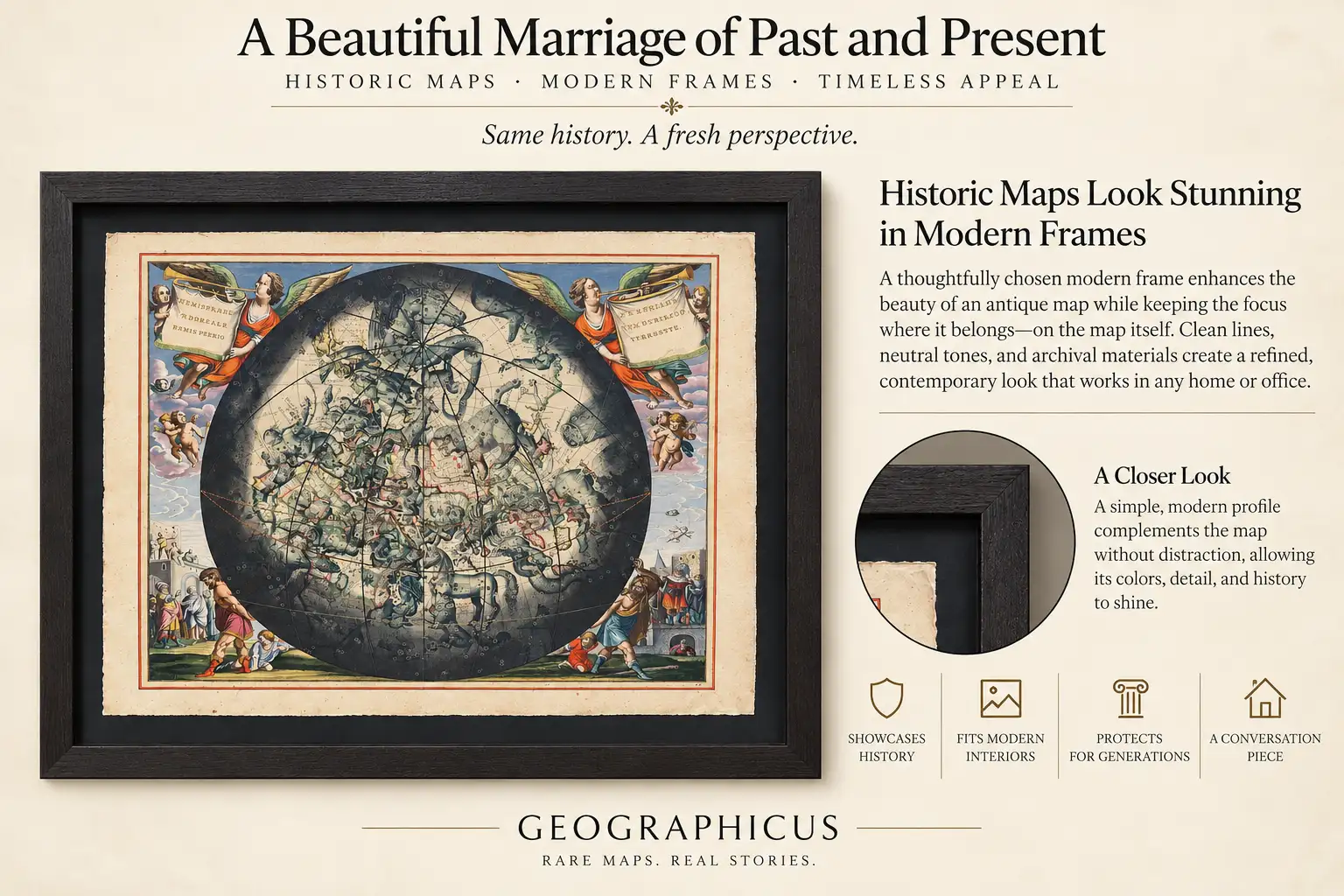
Modern Frames - A compelling alternative to an antique, period-correct frame is clean, modern framing. Simple contemporary profiles, particularly when paired with restrained, neutral matting, can be exceptionally effective for rare maps. Rather than competing with the map's history and visual complexity, a modern frame recedes into the background, letting the color, typography, engraving, and natural character of the antique paper take center stage. The result can be both elegant and timeless, integrating an historic object beautifully into contemporary interiors while keeping the focus exactly where it belongs: on the map itself.
Matting Techniques for Antique Maps
Matting not only enhances the visual appeal of a framed map but also serves as a protective barrier. Here are some matting techniques to consider:
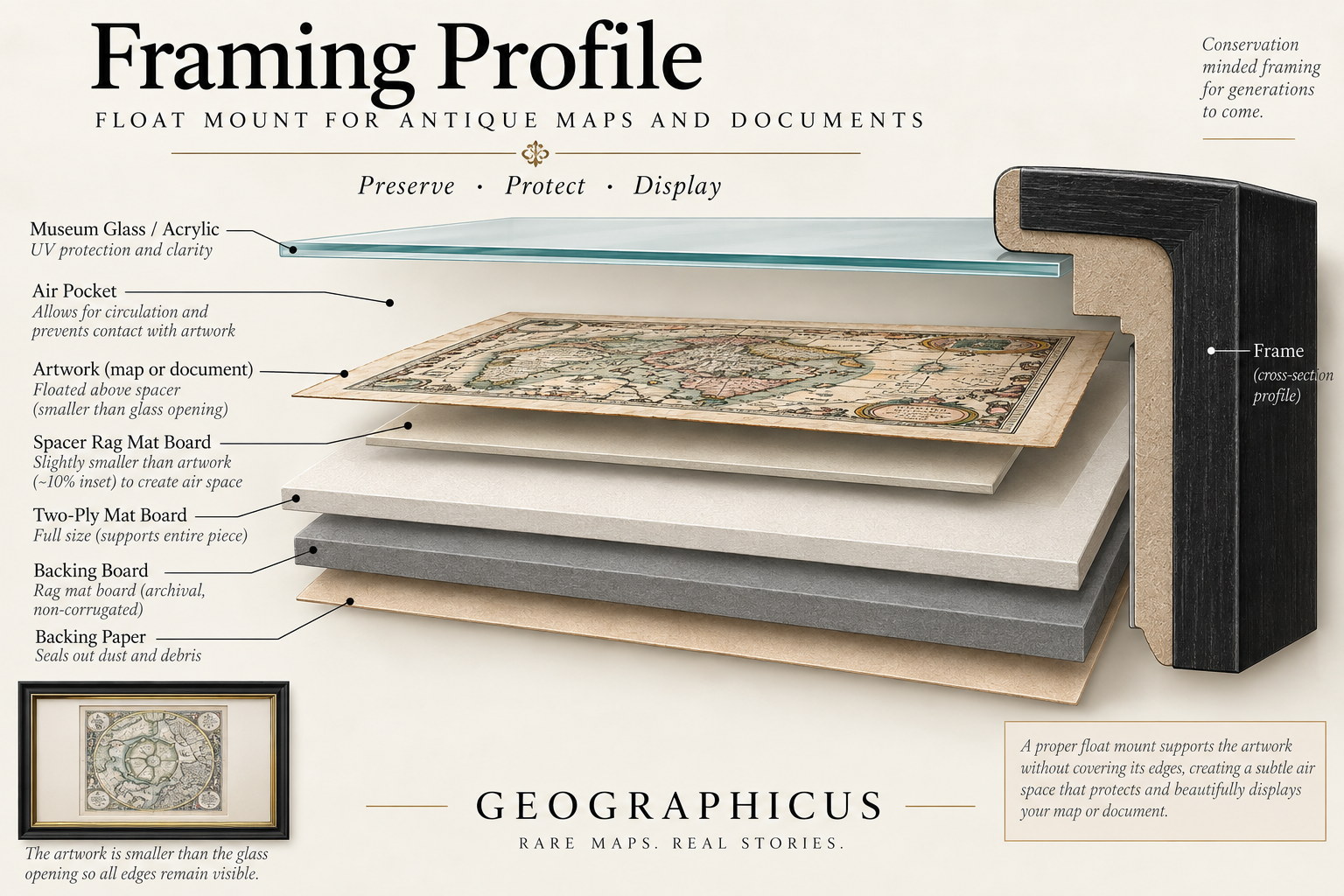
Float Mounting - In almost all situations, we recommend floating your map. Floating the map on a mat board lets the edges of the document show. This technique emphasizes that the map is a historical three-dimensional artifact, not just a modern print or photograph. This technique is also an effective way to celebrate that few historical documents are perfectly square or flat. It brings their life and history to the fore, rather than hiding it behind boards or forcing it to conform to 'poster' standards. It works exceptionally well with wall maps or dissected maps which are naturally three-dimensional.
One trick to make 'floats' stand out even more is to use a smaller concealed piece of mat board under the map or document to create space, thus truly 'floating' it.
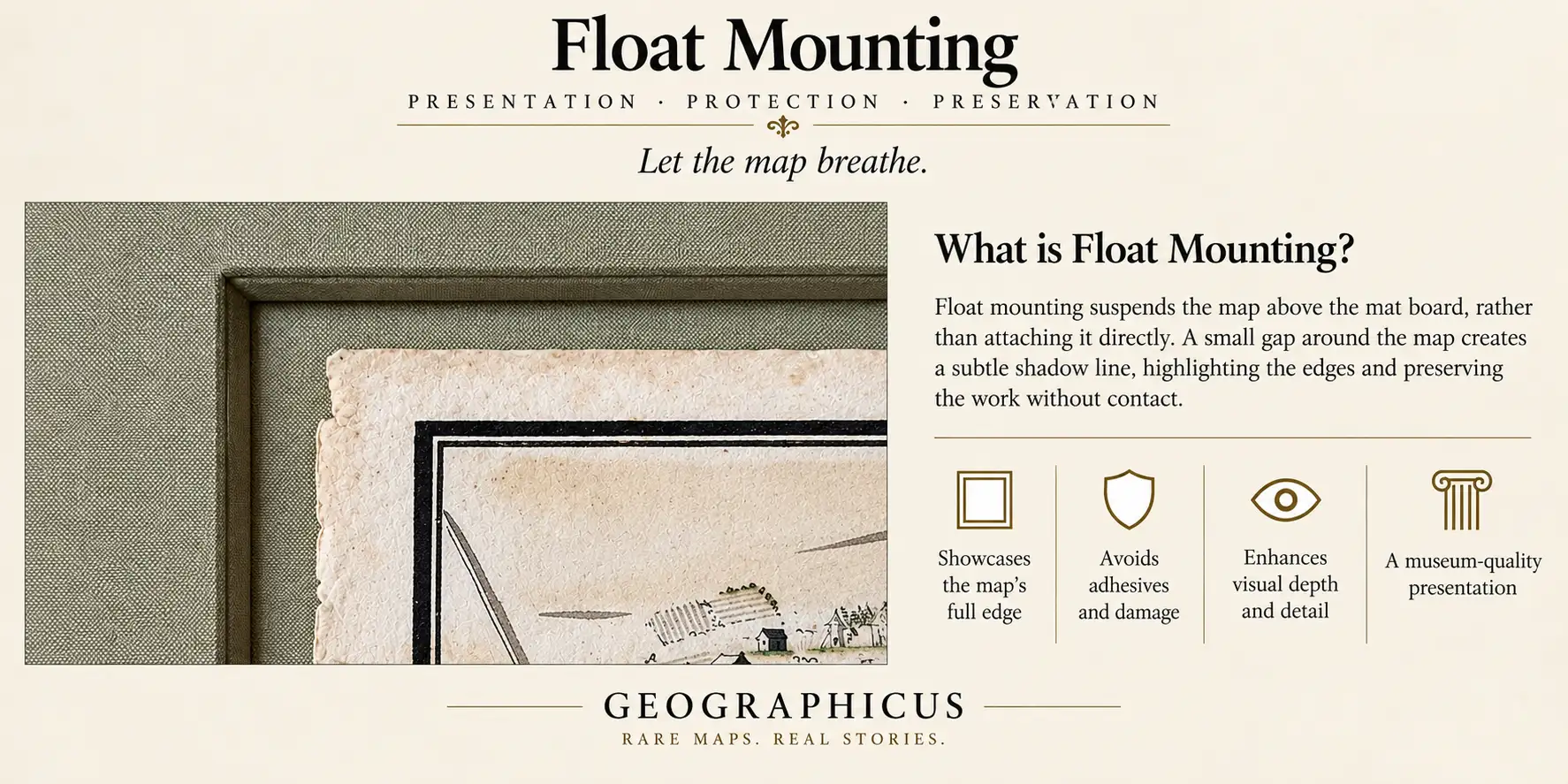
Floated maps can still incorporate multi-ply, double, or triple matting to balance color, emphasize certain qualities of the map, or create space. The main difference is that the matting does not overlap the paper's edges.
Over the Paper Matting - The alternative to float mounting is traditional matting. Maps can be single-, double-, or even triple-matted, a technique that uses multiple layers of mat board to create depth and draw attention to the map. You can use a single mat, or even a thick triple- or quadruple-ply mat, to create extra depth.
In the case of double or triple matting, the top mat is usually a neutral color, while the underlying mat(s) can use contrasting color to highlight specific features of the map. While double matting can be used in conjunction with a float technique, as noted above, it more commonly overlaps the edges of the paper.
This overlap technique is most common with art prints and photographs. We recommend it with rare maps only when the margins are stained or otherwise disfigured in a way that visually detracts.
Mat Color
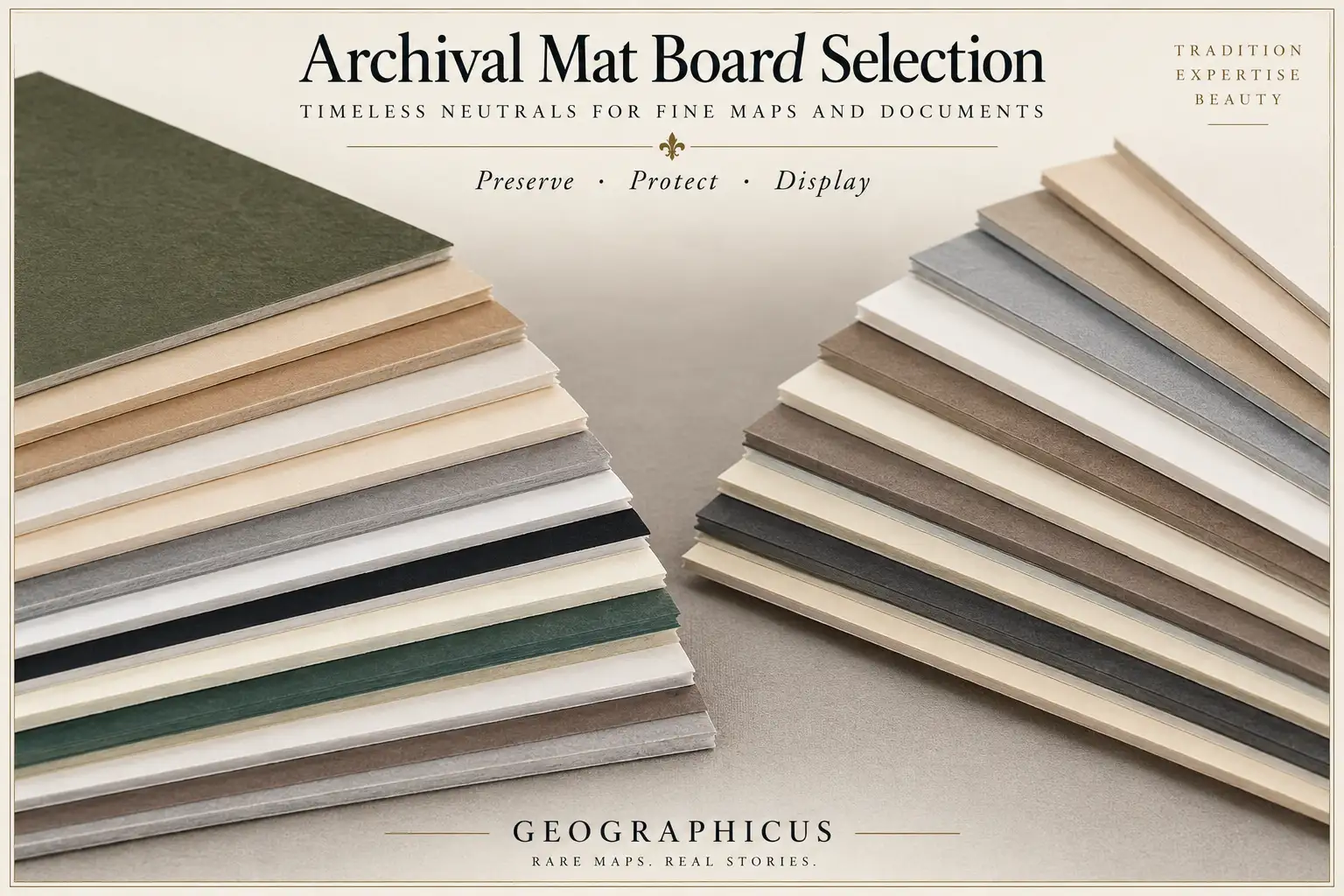
When choosing the right mat board color, your best bet is usually a neutral tone. Consider 'drab' cream, tan, and olive tones. You can choose to match or contrast the map's paper tone. Avoid bold color tones that will distract from the piece. In some cases, particularly with modern frames, black or even stark white matting can also work well. Black matting is most effective with uncolored maps on clean paper that have their own strong black-and-white contrast - such as maps by Chatelain, Coronelli, or Dudley, or those of the Lafreri-school cartographers. Some mat boards feature linen coating, which works very well with old paper - as in the image above.
Framing Techniques for Preservation
To ensure your antique map is preserved in its framed environment, consider these essential framing techniques:
Adhesives - You can use adhesives, but they MUST be non-caustic, pH-neutral, and reversible. Some conservation framers advocate archival corners or other hinging techniques that mount the map securely without direct contact with adhesives. While ideal from a conservation perspective, this is sometimes impractical. Many conservation-grade glues and tapes can be used without risking your artwork.
Sealed Environment - Creating a sealed environment inside the frame can help protect the map from dust, insects, and environmental changes. You can do this by using high-quality sealing materials around the frame edges and closing the frame with backing paper
What to Avoid
Inevitably, a situation will arise when a client takes a map to a trusted framer, possibly recommended by a friend, another dealer, or even a well-known auction house. The framer then recommends a host of procedures, including conservation work, possibly linen backing, and/or dry mounting. These recommendations may be good-intentioned, or the framer may simply be trying to inflate the bill.
Many such recommendations might be appropriate for other types of art but would damage the integrity of your antique map or historical document. For example, poster dealers regularly canvas-back posters and then apply a layer of varnish to the surface. When applied to a 19th-century or 20th-century advertising poster, this procedure can make restoration easier, stabilize the often enormous pieces, create a 'flattened' effect, and enhance the color. On an antique map or other old document, this approach is rarely advisable and will almost always decrease the value and lifespan of the work.
Displaying Your Framed Antique Map
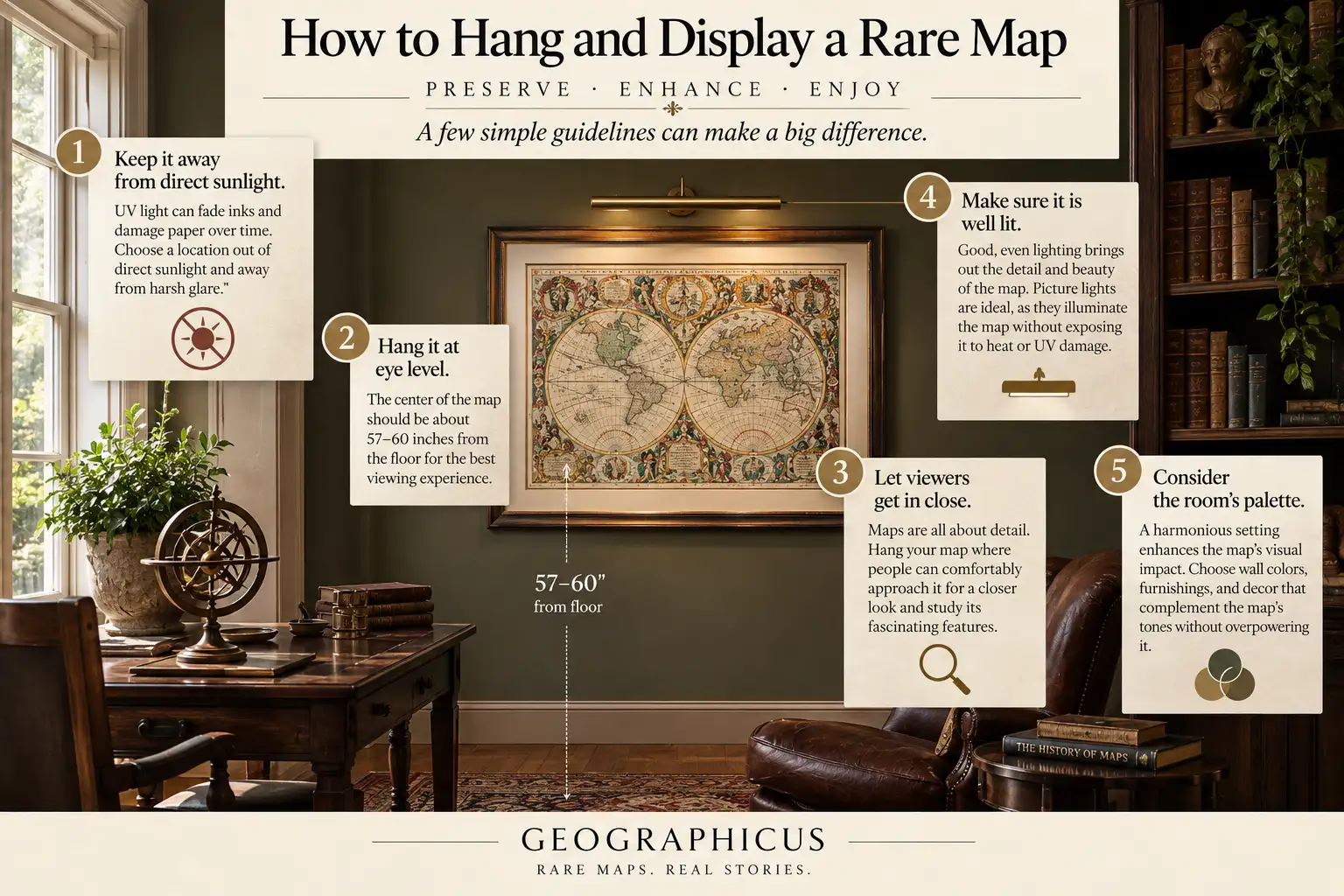
Once your map is beautifully framed, consider the best location for display. Avoid direct sunlight, which can cause fading regardless of how much UV protection you have in place. Choose a spot with stable temperature and humidity levels. Displaying your map in a low-traffic area can also minimize the risk of accidental damage.
In Summation
Framing antique maps requires a careful balance between aesthetics and preservation. By using conservation framing techniques and selecting the right materials, you can ensure that your rare maps are not only displayed beautifully but are also protected for years to come. Whether you're a collector or a history enthusiast, proper framing lets you enjoy these treasures while preserving their historical significance.
Remember, when in doubt, consult with a professional experienced in handling rare documents to ensure your maps receive the care and attention they deserve.