
NEW ACQUISITIONS
A 'Great Game' reconnaissance expedition from Beijing across the Gobi.
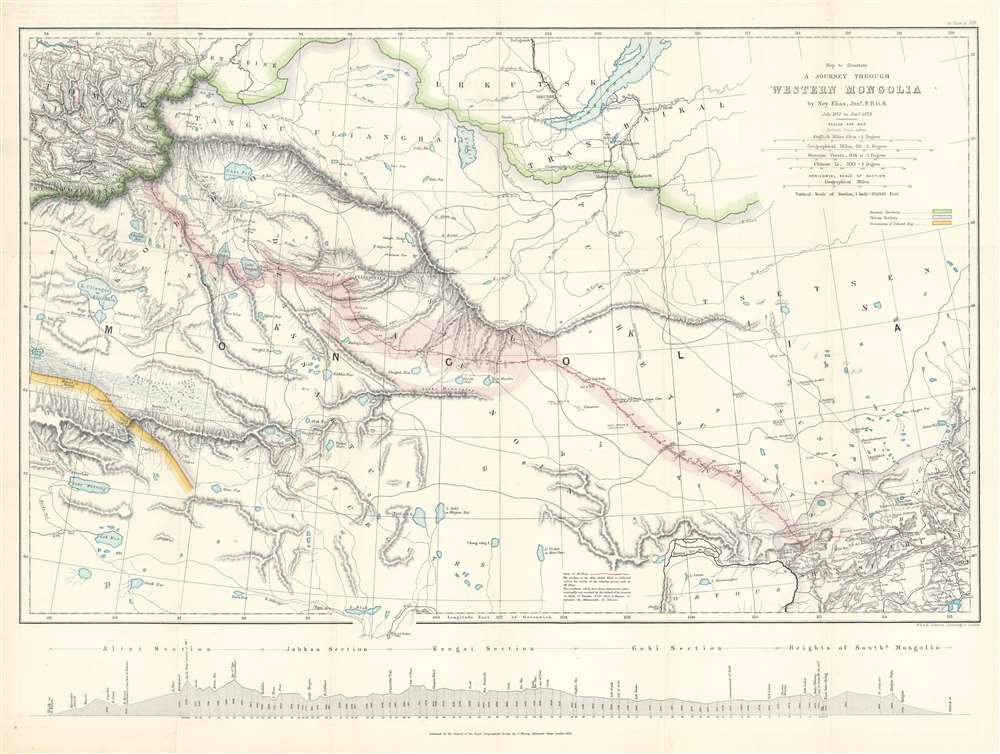
Map to illustrate A Journey Through Western Mongolia.
$800.00
Acquire
- Digital Map Information
- Suitable for large format printing
- File Size: 20.33 MB
- File Type: ZIP / TIFF
- ICC color profile embedded
- Delivered instantly via download link
This is an 1873 Ney Elias map of western Mongolia. Although not specifically described as such, this map and the Elias expedition were most likely British reconnaissance related to 'The Great Game'. This map was drawn by Elias after his 1872 expedition through the region. A thin red line follows his progress from Beijing (Peking), China, across the Gobi Desert to Bisk in Russia, where he arrived on January 4th, 1873. Elias marks each day's progress along his route and labels Uliassutai, the largest settlement he encountered. The pink shading around Elias's route highlights the limits of the surveys conducted by Elias during the expedition. Karakorum, which Elias refers to as the 'ancient Tartar capital', is marked in two places, suggesting ambugity over its actual location. The map traces the Great Wall along the bottom border, with the wall and the rivers leading from Lake Alak, Lake Tsui-yan, and Lake Sobi breaking the map's bottom border. Numerous lakes of varying sizes appear throughout. (more details)
Published during the Japanese occupation by a stateless Russian Jew.
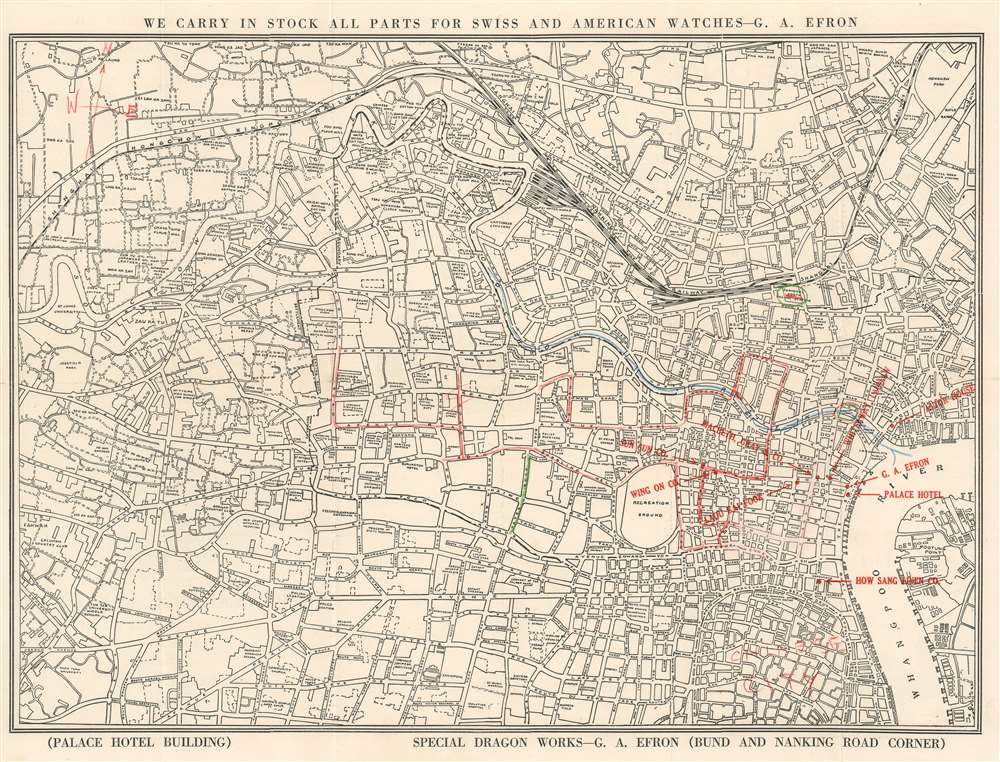
Map of Shanghai. With Compliments of G. A. Efron.
$450.00
Acquire
- Digital Map Information
- Suitable for large format printing
- Full resolution TIFF file
- ICC color profile embedded
- Delivered instantly via download link
This is a 1938 George A. Efron city plan or map of Shanghai, China. A piece created for English-speaking tourists, red overprinting highlights several department stores and other important tourist locations around the city, including G. A. Efron (jeweler), Astor House, the Palace Hotel, and Macbeth, Gray, and Company. Throughout the city, streets are labeled in English, along with theaters, police stations, clubs, consulates, markets, and schools. (more details)
First detailed map of the Juruá River, one of the longest tributaries of the Amazon.
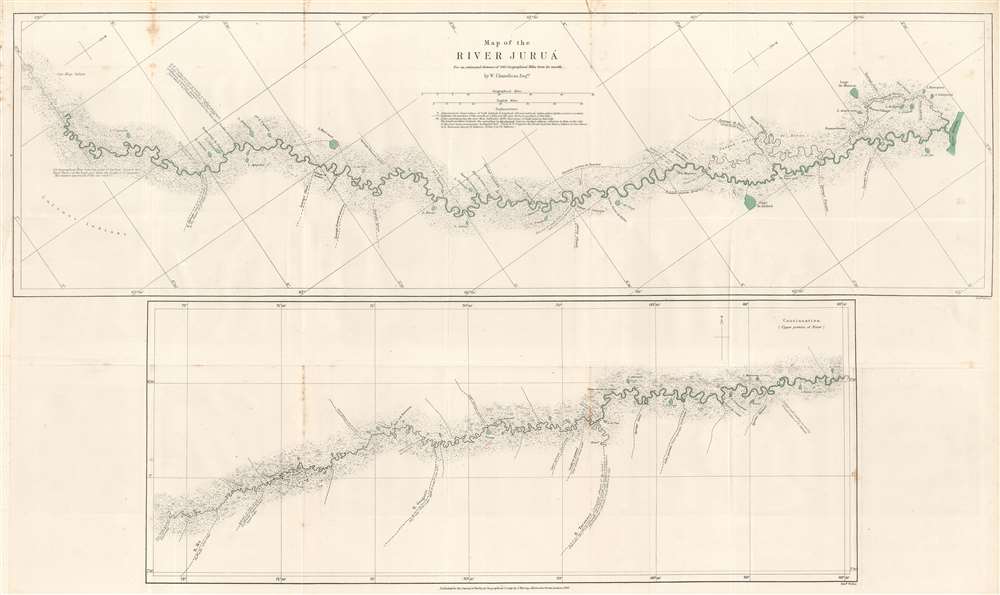
Map of the River Juruá.
$250.00
Acquire
- Digital Map Information
- Suitable for large format printing
- File Size: 13.33 MB
- File Type: ZIP / TIFF
- ICC color profile embedded
- Delivered instantly via download link
This is an 1869 William Chandless map of the Juruá River. The map divides the Juruá into two sections. The upper map illustrates the Juruá from its confluence with the Amazon to a point near Lake Ocoá. The lower map illustrates the upper portion of the river from Lake Ocoá to the point where the expedition reversed course. Small black crosses mark astronomical observations, and the dashed lines indicate the mouth of a lake or tributary. Chandless includes comments on the nature of the tributaries, and also notes the locations of the few tribal villages he encountered. (more details)
A beautiful view of a church that burned during the 1871 Great Chicago Fire.
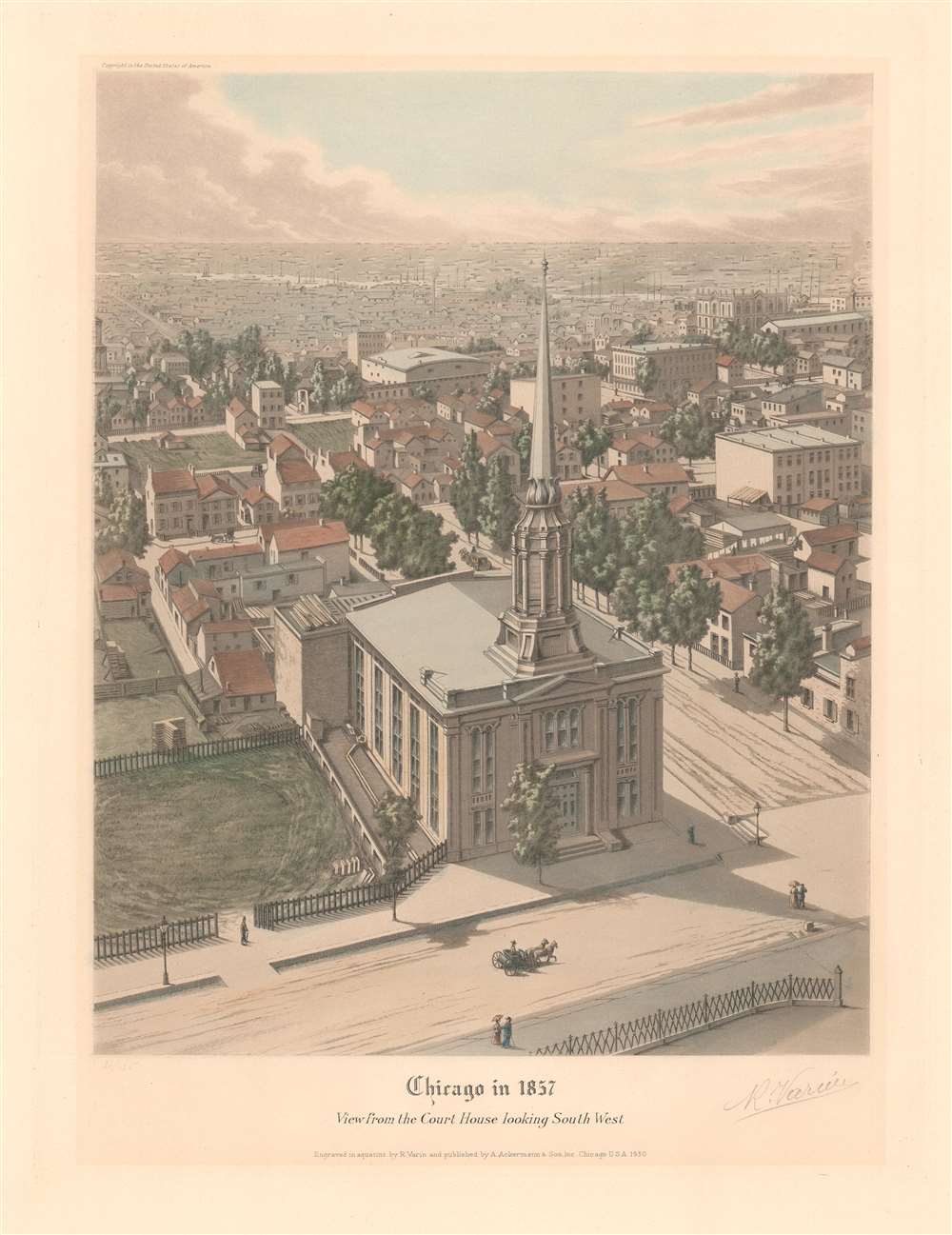
Chicago in 1857. View from the Court House looking South West.
$900.00
Acquire
- Digital Map Information
- Suitable for large format printing
- File Size: 14.45 MB
- File Type: ZIP / TIFF
- ICC color profile embedded
- Delivered instantly via download link
This is a 1930 Raoul Varin aquatint view of the First Baptist Church at the corner of Washington and South LaSalle Streets in Chicago, Illinois, as it appeared in 1857. The view looks southwest over Chicago from the top of the courthouse. The First Baptist Church dominates the foreground, while individual buildings and trees line South LaSalle Street. Ship masts are visible along the Chicago River. Both the courthouse and the First Baptist Church burned during the Great Chicago Fire of October 8-10, 1871. (more details)
Comic yet honest pictorial map of Baltimore County.
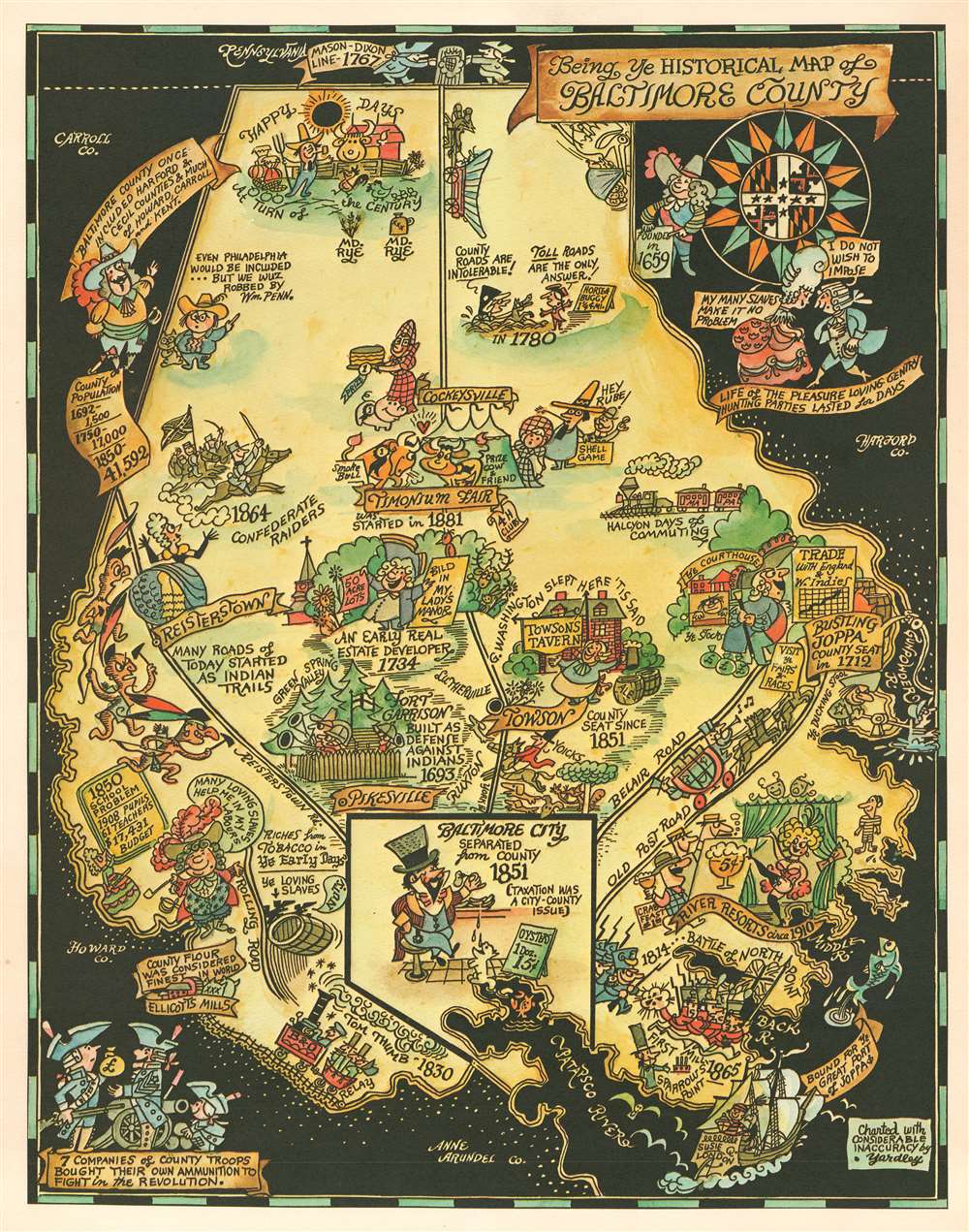
Being Ye Historical Map of Baltimore County.
$750.00
Acquire
- Digital Map Information
- Suitable for large format printing
- Full resolution TIFF file
- ICC color profile embedded
- Delivered instantly via download link
This is a c. 1935 Richard Yardley pictorial map of Baltimore County, Maryland. Populated by comical caricatures of the county's residents, Yardley both mocks and celebrates its history. Many of these vignettes illustrate historical events, such as the county's founding, its involvement in the American Revolution, the War of 1812, and the American Civil War. Baltimore itself does not appear on the map since it was separated from the county in 1851. Yardley acknowledges the role Native Americans played, stating that many of the modern-day county roads started as Indian trails. The other side of the coin was that Fort Garrison, near Pikesville, was built as a defense against those same Indians. Joppa occupies a sizable portion of the map, with its bustling trade with England and the West Indies prominently touted. A banner also states that the city was the county seat in 1712. (more details)
Münster's first map of Greece.
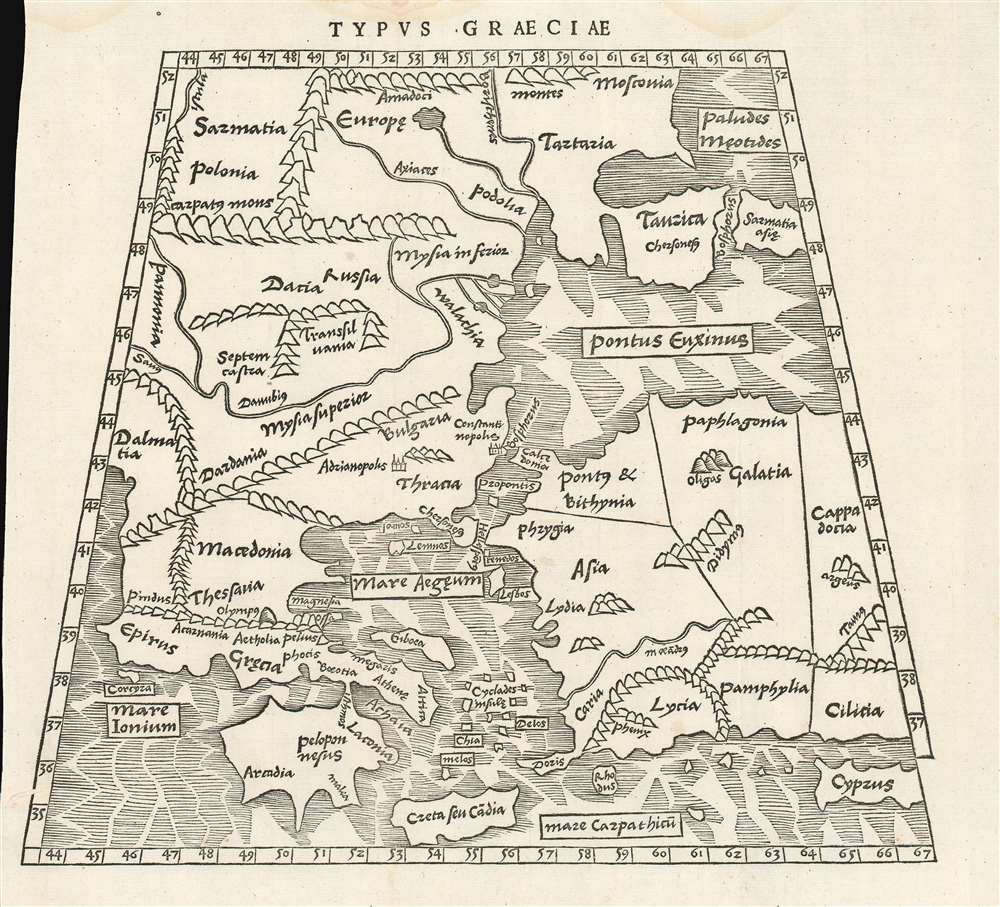
Typus Graeciae.
$600.00
Acquire
- Digital Map Information
- Suitable for large format printing
- Full resolution TIFF file
- ICC color profile embedded
- Delivered instantly via download link
This is a rare 1538 map of Greece and the region surrounding Constantinople, executed by Sebastian Münster for inclusion in his edition of Solinus' Polyhistor. It predates by two years the map of Greece in Münster's 1540 edition of Ptolemy'sGeographia, but it shares with other early maps of Greece the Ptolemaic conic projection. It is a sixteenth century woodcut showing third century geographical knowledge of the region - although at its northern extents, contemporary place names intrude. The map extends from Dalmatia in the west to Cappadocia, Cilicia and Cyprus in the east; it extends from Crete and Cyprus in the south to Poland, Muscovy and Sarmatia in Europe in the north. The Black Sea and the Meotian Swamp (the Sea of Azov) also appear. The map is boldly and legibly presented, with hachured oceans, and with mountains shown pictorially. The cities of Adrianopolis and Constantinople are marked pictorially as well, suggesting their greatness. (more details)
Gold regions in New South Wales and Victoria.
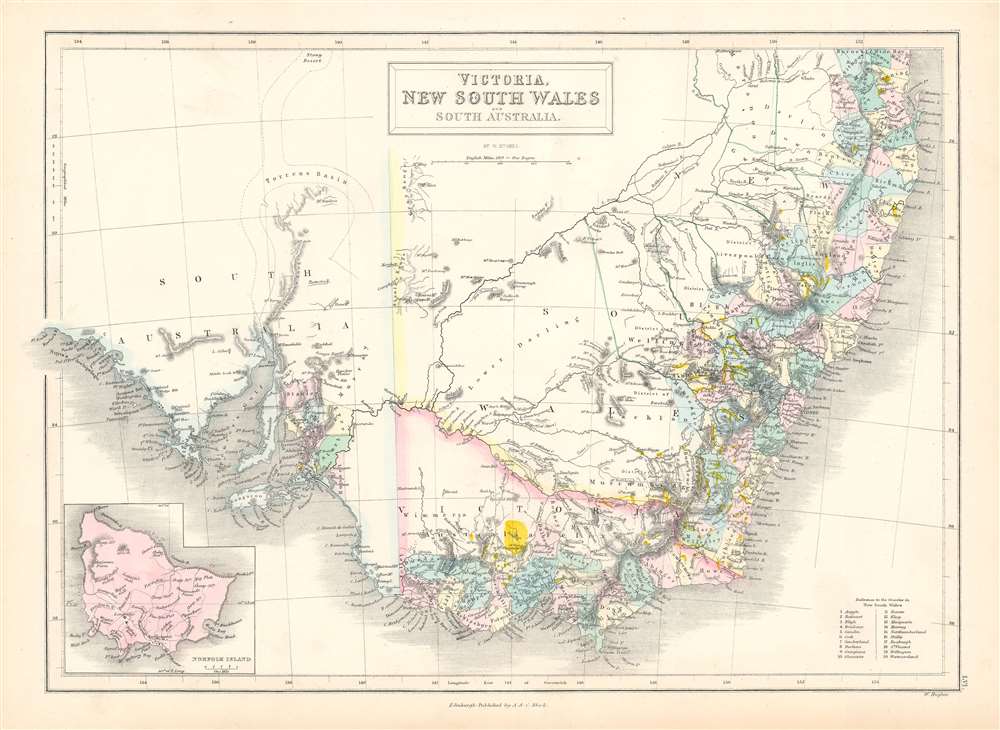
Victoria, New South Wales, and South Australia.
$150.00
Acquire
- Digital Map Information
- Suitable for large format printing
- Full resolution TIFF file
- ICC color profile embedded
- Delivered instantly via download link
This is an 1853 Adam and Charles Black map of New South Wales, Victoria, and South Australia, Australia. Updated because of intense interest surrounding the Australian Gold Rush, the region's gold deposits are highlighted in yellow. Twenty counties in New South Wales are numerically identified and correspond to a reference situated in the lower right corner. A handful of counties appear in South Australia around Adelaide and St. Vincent Gulf. All these counties are concentrated along the coastline with little inland detail, apart from river network in New South Wales. (more details)
Jungles, waterfalls, mountains, revolutionaries.
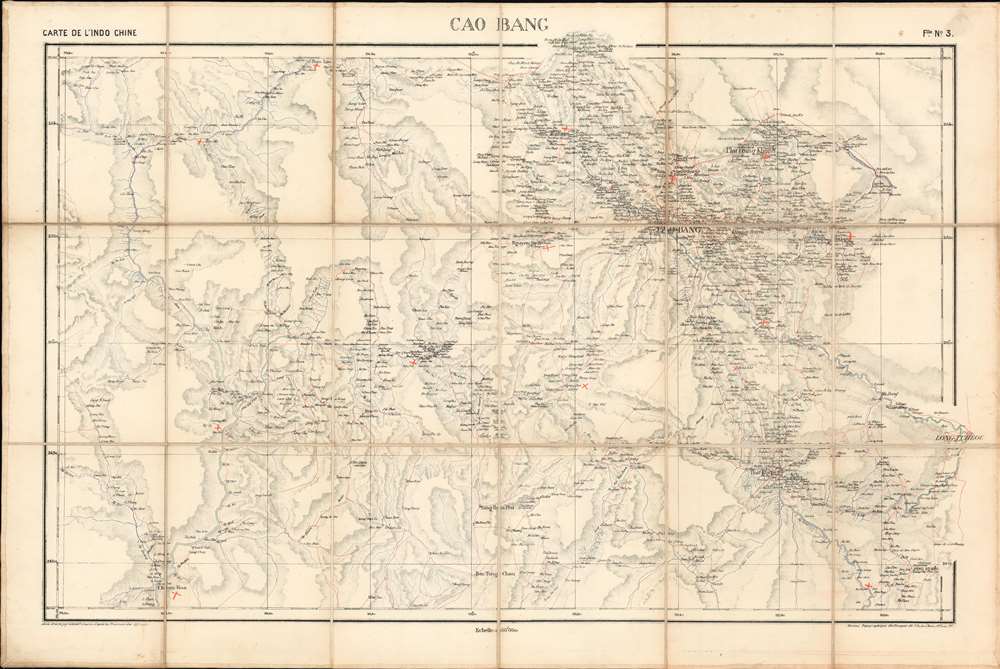
Cao Bang. / Carte de L'Indo-Chine.
$950.00
Acquire
- Digital Map Information
- Suitable for large format printing
- File Size: 39.32 MB
- File Type: ZIP / TIFF
- ICC color profile embedded
- Delivered instantly via download link
A rare 1895 map of the Cao Bằng region in northern Vietnam, on the border with Guangzi, China. The map was issued by the Bureau Topographique des Troupes de l'Indo-Chine and is sheet 6 of the Carte de L'Indo-Chine, an otherwise lost large-scale French military survey of the region. The area covered here, Cao Bằng, is considered one of the most beautiful places on Earth and one of Vietnam's most historically rich regions. The map is the work of surveys completed between 1886 and 1887 by French topographic surveys completed at the order of the Bureau Topographique as well as surveys completed by the 1886 Commission de Delimitation, which determined the Indochina-China border. (more details)
The path of invading armies - past limestone monoliths and stunning waterfalls.
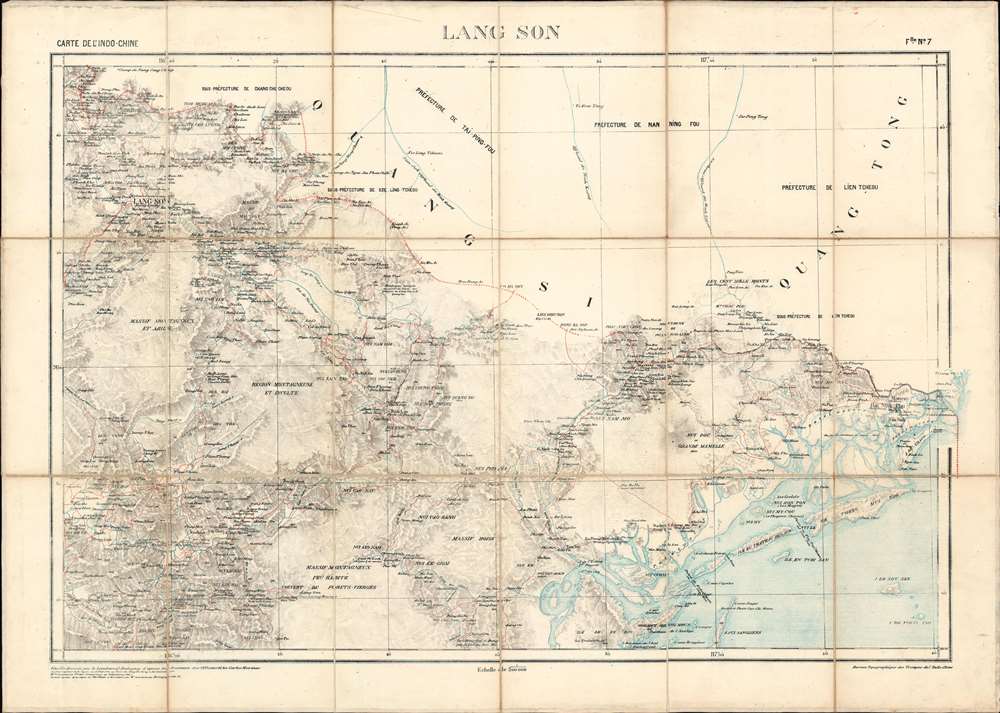
Lang Son. / Carte de L'Indo-Chine.
$950.00
Acquire
- Digital Map Information
- Suitable for large format printing
- File Size: 38.31 MB
- File Type: ZIP / TIFF
- ICC color profile embedded
- Delivered instantly via download link
A rare 1895 map of the Lạng Sơn region in northern Vietnam, off the Gulf of Tonkin and along the northern border with China. The map was issued by the Bureau Topographique des Troupes de l'Indo-Chine and is sheet 7 of the Carte de L'Indo-Chine, an otherwise lost large-scale French military survey of the region. The area covered here, the northeastern coastal section of the Gulf of Tonkin and the mountainous region as far as the city of Lạng Sơn, is considered one of the most beautiful places on Earth. The map is the work of surveys completed between 1886 and 1887 by French topographic officer Dominique Eugène Paul Balagny, and in 1886 along the Chinese border by a mysterious 'Lieutenant Privè.' (more details)
The Mekong Delta - one of the Earth's most ecologically diverse areas.
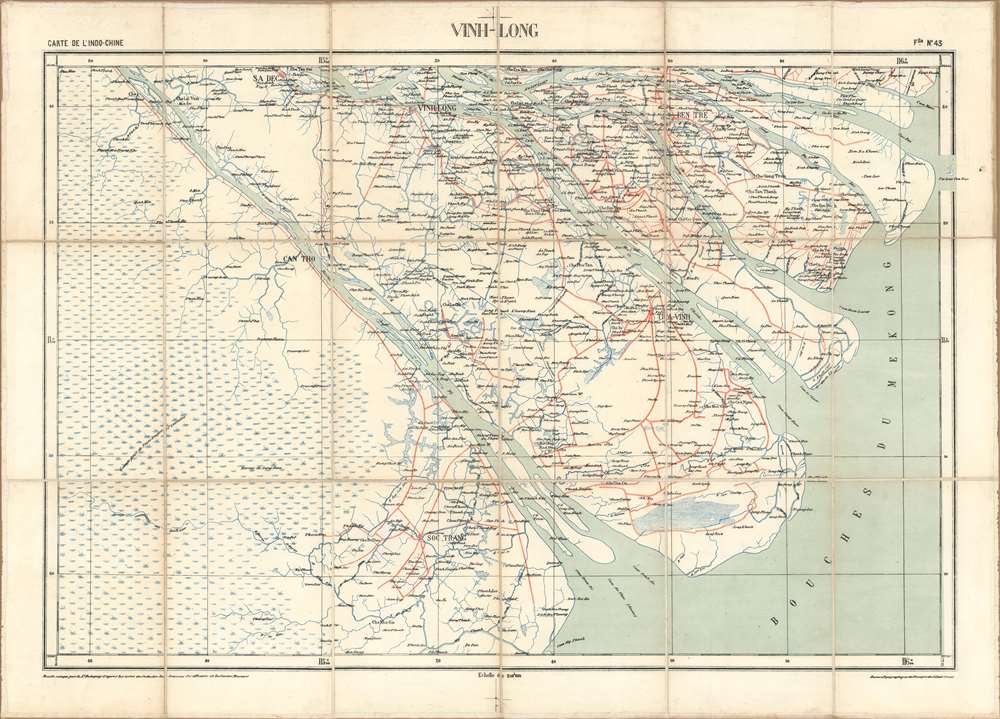
Vinh-Long. / Carte de L'Indo-Chine.
$950.00
Acquire
- Digital Map Information
- Suitable for large format printing
- File Size: 34.17 MB
- File Type: ZIP / TIFF
- ICC color profile embedded
- Delivered instantly via download link
A rare 1895 map of the Vinh-Long region of southern Vietnam, in the sprawling Mekong Delta. The map was issued by the Bureau Topographique des Troupes de l'Indo-Chine and is sheet 43 of the Carte de L'Indo-Chine, an otherwise lost large-scale French military survey of the region. The area covered here, the Mekong Delta and inland as far as the city of Vinh-Long, is considered one of the most beautiful places on Earth. The map is the work of surveys completed between 1886 and 1887 by French topographic officer Dominique Eugène Paul Balagny. (more details)
Emerald wasters and limestone monoliths! and sea caves!
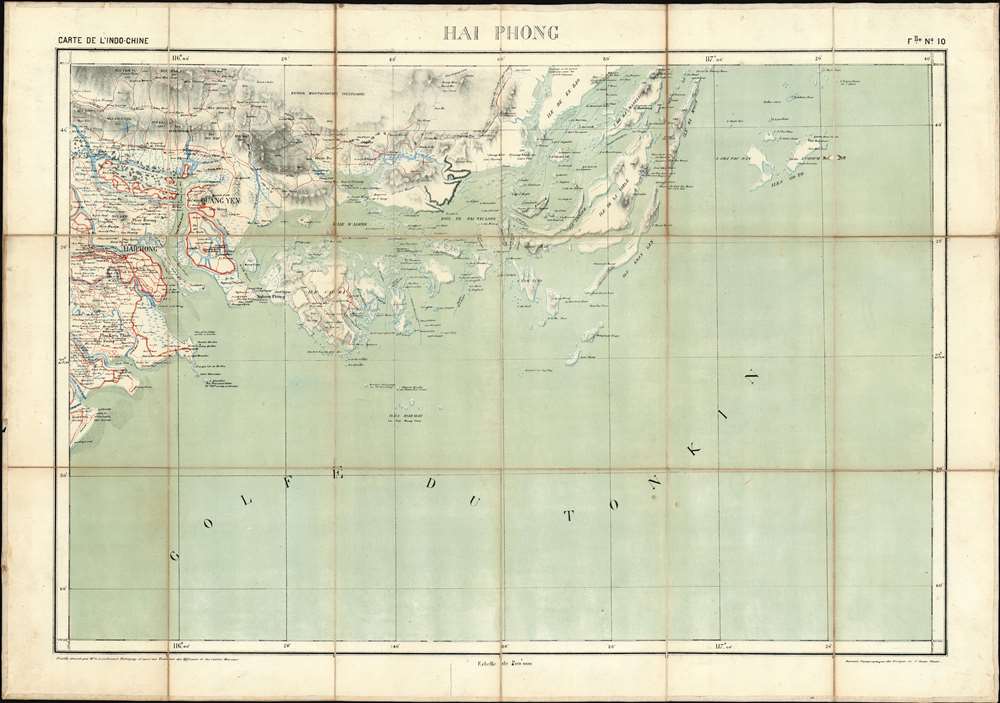
Hai Phong. / Carte de L'Indo-Chine.
$950.00
Acquire
- Digital Map Information
- Suitable for large format printing
- File Size: 35.93 MB
- File Type: ZIP / TIFF
- ICC color profile embedded
- Delivered instantly via download link
A rare 1895 map of the Hai Phong and Hạ Long Bay area in northern Vietnam, off the Gulf of Tonkin. The map was issued by the Bureau Topographique des Troupes de l'Indo-Chine and is sheet 10 of the Carte de L'Indo-Chine, an otherwise lost large-scale French military survey of the region. The area covered here, the northeastern coastal section of the Gulf of Tonkin, is considered one of the most beautiful places on Earth, flocked by both local and foreign tourists for its sparkling waters and majestic islands. The map is the work of surveys completed between 1899 and 1901 by French topographic officer Dominique Eugène Paul Balagny. (more details)
The first major telegraph lines throughout the Philippines.
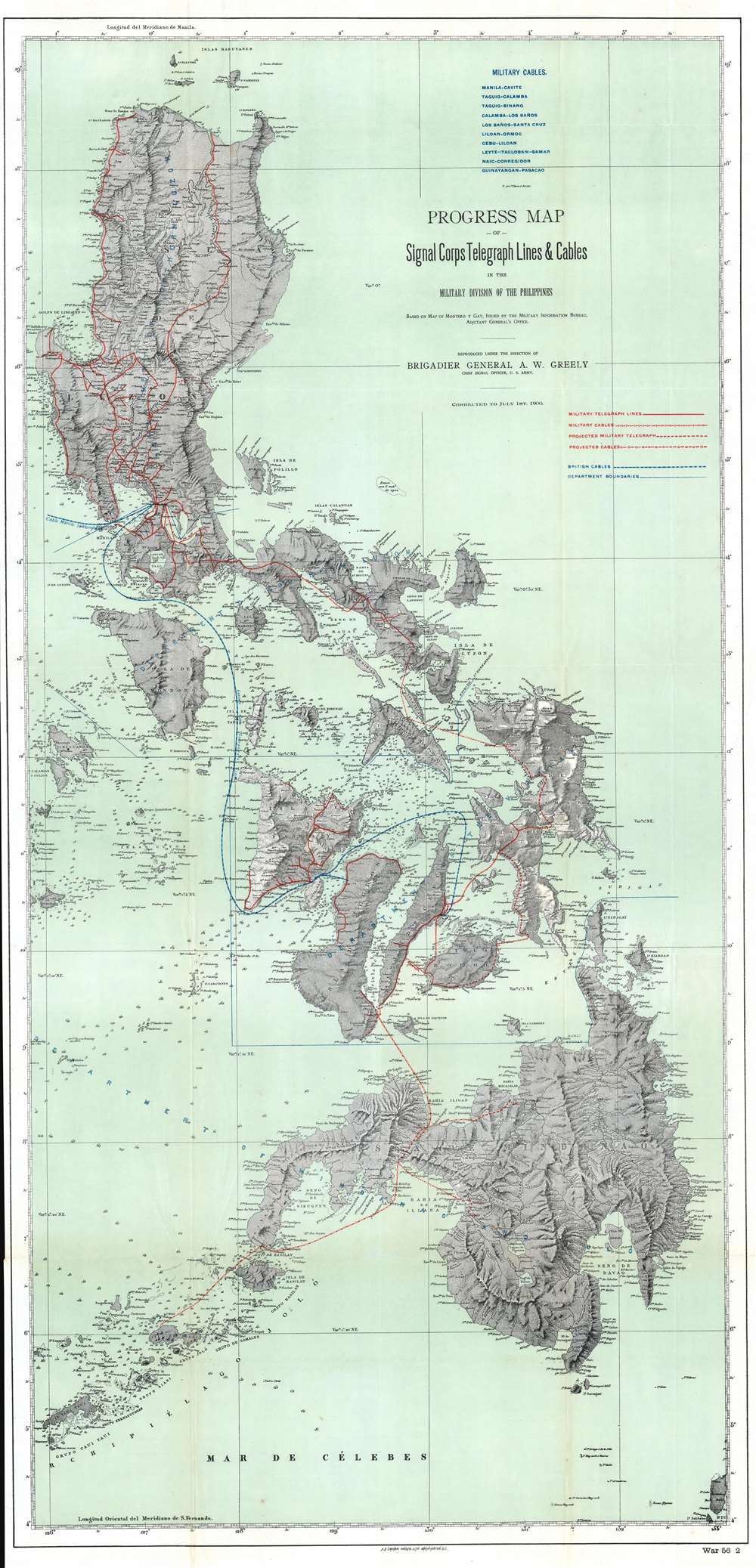
Progress Map of Signal Corps Telegraph Lines and Cables in the Military Division of the Philippines.
$900.00
Acquire
- Digital Map Information
- Suitable for large format printing
- File Size: 51.28 MB
- File Type: ZIP / TIFF
- ICC color profile embedded
- Delivered instantly via download link
This is a scarce 1900 map of the Philippines prepared under the direction of General Adolphus Washington Greely. This map represents a major step forward in Philippine infrastructure. The map is large and comprehensive, extending from the Babuyan Islands to the Sulu Archipelago, encompassing most of the modern-day Philippines except for Palawan. Cartographically, it is derived from the 1870 work of Claudio Montero y Gay. The map exhibits limited depth soundings throughout, but particularly between major island groups. American telegraphic cables, both extent and projected, are highlighted in red, while British lines appear in blue. (more details)
Panay during the Philippine-American War.
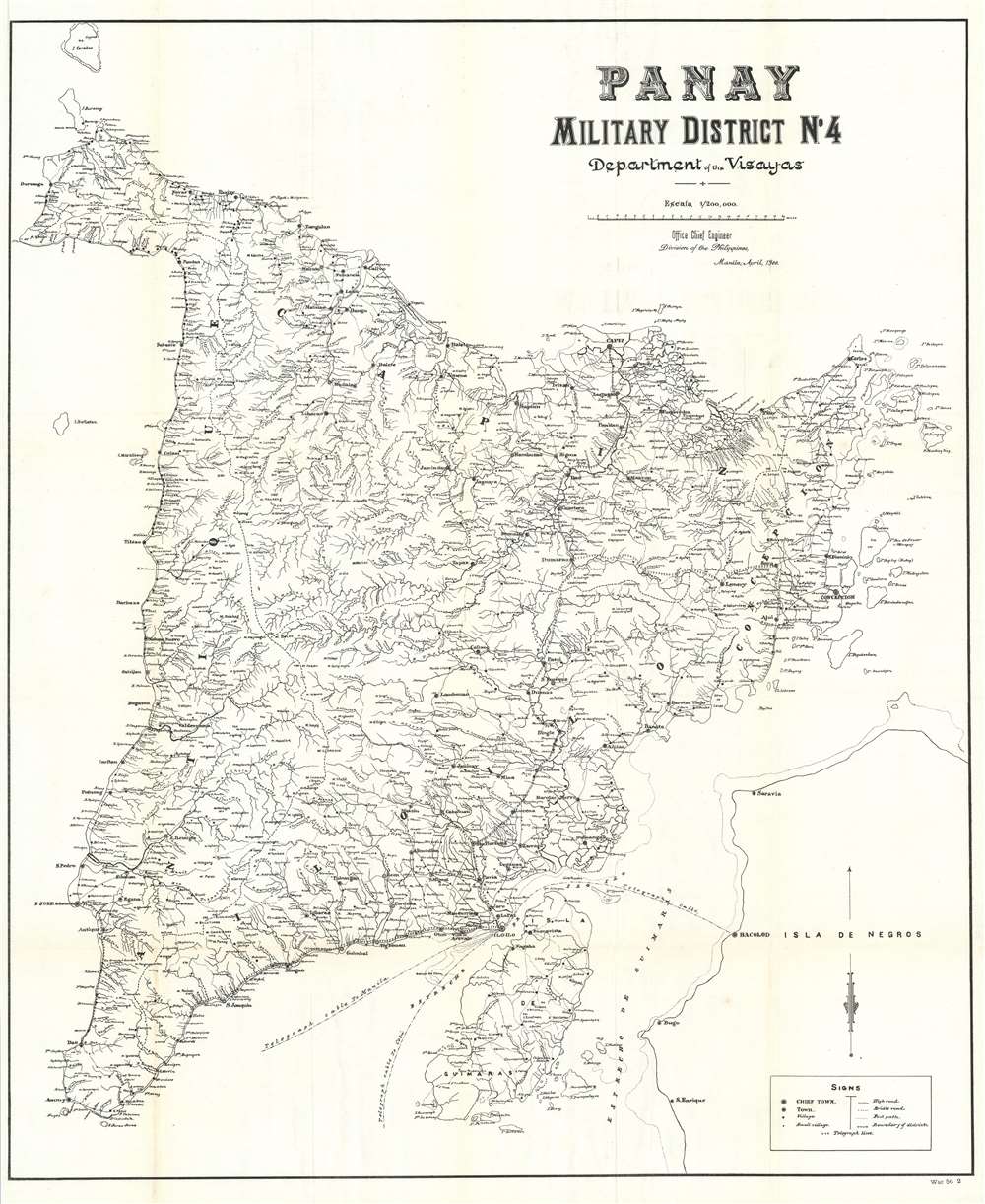
Panay. Military District No. 4. Department of the Visayas.
$750.00
Acquire
- Digital Map Information
- Suitable for large format printing
- File Size: 39.95 MB
- File Type: ZIP / TIFF
- ICC color profile embedded
- Delivered instantly via download link
This is a rare 1900 map of Panay, the Visayas, the Philippines, issued at the height of the Philippine-American War (1899 – 1902) by the Office of the Chief Engineer in the Philippines. The campaign in the Visayas began four days after the beginning of the campaign around Manila on Luzon. Fighting began at Iloilo (Ilo-Ilo) on Panay, followed closely by the occupation of Cebu City on Cebu and Bacolod on Negros. Highly detailed, the map depicts the entire island of Panay, including the myriad rivers, towns, and villages. The map also labels Negros, although the only town marked is Bacolod. Telegraph lines crisscross the island and also connect Iloilo to Manila, Cebu, and Bacolod. (more details)
A 'valuable map' of the Sinai Peninsula - RGS
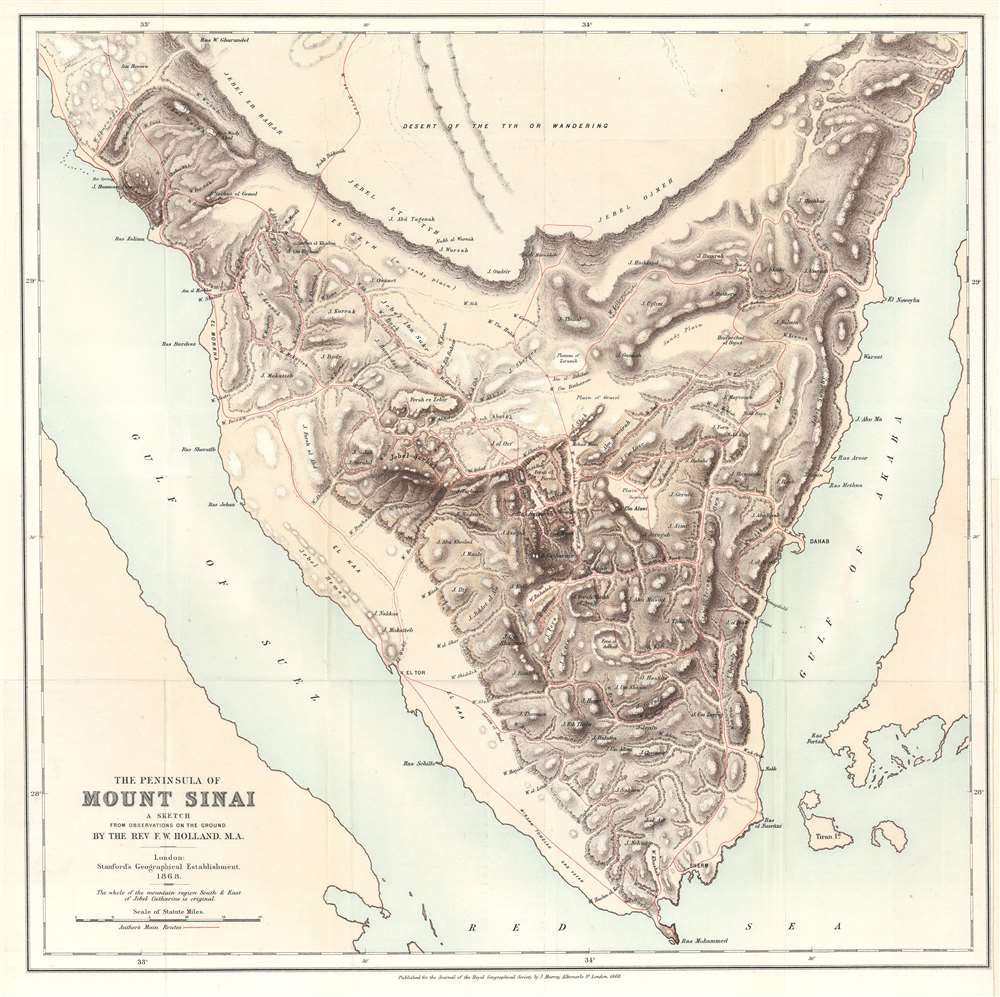
The Peninsula of Mount Sinai. A Sketch from Observations on the Ground by the Rev. F. W. Holland. M.A.
$750.00
Acquire
- Digital Map Information
- Suitable for large format printing
- Full resolution TIFF file
- ICC color profile embedded
- Delivered instantly via download link
This is Frederick Whitmore Holland's 1868 map of the Sinai Peninsula. The peninsula's mountainous terrain is illustrated in detail, with numerous peaks labeled with transliterations of their Arabic names. Holland traces the many wadis (valley, ravine, or channel that is dry except in the rainy season) and provides some commentary on the terrain. Mount Sinai, labeled here as J. Musa (its Arabic name), appears just south of the center of the peninsula. (more details)
The gateway to the Red River Delta.
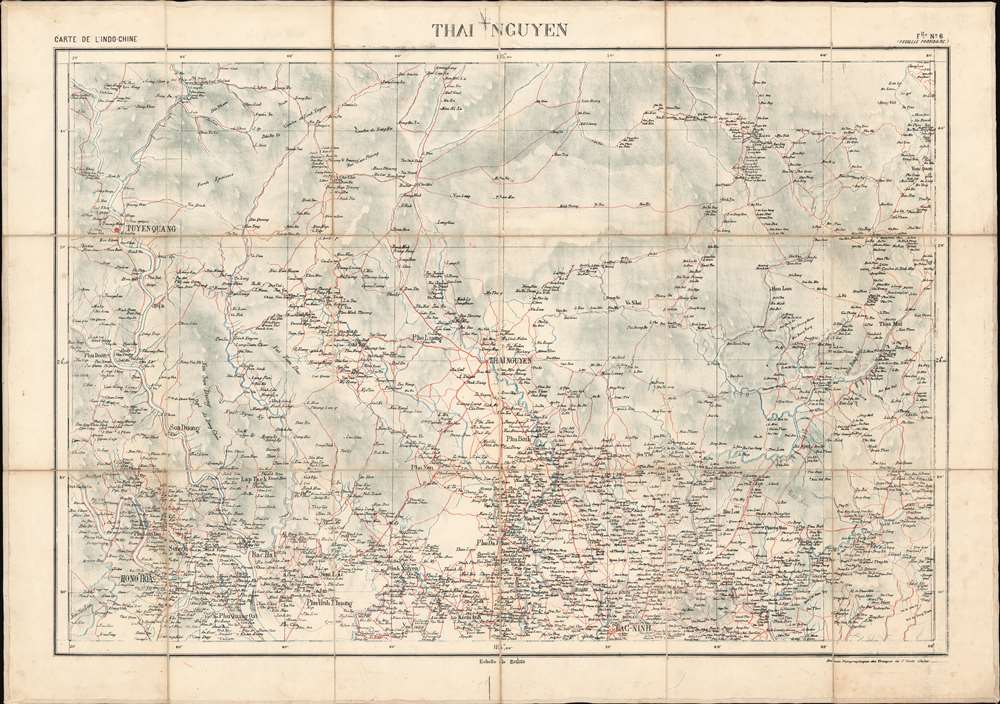
Thai Nguyen. / Carte de L'Indo-Chine.
$750.00
Acquire
- Digital Map Information
- Suitable for large format printing
- File Size: 46.64 MB
- File Type: ZIP / TIFF
- ICC color profile embedded
- Delivered instantly via download link
A rare 1895 map of the Thái Nguyên region in northern Vietnam, north of Hanoi. The map was issued by the Bureau Topographique des Troupes de l'Indo-Chine and is sheet 6 of the Carte de L'Indo-Chine, an otherwise lost large-scale French military survey of the region. The area covered here, Thái Nguyên, is a mountainous, midland region. It is the gateway, via road, rail and waterways, for socio-economic exchange with the important Red River Delta. It is also the site of Tam Đảo National Park. The map is the work of surveys completed between 1886 and 1887 by French topographic surveys completed at the order of the Bureau Topographique as well as surveys completed by the 1886 Commission de Delimitation, which determined the Indochina-China border. (more details)
Promotes Israeli attendance at the 1964 New York World's Fair!
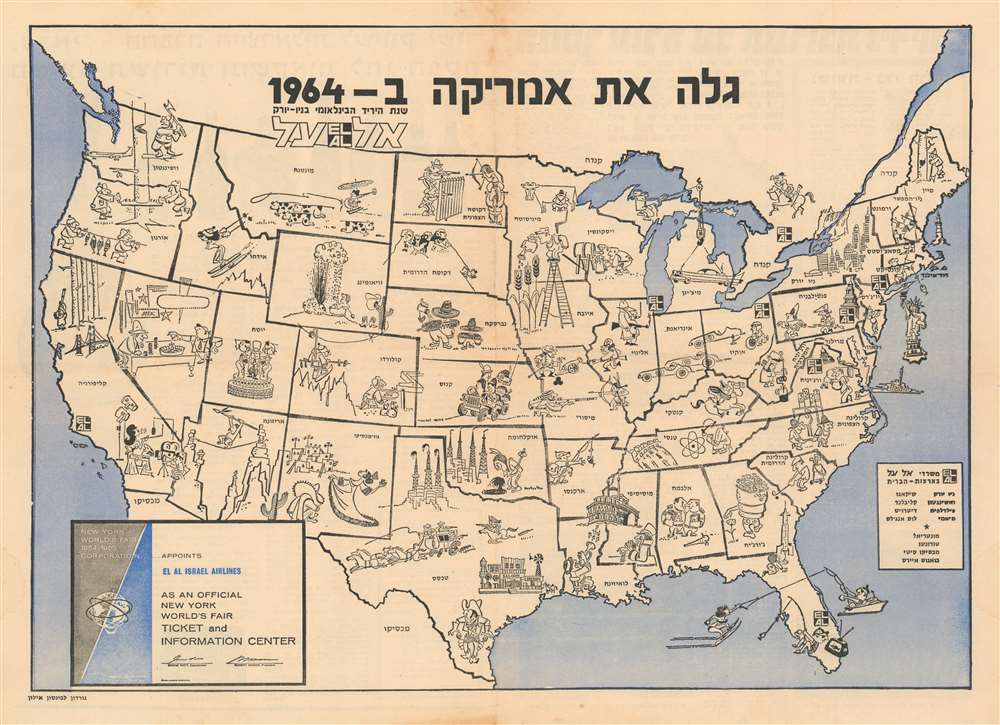
גלה את אמריקה ב -1964 היריד הבינלאומי בניו - יורק / Discover America at the 1964 New York International Fair.
$450.00
Acquire
Almost entirely in Hebrew and promoting Israeli tourism to the United States, this 1964 Gordon Levinson Ayalon pictorial map of the United States encourages Israelis to attend the 1964 World's Fair in New York City and, of course, fly El Al to get there. Fifty vignettes present images of life from coast to coast, and reinforce a few stereotypes along the way. Many of them also have a comic bent to them. Wyoming, for example, bears a man in a tub sitting underneath a geyser, while a guy in Colorado rides a chair lift and a second mines for silver. People gamble in Nevada and a Hollywood movie is filmed in California. Illinois is marked by a mobster, and cowboys and Indians fight it out in Texas and North Dakota. Horseracing dominates Kentucky, while a cigarette pack taller than a man marks North Carolina. The most outlandish, however, might be the vignette illustrating life in Montana, where someone is herding and roping cattle in a helicopter! Since this is an advertisement for El Al, block letters highlight cities where El Al flies, including Chicago, New York, Philadelphia, Washington, D.C., and Los Angeles. (more details)
Cold War tourism from East Germany to Moscow.

Moskau Illustriertes Schema.
$250.00
Acquire
A reminder of Cold War-era tourism, this is a 1968 Moscow City Planning office pictorial city plan or map of Moscow, Russia. This map, printed entirely in German was intended to court East German tourism to Moscow. Three hundred sixty-nine locations throughout Moscow are numerically identified and correspond with an index printed on the verso. These include museums, theaters, churches, and hotels. Numerous famous landmarks are illustrated in profile, such as St. Basil's Cathedral, the Bolshoi Theatre, the Cathedral of Christ the Savior, the Kotelnicheskaya Embankment Building, and the State Historical Museum. Many city parks are lavishly illustrated. A gorgeous pictorial inset of the Kremlin appears in the lower right corner. Opposite this inset, in the lower-left corner, a Moscow subway map conveniently helps tourists make their way around the city. (more details)
The first map of Albany County.
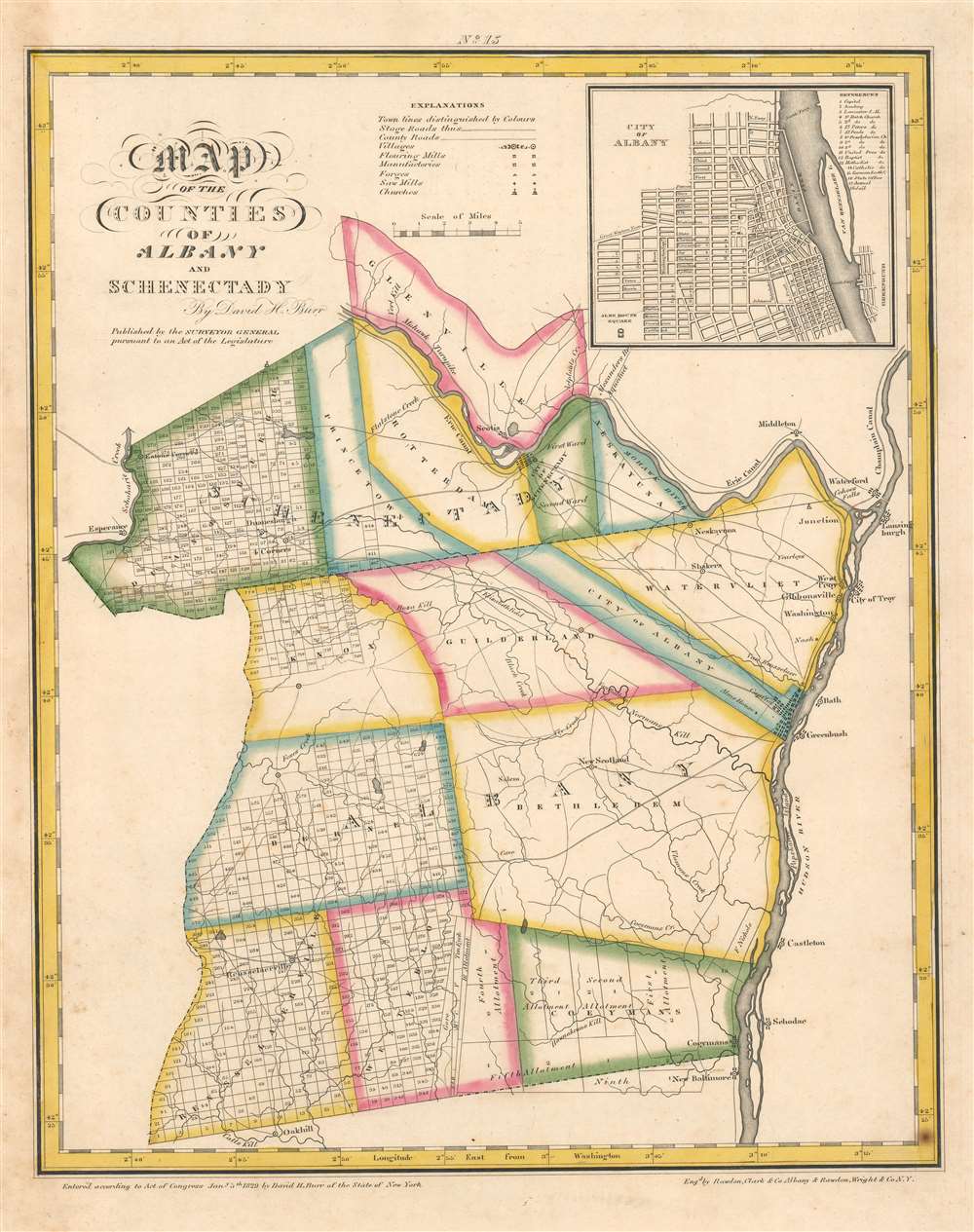
Map of the Counties of Albany and Schenectady.
$400.00
Acquire
- Digital Map Information
- Suitable for large format printing
- Full resolution TIFF file
- ICC color profile embedded
- Delivered instantly via download link
The first printed map of Albany County, this is David Burr's 1829 map of Albany and Schenectady Counties in New York. Towns in both counties are outlined in various colors to allow for easy differentiation and identified. Albany is situated along the Hudson River on the right. The region's stage roads are illustrated (although only the Mohawk Turnpike is labeled) and most of them serve Albany. Icons mark flour mills, factories, forges, sawmills, and churches. The Erie Canal runs through the upper portion of the map along the Hudson River from above Schenectady through West Troy and Washington to Albany. An inset of Albany appears in the upper right corner. Streets are illustrated and labeled. Eighteen locations across the city are numerically identified and correspond with an index in the upper right corner of the inset. These include the Capitol Building, the arsenal, and a dozen churches. (more details)
The Paris Commune - one year later.
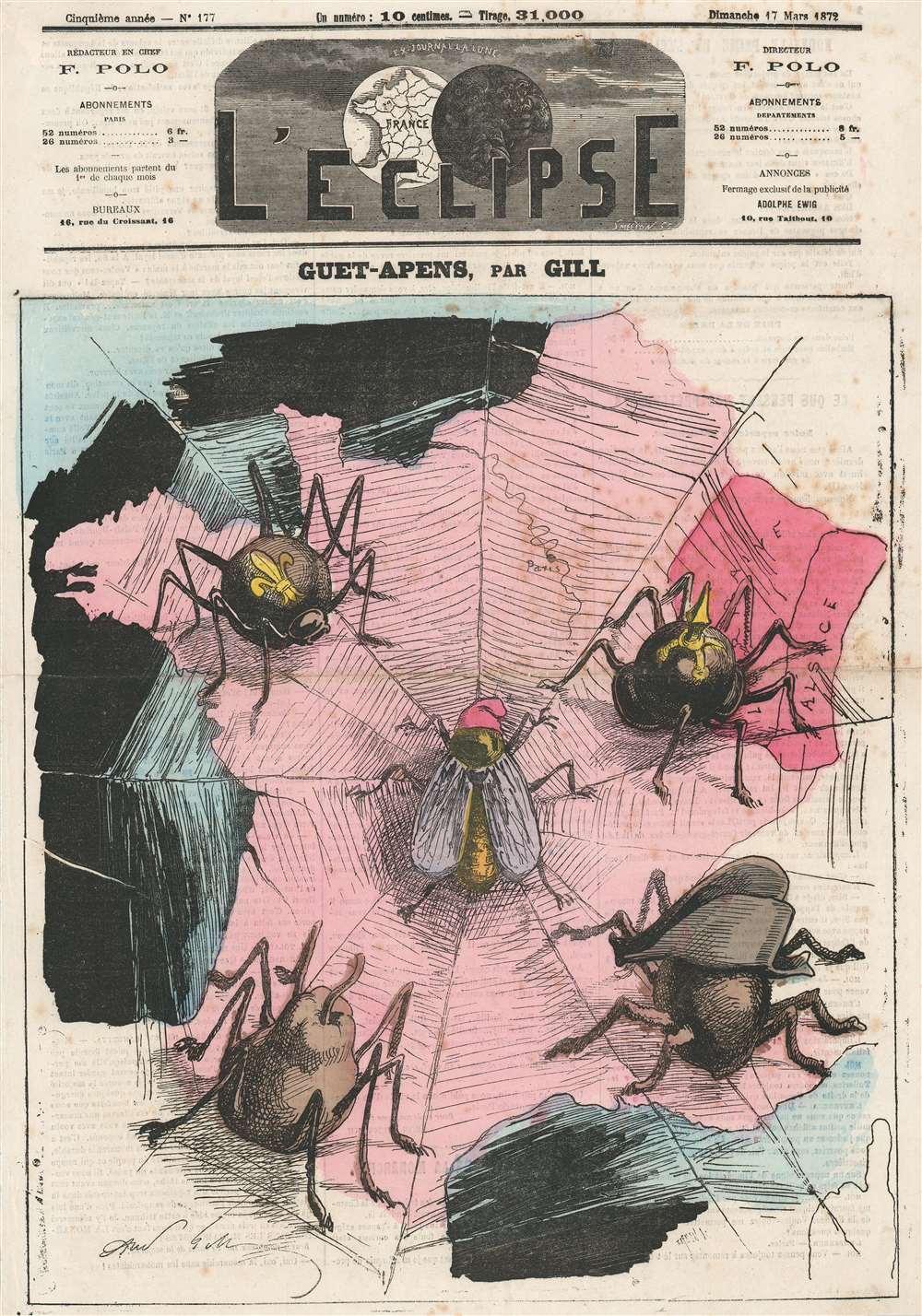
Guet-Apens. / Ambush.
$650.00
Acquire
- Digital Map Information
- Suitable for large format printing
- File Size: 13.41 MB
- File Type: ZIP / TIFF
- ICC color profile embedded
- Delivered instantly via download link
This is an 1872 André Gill political cartoon map of France after the fall of the Paris Commune. France appears as a gigantic spider's web, with the fly at the center representing the communards, identifiable by the symbolic red Phrygian cap. Four spiders surround the fly, apparently poised for attack. The spider on the top left represents the French government, then the Third Republic, identified by the fleur-de-lis. Proceeding clockwise, the next spider wears the iconic Prussian Pickelhaube, represents Germany and stands astride Alsace and Lorraine, two French provinces that Germany annexed after their victory in the Franco-Prussian War. The spider in the lower right corner represents the exiled French Emperor Napoleon III, who was captured by Prussia during the Franco-Prussian War. The fourth 'spider,' which is, in fact, a pear with spider's legs, represents the Royalists. The pear was the preferred symbol for the 'rotund' Louis-Philippe, the last French king. (more details)
Chromolithograph view of Washington's tomb at Mount Vernon.
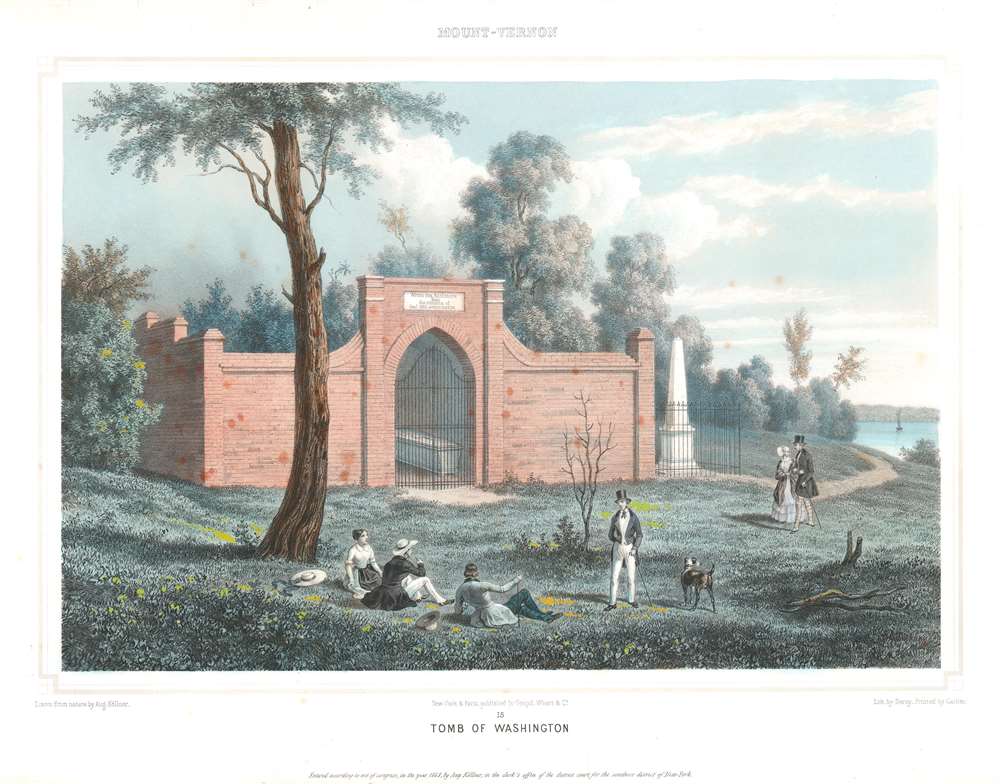
Tomb of Washington.
$375.00
Acquire
- Digital Map Information
- Suitable for large format printing
- Full resolution TIFF file
- ICC color profile embedded
- Delivered instantly via download link
This is an 1848 Augustus Köllner view of George Washington's tomb at Mount Vernon, Virginia. Depicting the New Tomb at Mount Version, the tomb's brick façade dominates the view, and the inscription above the archway is legible and reads 'Within this Enclosure Rest the remains of Genl. George Washington.' Washington's marble casket is seen through the steel gate barring entry to the tomb. A white obelisk (described as a marble shaft by Mount Vernon) appears to the right and was erected in memory of Bushrod Washington, a proprietor of Mount Vernon. Two men and one woman are illustrated lounging under a tree and are seen conversing with another man in the foreground. A couple strolling through the ground are seen further back, and the Potomac River can just be seen along the right side. (more details)