
NEW ACQUISITIONS
Taiwanese city plan of Taichung City, the second largest city in Taiwan.
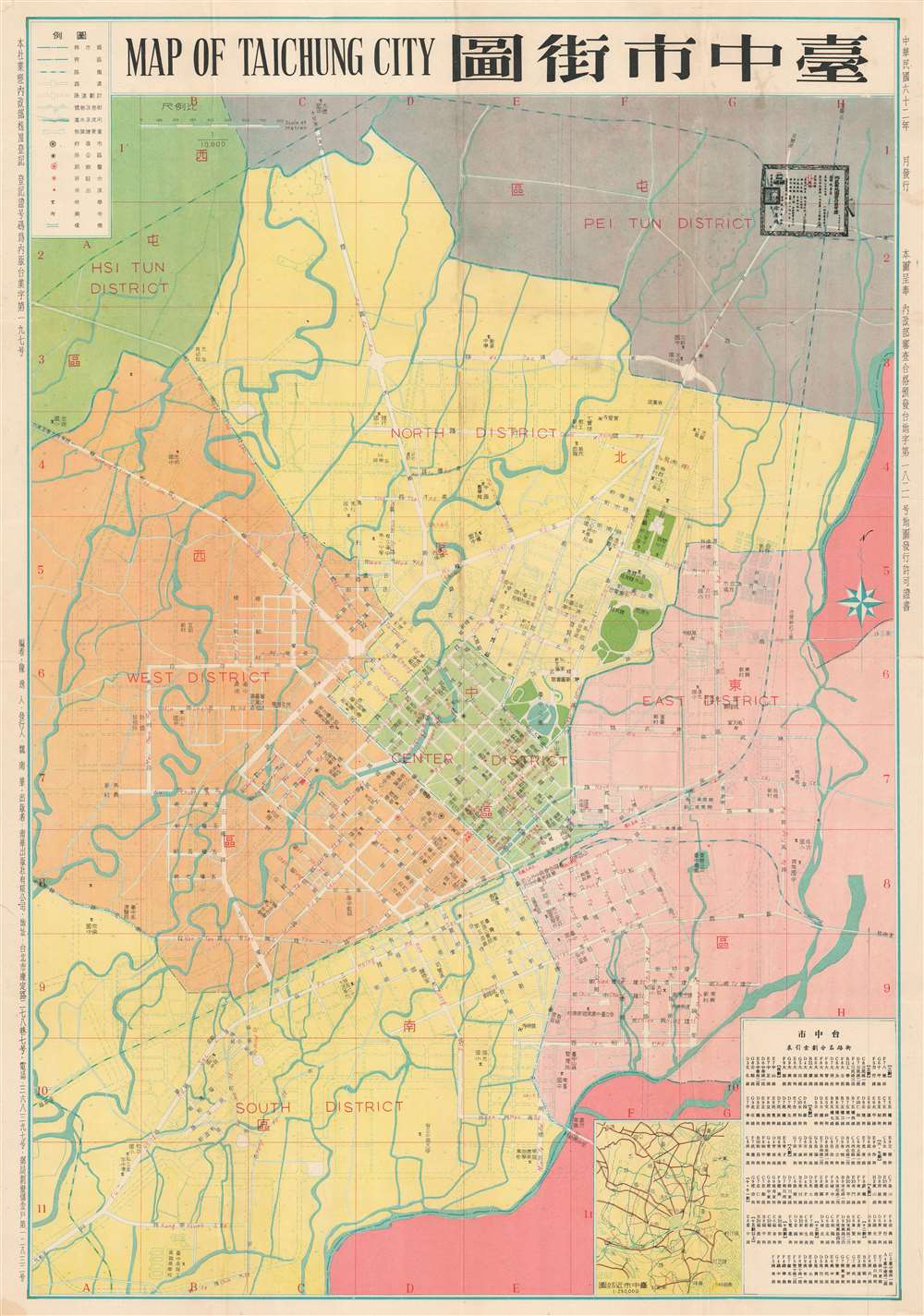
Map of Taiching City. 圖街市中臺.
$400.00
Acquire
This is a 1972 Nanhua Publishing House (南華出版社) city plan or map of Taichung City, Taiwan. Printed in both English and Chinese, the map depicts the city from the Pei Tun District to the South District. Streets throughout are labeled, although more streets bear Chinese labels than English. The cartographer leverages color coding to differentiate districts and the city's blue rivers stand out in contrast. Blue dashed lines trace railroad lines. A legend in the upper left explains the various notations used. (more details)
Christmas greetings from Southeast Asia - with a geography lesson.
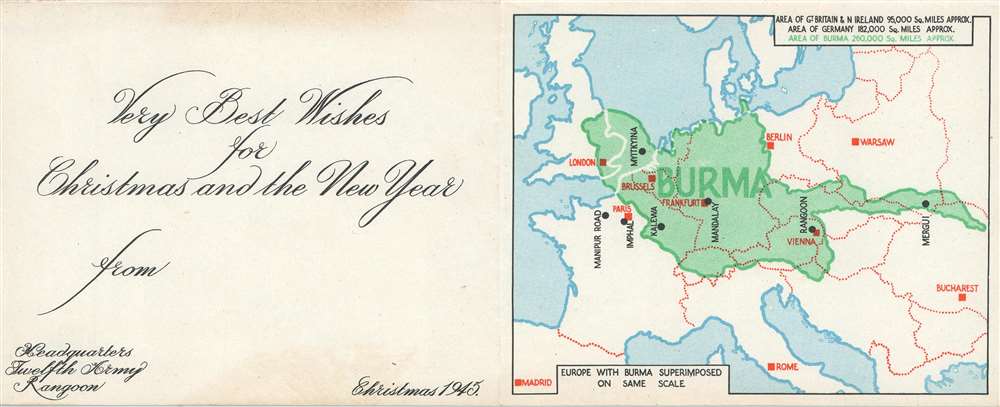
Christmas Greetings.
$200.00
Acquire
- Digital Map Information
- Suitable for large format printing
- Full resolution TIFF file
- ICC color profile embedded
- Delivered instantly via download link
This is a 1945 British Twelfth Army Christmas card map of Burma / Myanmar superimposed over a map of Europe. The card extends the Army's 'very best wishes for Christmas and the New Year' while at the same time providing a geography lesson for family and friends back in Britain. Drawn on the same scale, Burma appears in green and extends from central England to eastern Romania and covers a significant portion of continental Europe, allowing a British audience to relate to the vastness of the country. The Twelfth Army insignia, consisting of a Chinthe on a red background with a black stripe and 'XII' written along the bottom in white letters, adorns from front of the card. (more details)
Published by 'The grandmother of Afghanistan'.
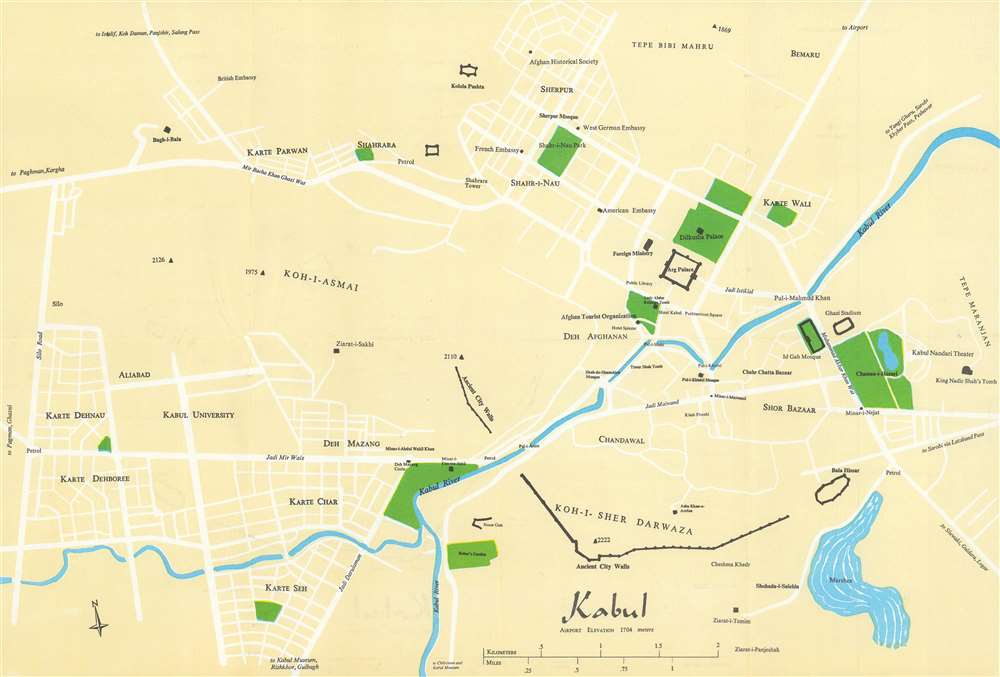
Kabul.
$75.00
Acquire
This is a first edition 1965 Nancy Hatch Dupree tourist city plan or map of Kabul, Afghanistan. Although Afghanistan may not seem like a tourist mecca today, not long ago, it was considered to be among the most beautiful and welcoming places in Central Asia. Neighborhoods are labeled along with several important buildings. These include the Id Gah Mosque, the Dilkusha Palace, the Arg Palace, the Foreign Ministry, the Afghan Historical Society, Kabul University, and the American, West German, and French Embassies. City parks are shaded green and the ancient city walls are also illustrated. Only major streets are labeled but many are illustrated. (more details)
Issued just days after the outbreak of the Qing-Japan War or First Sino-Japanese War.
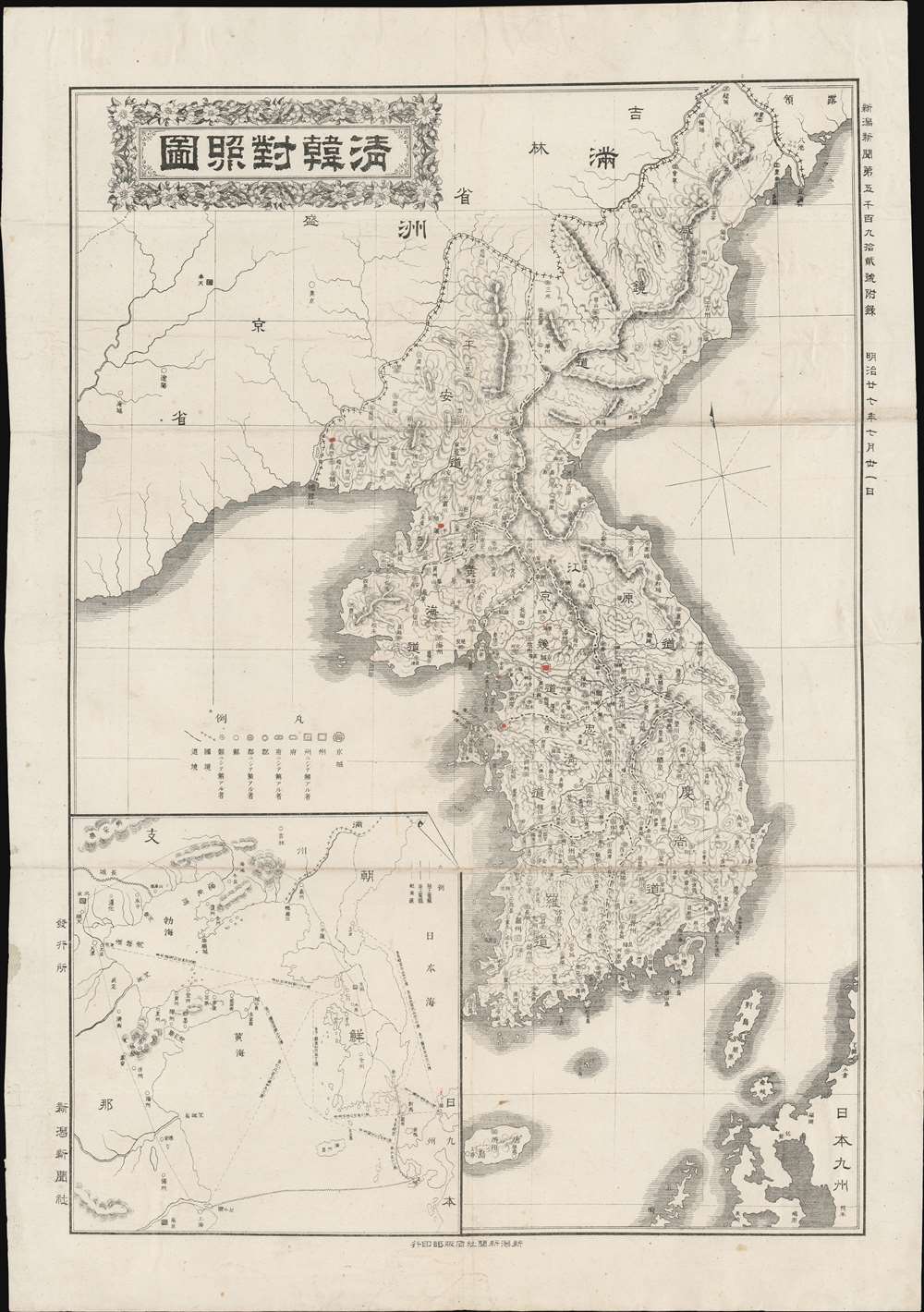
Comparative Map of Qing and Korea. / 清韓對照圖
$1,200.00
Acquire
- Digital Map Information
- Suitable for large format printing
- File Size: 13.89 MB
- File Type: ZIP / TIFF
- ICC color profile embedded
- Delivered instantly via download link
A rare 1894 map of Korea drawn to illustrate the beginning of the First Sino-Japanese War (1894 - 1895). The war broke out on July 25th, and this map went to the presses on July 31st, just 6 days later. The map covers all of modern-day South Korea and North Korea, as well as parts of adjacent Manchuria. Korea is here divided into provinces with major cities, and the roadways connecting them, noted. Topography is rendered with hachure. In the lower left a large inset detail telegraph cables and shipping lanes between China and Korea. Ostensibly the map is intended to offer a comparative view of China and Korea, but in fact, merely illustrates connections between the two nations - which would of course be of great intersect at the outbreak of a war that would largely be fought in Korea and China. (more details)
Reverend Alexander Williamson's 1860s travels through Manchuria.
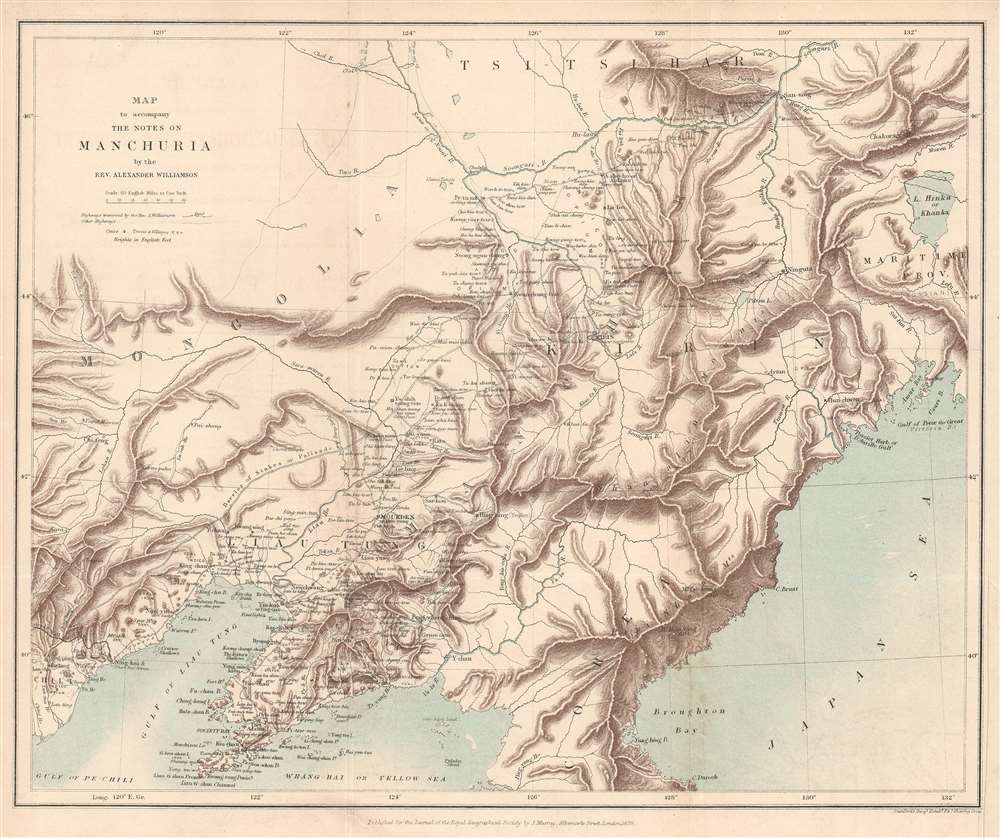
Map to accompany the Notes on Manchuria by the Rev. Alexander Williamson.
$300.00
Acquire
- Digital Map Information
- Suitable for large format printing
- File Size: 8.25 MB
- File Type: ZIP / TIFF
- ICC color profile embedded
- Delivered instantly via download link
This is an 1870 John Murray map of Manchuria, China - a region that within 20 years would become the stage for a global power struggle between Imperial Japan, Qing China, and Tzarist Russia. The map was drawn to accompany a paper written by Reverend Alexander Williamson and published in The Journal of the Royal Geographical Society. Parallel lines trace Williamson's travels through the region. Cities, towns, and villages are labeled throughout, including Mukden (Shenyang). The region's impressive topography leaps off the page, and its extensive river network is well illustrated. Part of the Willow Palisade (labeled here as Barrier of Stakes or Palisade) appears and traverses a southwest-northeast line through the map's center. The Willow Palisade, a system of embankments and ditches planted with willows, was built by the Qing in the late 17th century and separated traditionally Manchu areas from Mongol territory. (more details)
Freedom for civilian aviation after World War II?
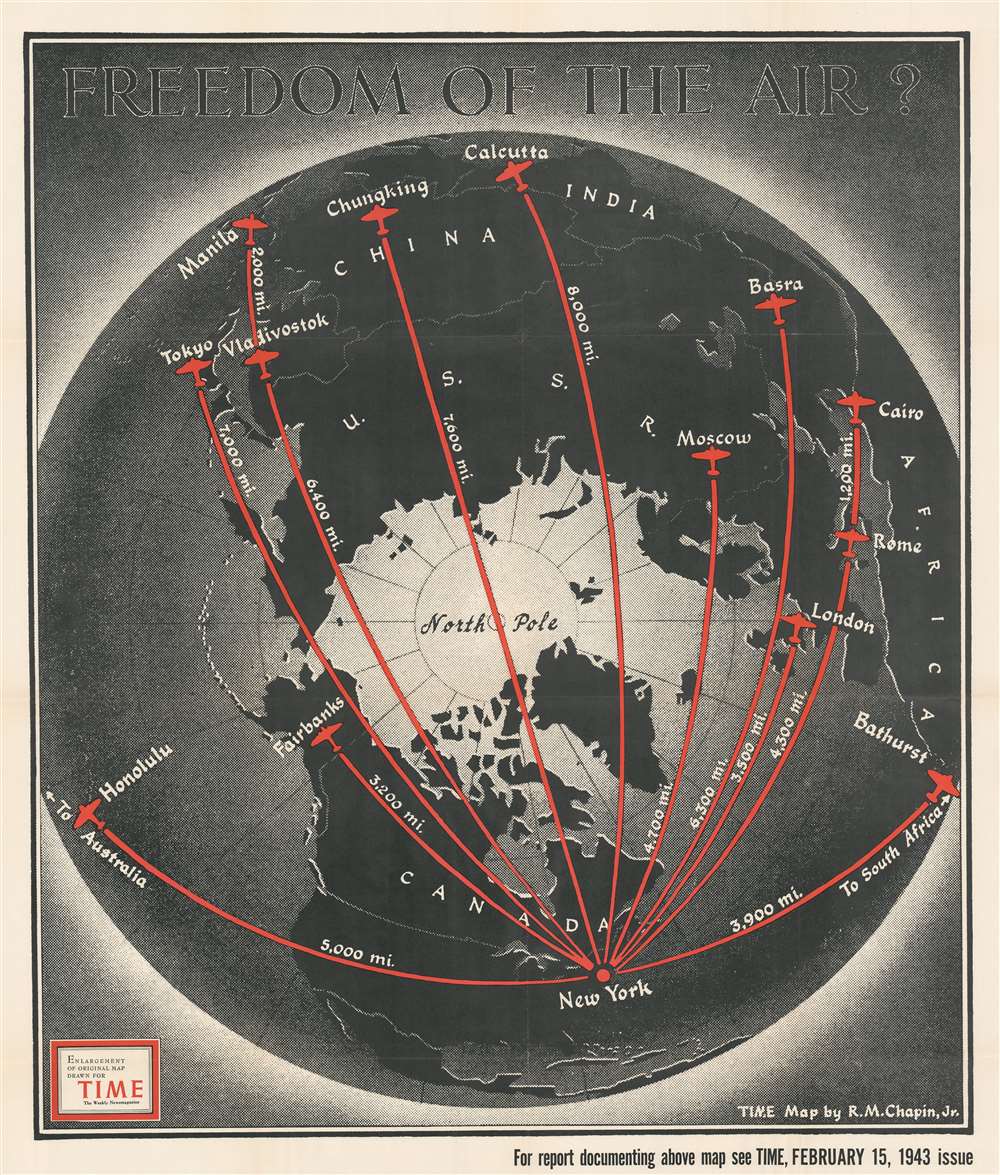
Freedom of the Air?
$500.00
Acquire
- Digital Map Information
- Suitable for large format printing
- File Size: 87.48 MB
- File Type: ZIP / TIFF
- ICC color profile embedded
- Delivered instantly via download link
This is a 1943 Robert M. Chapin, Jr. map of the Northern Hemisphere and its great circle aviation routes. Red lines highlight eleven great circle routes from New York to points across the hemisphere, including London, Rome, Tokyo, Moscow, Calcutta, Fairbanks, and Honolulu. Each route's distance from New York appears in miles and silhouettes of the iconic DC-3 / C-47 mark each city. (more details)
Fascinating Depiction of Siberia based on a Hard-to-Find Source.
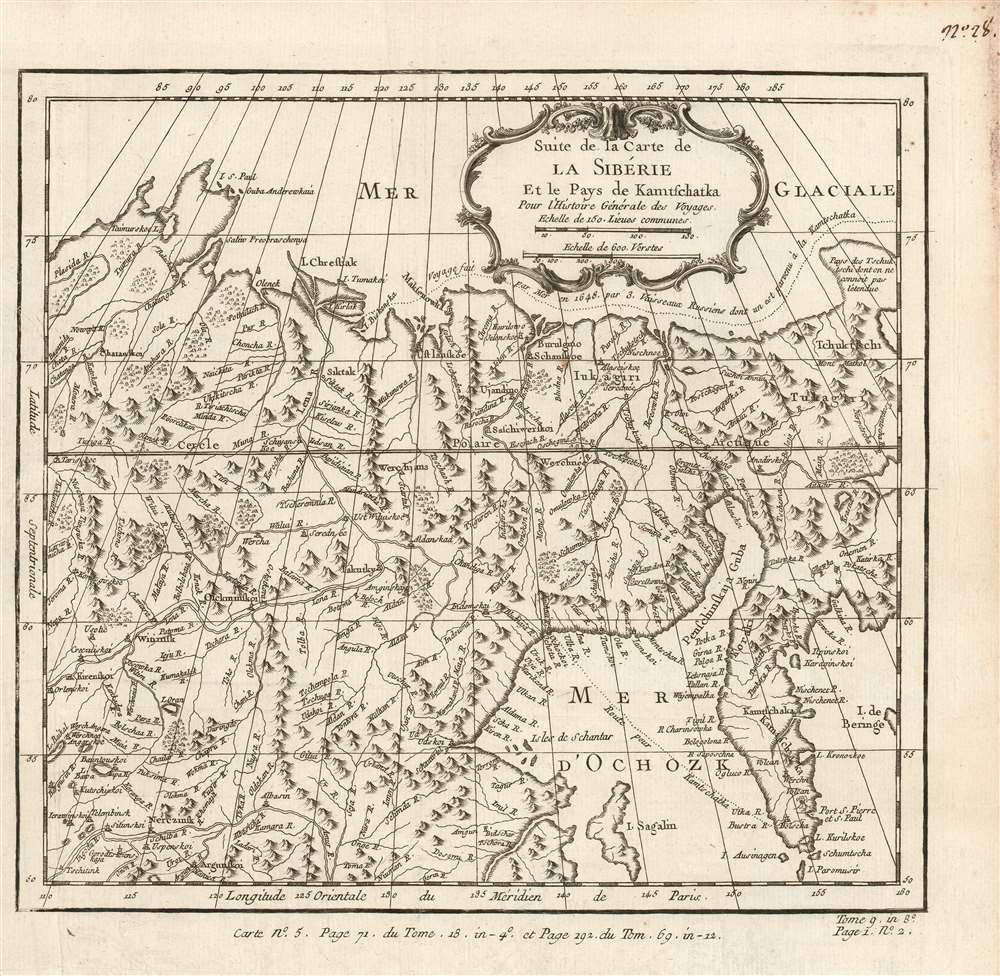
Suite de la Carte de La Siberie Et le Pays de Kamtschatka Pour l'Histoire Générale des Voyages.
$450.00
Acquire
- Digital Map Information
- Suitable for large format printing
- Full resolution TIFF file
- ICC color profile embedded
- Delivered instantly via download link
This is a beautifully engraved 1780 map of northeastern Asia, including Siberia and the Kamchatka Peninsula. Executed by Bellin, the map's details are drawn from the Asian portions of Gerhard Friedrich Müller's landmark 1754 Nouvelle Carte Des Decouvertes. Although Müller is lionized for its revelations of the voyages of Vitus Bering (1681 - 1741) and Aleksei Chirikov (1703 -1748), it also provided remarkably state-of-the-art details for the northeastern extremes of Siberia and Kamchatka. Müller's map was intended to counter the fraudulent maps produced of the same regions by fellow Academians Joseph-Nicolas De l’Isle (1688 - 1768) and Phillippe Buache (1700 - 1773), and the adoption of his geography by no lesser a figure than Bellin is a sign of his success. While mountains are shown pictorially, the delineation of the Sea of Ochosk, Sakhalin Island and the Kamchatka Peninsula is remarkably accurate. The Tschukschi Peninsula is shown in vague hachure, with a note explaining that its size is not understood. (more details)
Biblical wonders of the Sinai.

Abbildung Des H. Bergs Horeb und Seiner Gegend.
$450.00
Acquire
- Digital Map Information
- Suitable for large format printing
- Full resolution TIFF file
- ICC color profile embedded
- Delivered instantly via download link
This is a rare 1732 Joseph Stocklein depiction of Mount Horeb, (identifying it as Mount Sinai) Mount Saint Catherine, and a third mountain labeled 'Strasberg'. The stylized mountains are set in a dramatically foreshortened bird's eye view of the Holy Land, encompassing not only all of the Sinai Peninsula but also including the land of Canaan and (judging by the prominent Crucifixion) Jerusalem itself. Thus Stocklein's view places the site of Moses' receipt of the Ten Commandments in a markedly Christian framework. The view combines scenes from different stages in Biblical history: Atop Horeb/Sinai, a vignette numbered '7' shows Moses receiving the Commandments (the Ark of the Covenant lies beside him, awaiting the tablets.) Nestled between the mountains are the walled compounds of the Monastery of St. Catharina, built between 548 and 565 CE.
At the far left is a body of water, labeled as the Red Sea. At the top center, not to be mistaken for the sun (which can be seen rising to the right of the view, indicating east) is the radiance-streaming Tetragrammaton, reinforcing the identity of Mount Horeb as the 'Mountain of YHWH.' The view is numbered and lettered, with reference to an absent descriptive text. (more details)
At the far left is a body of water, labeled as the Red Sea. At the top center, not to be mistaken for the sun (which can be seen rising to the right of the view, indicating east) is the radiance-streaming Tetragrammaton, reinforcing the identity of Mount Horeb as the 'Mountain of YHWH.' The view is numbered and lettered, with reference to an absent descriptive text. (more details)
The beginning of events leading to the Second Anglo-Afghan War.
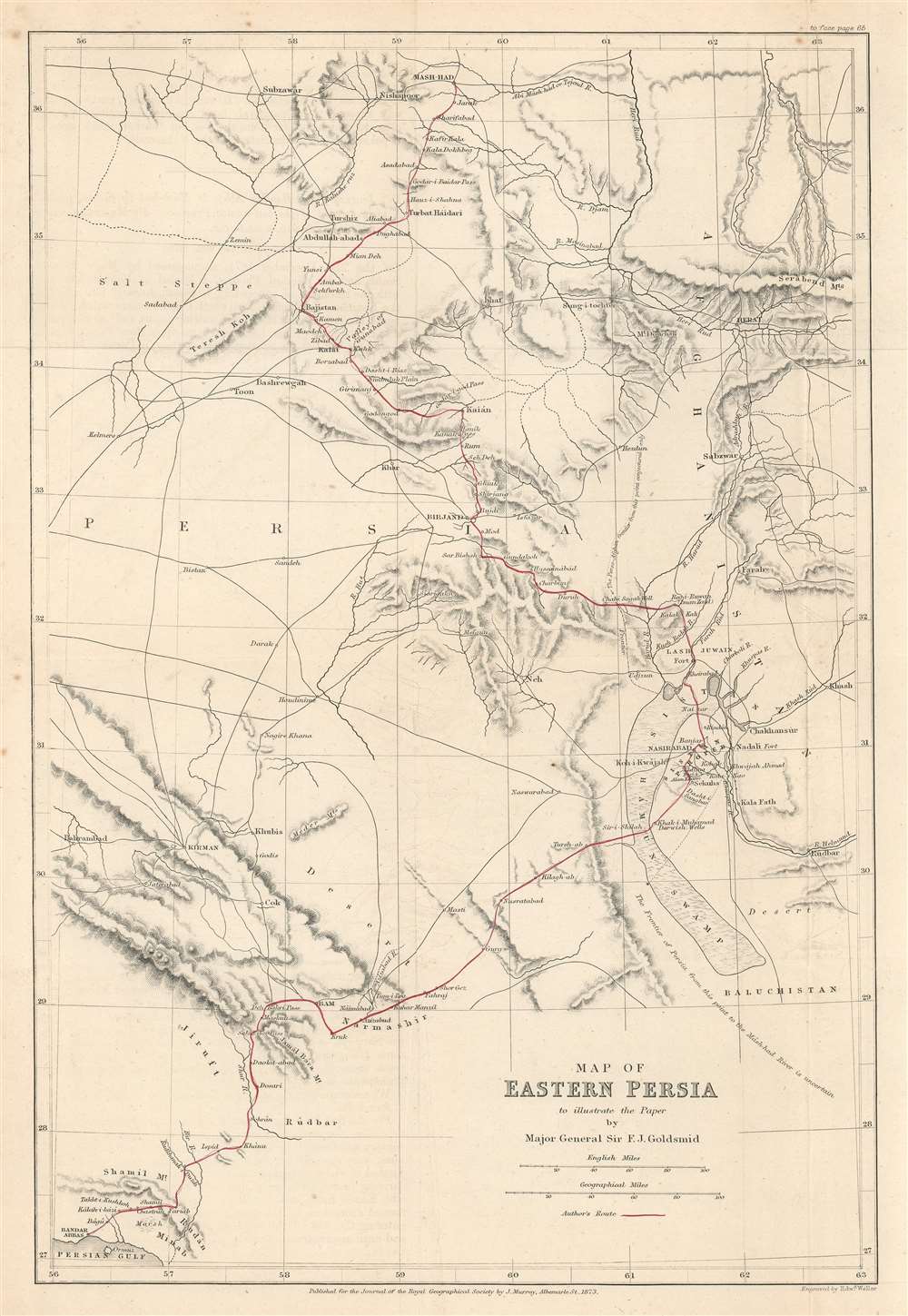
Map of Eastern Persia to illustrate the Paper by Major General Sir F. J. Goldsmid.
$350.00
Acquire
- Digital Map Information
- Suitable for large format printing
- File Size: 6.04 MB
- File Type: ZIP / TIFF
- ICC color profile embedded
- Delivered instantly via download link
This is an 1873 John Murray map of eastern Persia, or modern-day south-central Iran. A thin red line highlights Sir Frederic John Goldsmid's route through the region from Bandar Abbas on the Strait of Hormuz north to Mash-had. Goldsmid was dispatched to this region in order to enforce a British-negotiated Selstan frontier boundary settlement, a move in the 'Great Game' intended to secure Persia and Afghanistan as buffer provinces between Russia and British India. (more details)
A tourist's road map of Florida - ideal for any fishing enthusiast who wants to know where to catch different species of fish.
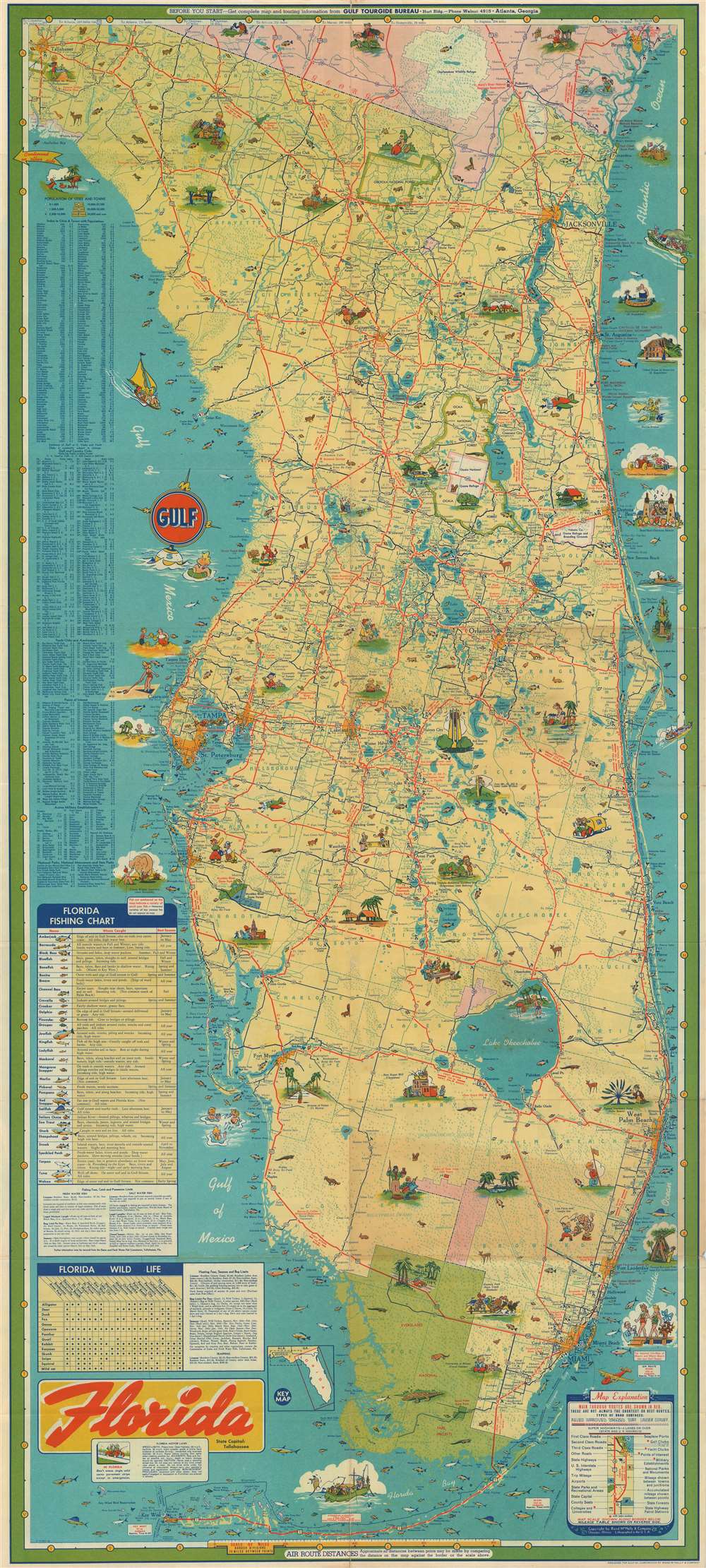
Florida.
$300.00
Acquire
- Digital Map Information
- Suitable for large format printing
- DPI: 600
- File Type: ZIP / TIFF
- ICC color profile embedded
- Delivered instantly via download link
This is a c. 1950s Rand McNally pictorial road map of Florida designed for the Gulf Oil Corporation. The map depicts the state from Tallahassee and the Gulf of Mexico to the Atlantic Ocean and from Georgia to Key West. Highly detailed, myriad cities and towns throughout Florida are labeled, including Tallahassee, Tampa, St. Petersburg, Orlando, Jacksonville, West Palm Beach, Fort Lauderdale, and Miami. Everglades National Park occupies a large portion of the southern part of the state, while other national forests, state parks, and state forests are scattered throughout. Other tourist destinations, such as the Devil's Punch Bowl, the circus winter quarters, and the Ocean Beach Speedway are highlighted by small, eye-catching vignettes. Florida is a major destination for fishing enthusiasts, and this map highlights thirty-two different species of fish that could be caught in Florida's rivers and lakes, as well as along its coastlines. (more details)
Battle that secured the Shenandoah Valley for the Union.
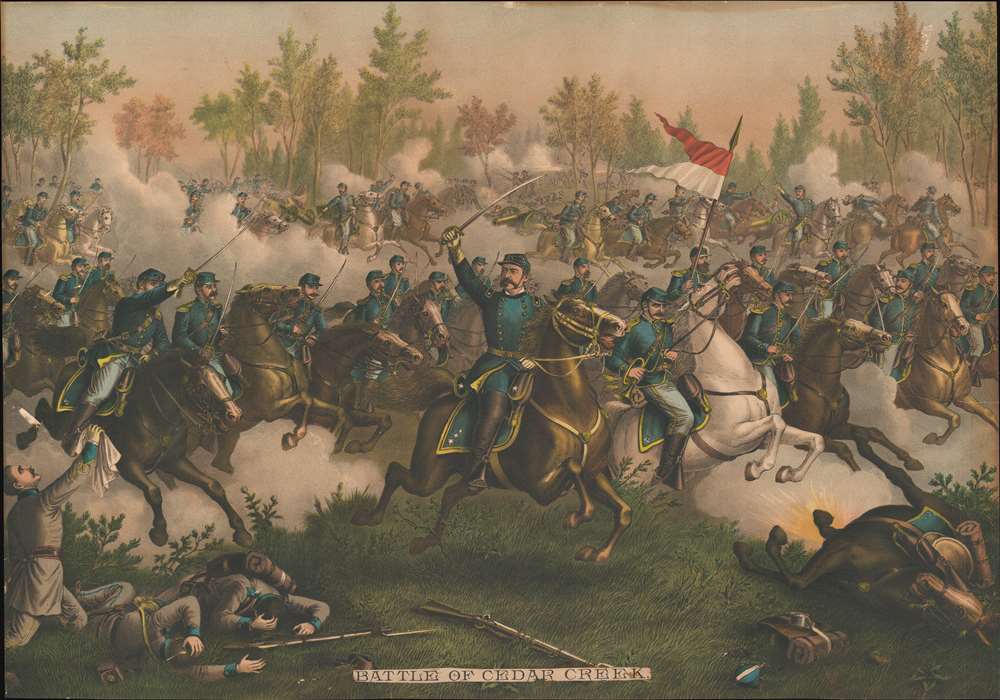
Battle of Cedar Creek.
$300.00
Acquire
- Digital Map Information
- Suitable for large format printing
- File Size: 34.54 MB
- File Type: ZIP / TIFF
- ICC color profile embedded
- Delivered instantly via download link
This is an 1890 Kurz and Allison view of the Battle of Cedar Creek, also known as the Battle of Belle Grove, fought during the 1864 Valley Campaigns of the American Civil War (1861 - 1865). Fought on October 19, 1864, the Battle of Cedar Creek ended the 1864 Valley Campaigns and secured Union control of the vital Shenandoah Valley for the remainder of the war. Kurz and Allison focus on the most legendary part of the battle, when Union Major General Philip Sheridan (equestrian at center) dramatically rode into retreating the Union lines to rally his fleeing army. Sheridan gained everlasting fame for his heroics. His army responded to his entreaties, halted the Confederate attack, and routed the Confederate army with a devastating counterattack. (more details)
One of Italy's most celebrated cities.
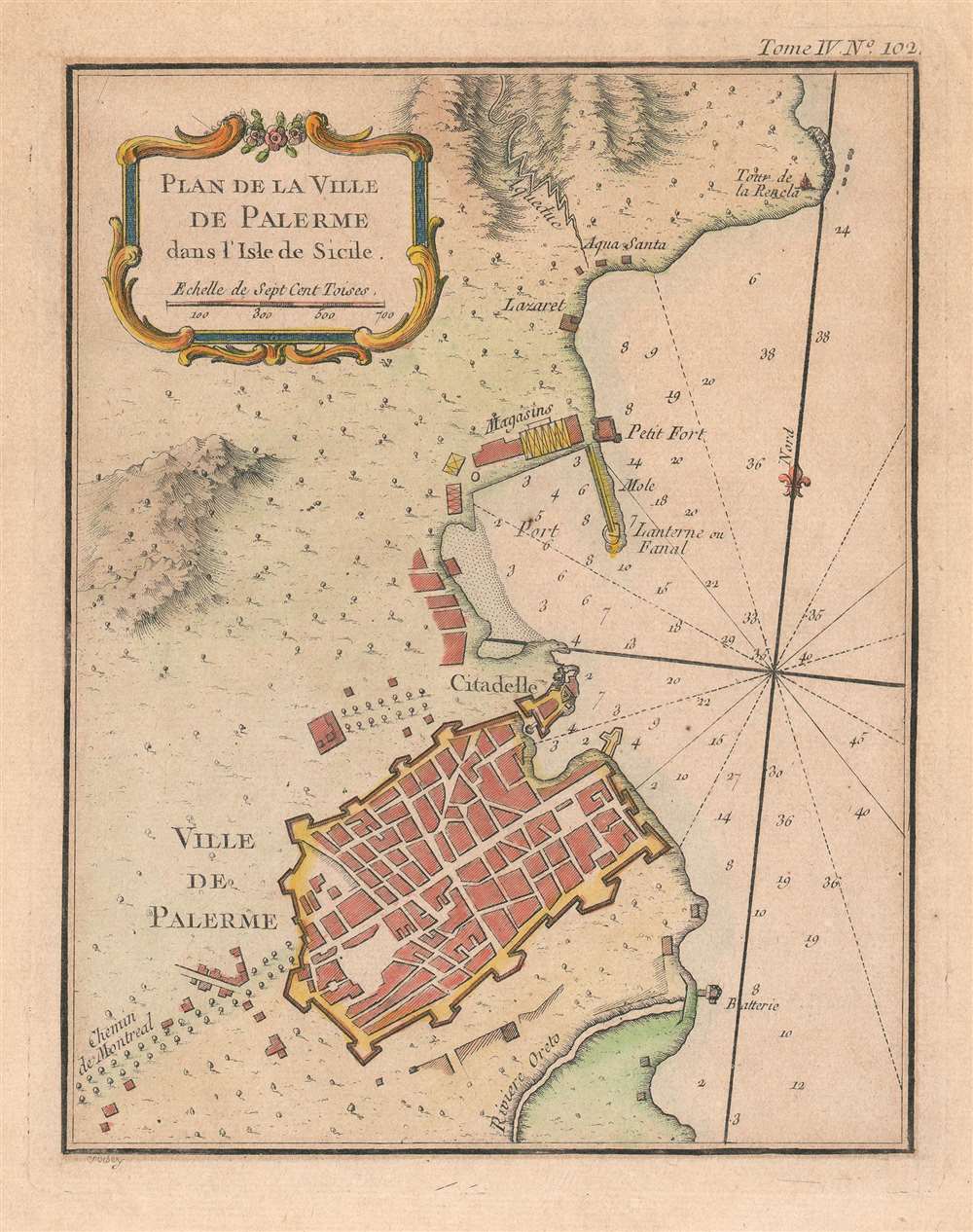
Plan de la Ville de Palerme dans l'isle de Sicile.
$250.00
Acquire
- Digital Map Information
- Suitable for large format printing
- Full resolution TIFF file
- ICC color profile embedded
- Delivered instantly via download link
This is a beautiful 1764 Jacques-Nicolas Bellin city plan or map of Palermo, Italy. The city occupies the bottom portion of the map, with its citadel and shore battery both labeled. its city walls are clearly illustrated. The Chemin de Montreal (the road to Monreale) is labeled to the left of the city and heads west.The Oreto River appears south of Palermo, while the city's port is to its north. A small fort and storage facilities near the port are both illustrated and labeled, along with a signal lantern. An aqueduct brings water from the nearby mountains to a site labeled 'Aqua Santa', which would translate to 'Holy Water'. Today, Palermo is the economic and tourist capital of Sicily and draws people because of its history, art, culture, music, and food. Its Mediterranean climate, incredible architecture, and nightlife all appeal to tourists. The city is also home to eight UNESCO World Heritage sites dating from the era of the Norman Kingdom of Sicily (1130 - 1194): three cathedrals, two palaces, and a bridge. Two other cathedrals, in Cefalù and Monreale, are also part of the UNESCO World Heritage Site designation. (more details)
Mysterious, opaque Interior of Brazil.
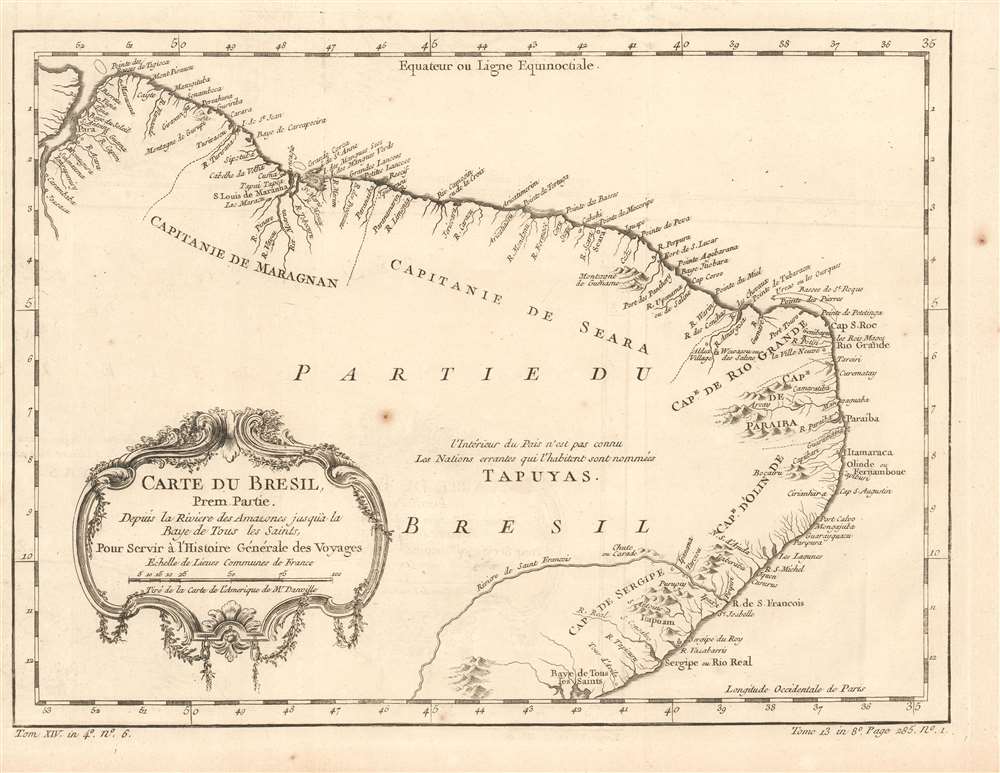
Carte du Bresil, Prem. Partie Depuis la Riviere des Amazones jusquà la Baye de Tous es Saints, Pour Servir à l'Histoire Générale des Voyages.
$250.00
Acquire
- Digital Map Information
- Suitable for large format printing
- Full resolution TIFF file
- ICC color profile embedded
- Delivered instantly via download link
This is a beautifully engraved 1780 map of the coast of Brazil, extending from the mouth of the Amazon River to the Baía de Todos los Santos. It names and marks the coastal borders of the Portuguese colonial Captaincies of Maranhão, Ceará, Rio Grande do Norte, Paraiba, Olinda (actually Pernambuco, of which Olinda was the capital), and Sergipe. Coastal settlements and the mouths of rivers are named, and prominent mountain ranges near coastal areas are shown pictorially. While most rivers are not shown at length, the Rio São Francisco does appear, and its sharp turn to the southwest is suggestive of the actual course of that river. Waterfalls are marked in the vicinity of the Paulo Afonso Falls, and settlements are named along the lower course of the river. (more details)
The coveted Spice Islands
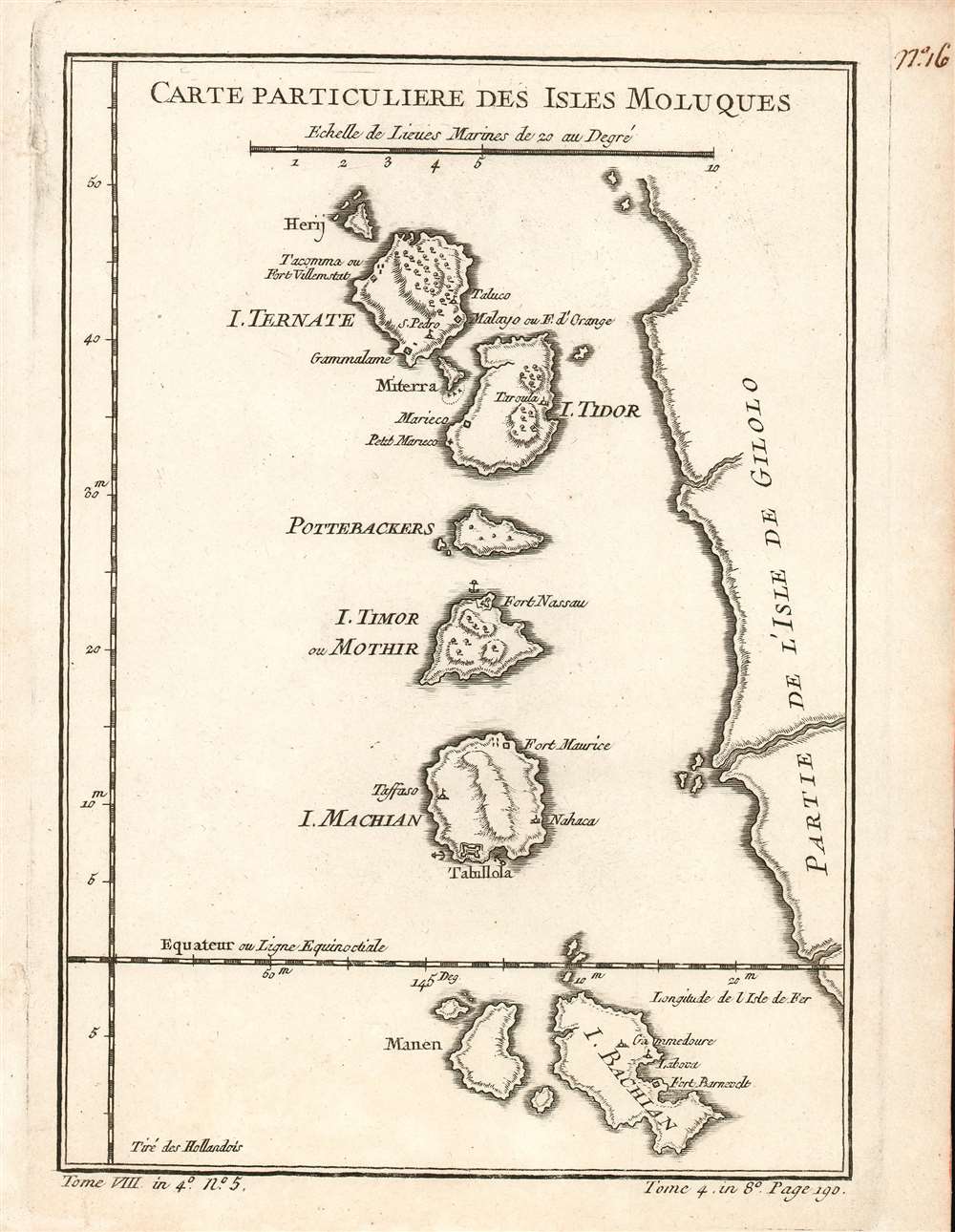
Carte Particuliere Des Isles Moluques.
$250.00
Acquire
- Digital Map Information
- Suitable for large format printing
- Full resolution TIFF file
- ICC color profile embedded
- Delivered instantly via download link
This is a beautifully engraved 1780 map of the Malaku Islands, or the Moluccas - also known as The Spice Islands. The string of islands, now part of eastern Indonesia, are shown along the west coast of the island of Halmahera, previously known as Gilolo (and so marked on the map.) Hiri Island, Ternate, Maitara, Tidore, Mare Island (Pottebackers) Moti Island (I. Timor, or Mothir) and Makian Island, are somewhat accurately delineated. Forts and settlements are noted on each island. At the southern extremity of the map, Kasiruta Island (Manen) and Bacan Island are recognizable. It is puzzling that between Makian and Bacan, the islands of Kaioa and Laluin have been omitted - but indeed, this is the case on maps of the Moluccas going back to the Age of Discovery. European explorers, arriving from a trans-Pacific voyage, seem to have coasted Halmahera/Gilolo exclusively from the north, having reached the islands north of New Guinea; this was the case with Magellan's survivors, Drake, and Le Maire. Hence Antonio Pigafetta's (c. 1491 - 1531) 1525 depiction of the Moluccas began with Ternate and ended with Machian; the 1630 Willem Blaeu (1571 - 1638) would do the same, adding Bachian as an inset. Hondius' 1633 map of the Moluccas added Bachian - in very schematic form, and too far north - as an island at the southern end of the chain. The great French geographer, Nicolas Sanson (1600 - 1667), chose this as his model. It appears that despite Bellin's having obtained a significantly better mapping of Bacan, he has been given no cause to question Sanson's placement of the island - or Sanson's naming of settlements and forts, which here is consistent both with the 17th century French geographer's map and its Dutch forebearer. (more details)
Charming pictorial map of Oregon.
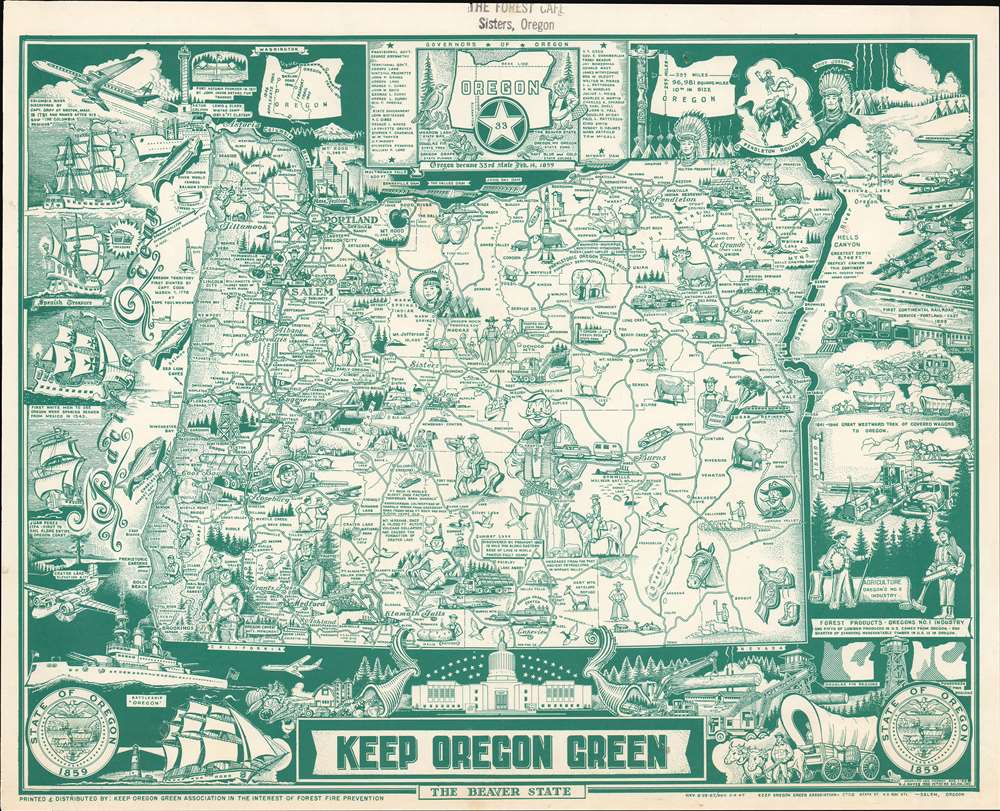
Keep Oregon Green. The Beaver State.
$150.00
Acquire
This is a charming 1967 Hugh J. Hayes pictorial map of Oregon in the form of a placemat. Depicting the entire state, countless illustrations reference Oregon's history, topography, and places of interest. Fun facts about the state also abound, some of which include ‘Mt. Mazama, once a 14000 ft. active volcano collapsed and caused the formation of Crater Lake’, ‘Oregon Territory first sighted by Capt. Cook March 7, 1778 at Cape Foulweather’, and ‘Prehistoric Oregon Fossil Beds formerly semi tropical climate’. The illustrations feature cowboys, covered wagons, and Native Americans. Vignettes of historical events surround the map, and include depictions of Fort Astoria, a commemoration of railroad service reaching Portland, and the Battleship Oregon, among others. (more details)
Goin Down To Rio!
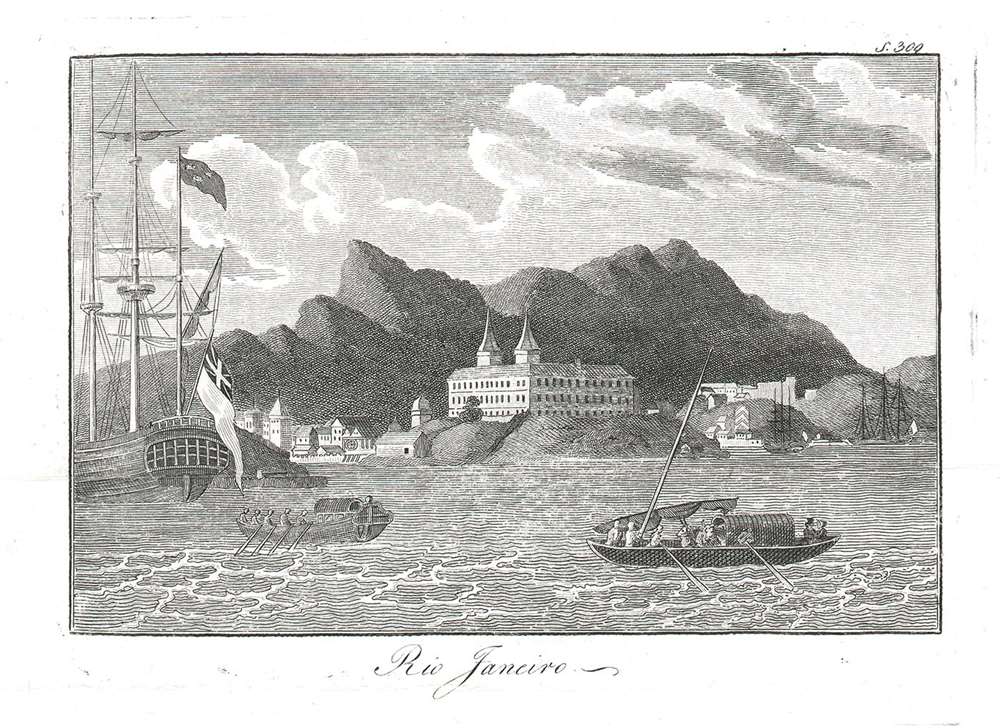
Rio Janeiro.
$100.00
Acquire
- Digital Map Information
- Suitable for large format printing
- Full resolution TIFF file
- ICC color profile embedded
- Delivered instantly via download link
This is a gorgeous c. 1850 view of Rio de Janeiro, Brazil. The view illustrates a coastal portion of the city, with a monumental building at center. A three-masted ship appears in the foreground on the left and is flying two flags, one of which appears to be the flag of the British East India Company, but that makes very little sense if this is Brazil. Two boats in the foreground ferry supplies, including cattle, to the waiting ship. Buildings line the shore in the background. (more details)
Scarce map of the Philippines published in Manila.
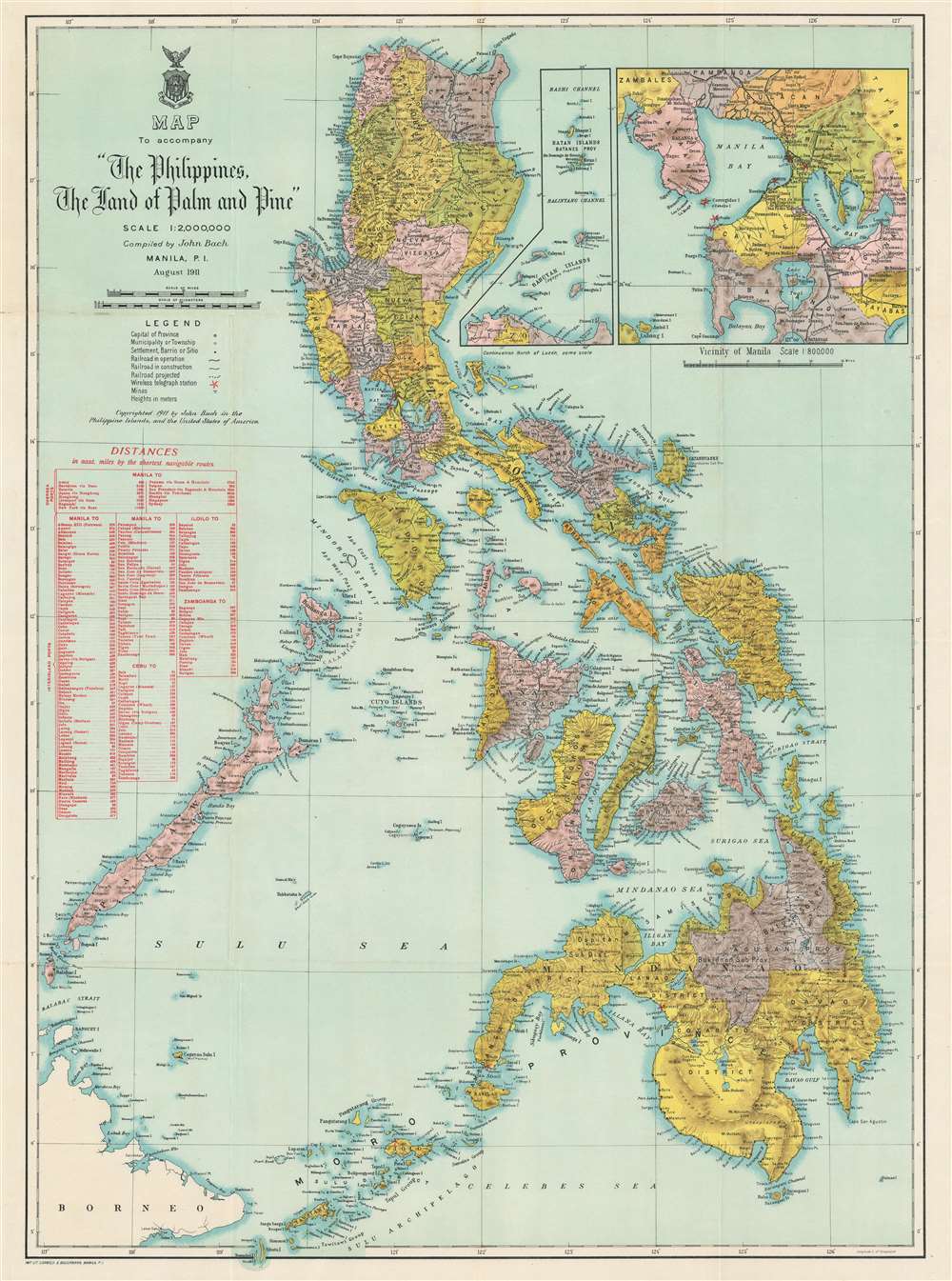
Map to accompany 'The Philippines, The Land of Palm and Pine'.
$750.00
Acquire
- Digital Map Information
- Suitable for large format printing
- File Size: 36.26 MB
- File Type: ZIP / TIFF
- ICC color profile embedded
- Delivered instantly via download link
This is a 1911 John Bach map of the Philippines published in Manila. Provinces are illustrated, labeled, and shaded. Operating railroads on Luzon, Cebu, and Panay appear as thick black with stops noted. Red 'stars' made of bolts of electricity mark wireless telegraph stations: six appear on Luzon and another three operate on Mindanao. Two insets are situated in the upper right. One details the vicinity of Manila and the other the Babuyan Islands, Balintang Channel, and Batan Islands north of Luzon. A table in red along the left border provides overseas port connections with Manila and the shortest distance in nautical miles along with interisland connections between Manila, Cebu, Iloilo, and Zamboanga. (more details)
An entire world at war...
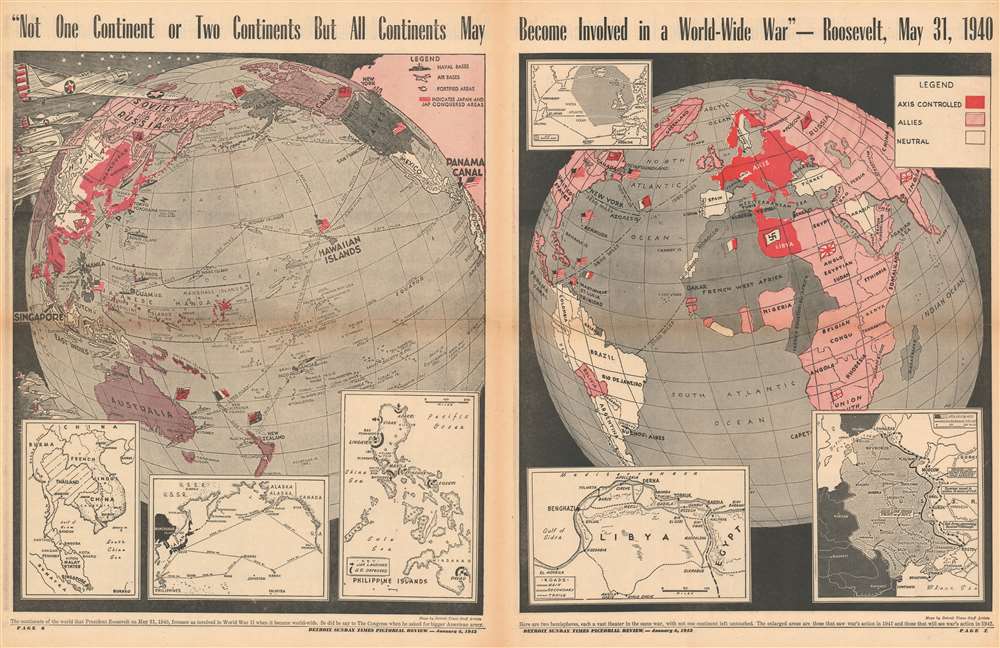
'Not One Continent or Two Continents But All Continents May Become Involved in a World-Wide War' - Roosevelt, May 31, 1940.
$500.00
Acquire
- Digital Map Information
- Suitable for large format printing
- Full resolution TIFF file
- ICC color profile embedded
- Delivered instantly via download link
This is a January 4, 1942 Detroit Times pictorial map of the world during World War II. Times artists chose not to draw the hemispheres in the traditional eastern/western configuration, but instead illustrates the Pacific theater of war on the left and the European/African/Atlantic theaters on the right. (more details)
Pacific supply lines.
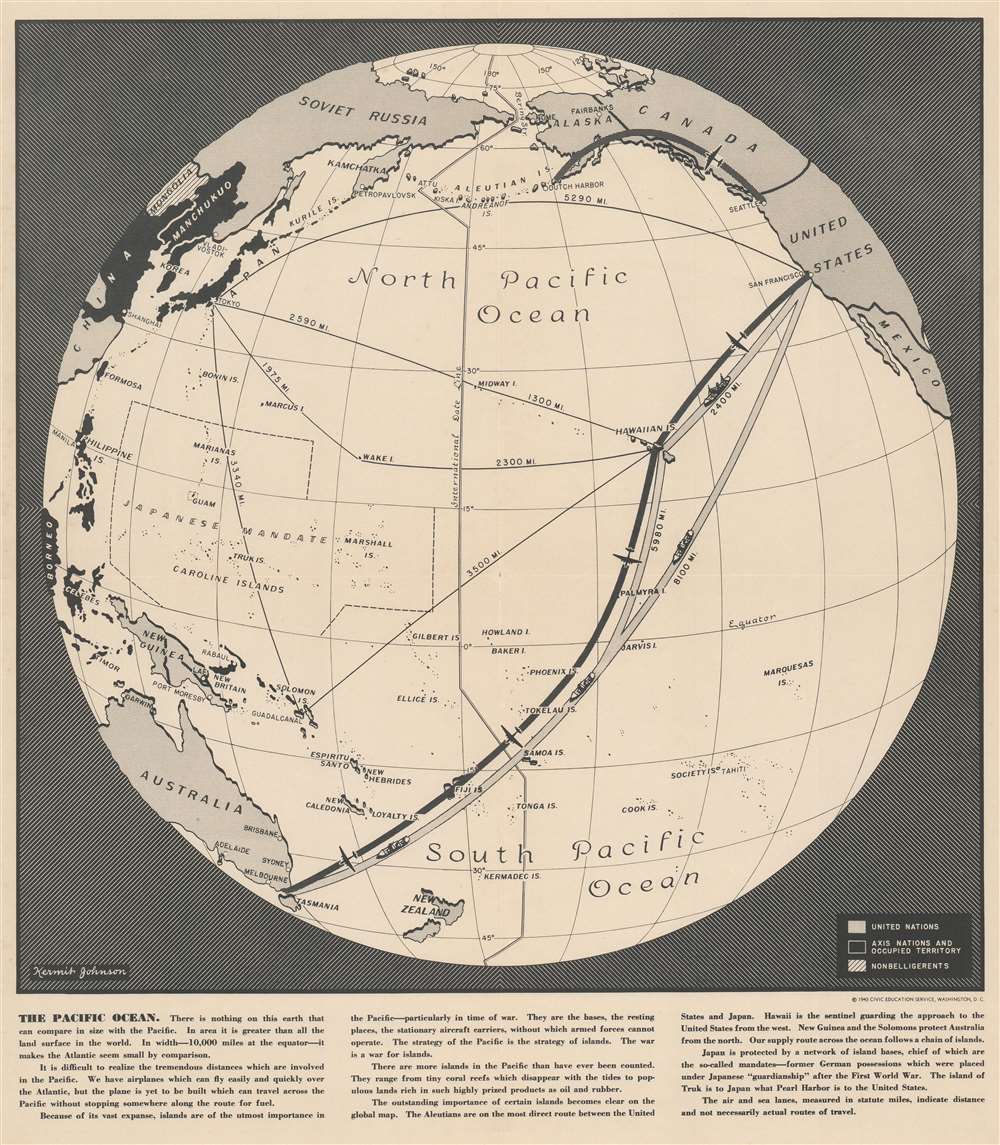
The Pacific Ocean.
$275.00
Acquire
- Digital Map Information
- Suitable for large format printing
- File Size: 20.83 MB
- File Type: ZIP / TIFF
- ICC color profile embedded
- Delivered instantly via download link
This is a 1943 Kermit Johnson and Civic Education Service map of the Pacific during World War II. The map's main focus is the vast distances involved in fighting a war across the Pacific. It illuminates in a simple, straightforward way the challenge of transporting troops and supplies from the United States to Australia, where American supplies were staged. The text along bottom border puts this in perspective, 'In area it [the Pacific] is greater than all the land surface of the world. In width - 10,000 miles at the equator - it makes the Atlantic seems small by comparison.' Johnson uses silhouettes of cargo ships and planes to differentiate between routes (although they are illustrated here as being practically identical). (more details)
Attractive city map or plan of Suzhou (Soochow), China, 'The Venice of the Far East.'
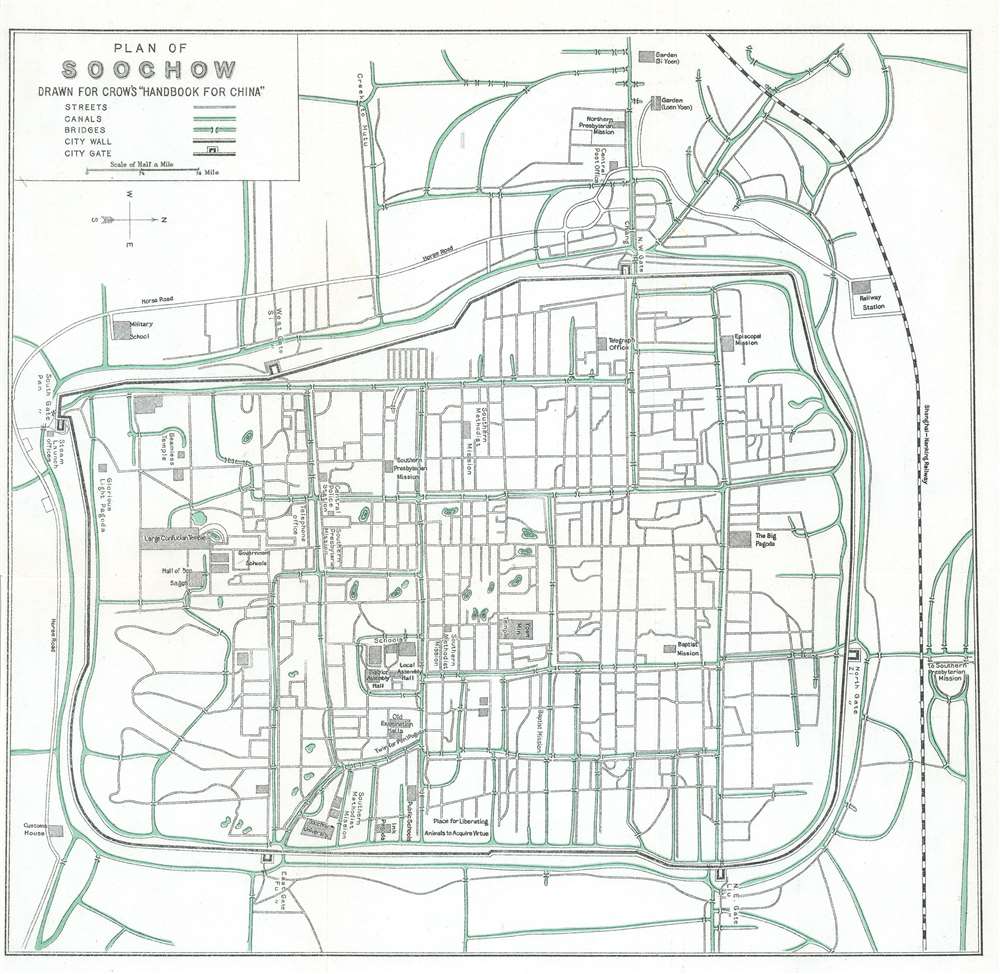
Plan of Soochow. Drawn for Crow's 'Handbook for China.'
$220.00
Acquire
- Digital Map Information
- Suitable for large format printing
- File Size: 4.63 MB
- File Type: ZIP / TIFF
- ICC color profile embedded
- Delivered instantly via download link
This is a 1921 Carl Crow city map or plan of Suzhou (Soochow), China. The map depicts the city and some of the surrounding area. Soochow, per Crow, lies '53 miles from Shanghai, on the Shanghai-Nanking Railway', which is depicted and labeled on the map. Due to its extensive system of canals, Soochow has been given the name 'The Venice of the Far East.' Several locations are labeled on the map, including The Big Pagoda, the Local Assembly Hall, Soochow University, the Large Confucian Temple, and the Railway Station. Only one of the myriad roads on the map is labeled, the Horse Road, and it falls outside the city walls. (more details)